
The next Friday, before the venue meeting
Whose room is it, anyway?
The bookshop needs to cover its costs. A proposal would replace two free evenings with paid bookings. The crew has a question before anyone calls that a win.
Start the storyOkay, here’s what happened.
The Common Room is run by a small neighborhood nonprofit alongside the bookshop. Its board is considering two paid evening rentals a week to help cover staffing. Nothing has passed yet. Mari, 19, works the counter. She knows “just keep it free” does not pay the evening staff.
Sami, 23, needs an accessible place to meet clients after her print-shop shift. Mateo wants to start a petition immediately. The crew agrees the room matters; they do not agree on the best schedule. You are helping them make a specific, informed request before the board meeting.
Inside the story.
A little more context before you decide.
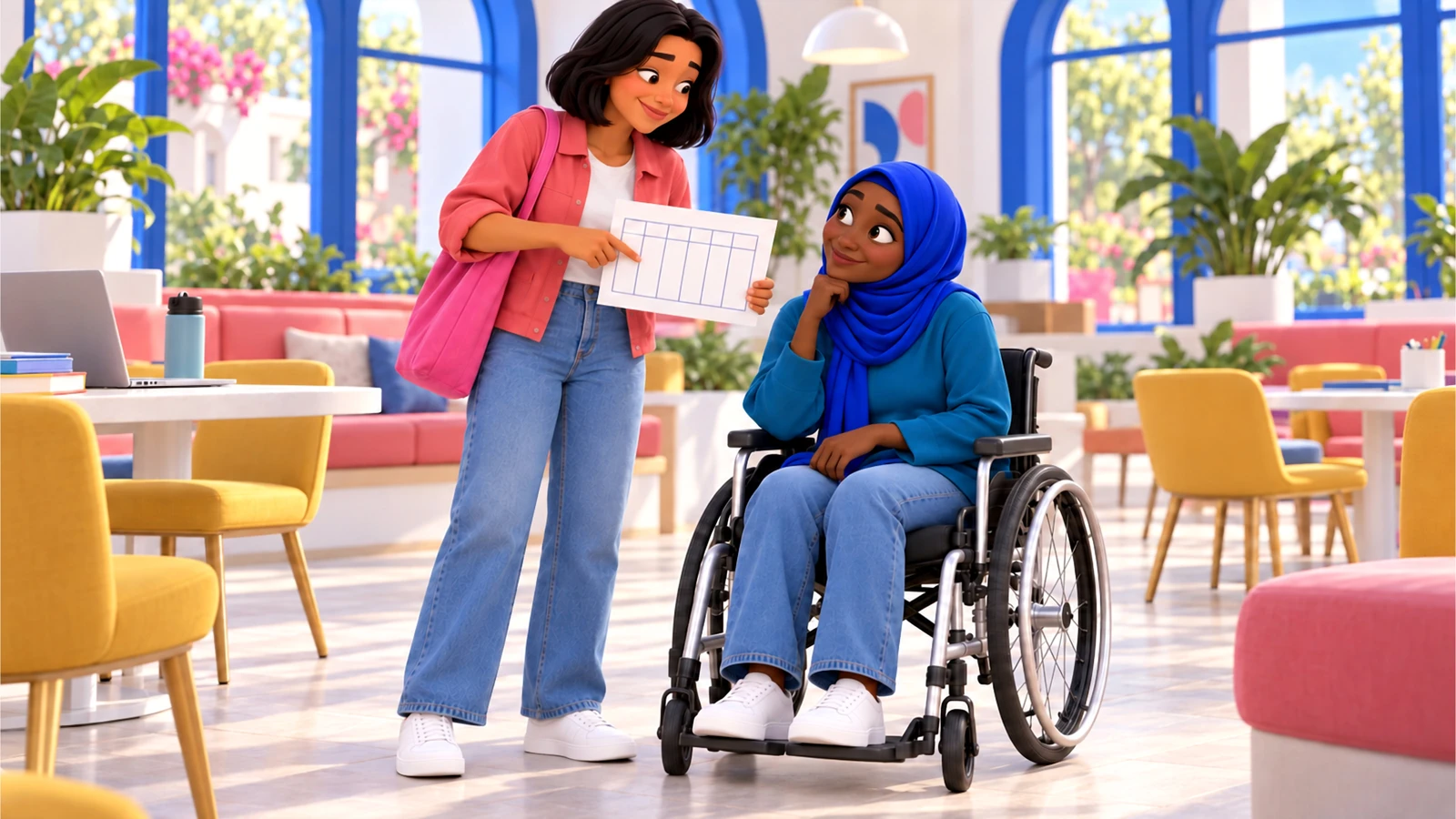
Mari and Sami study a proposed room schedule in the venue.

Mari measures a clear access path between chairs as Sami watches.

Sami records access and timing questions while Mari listens.
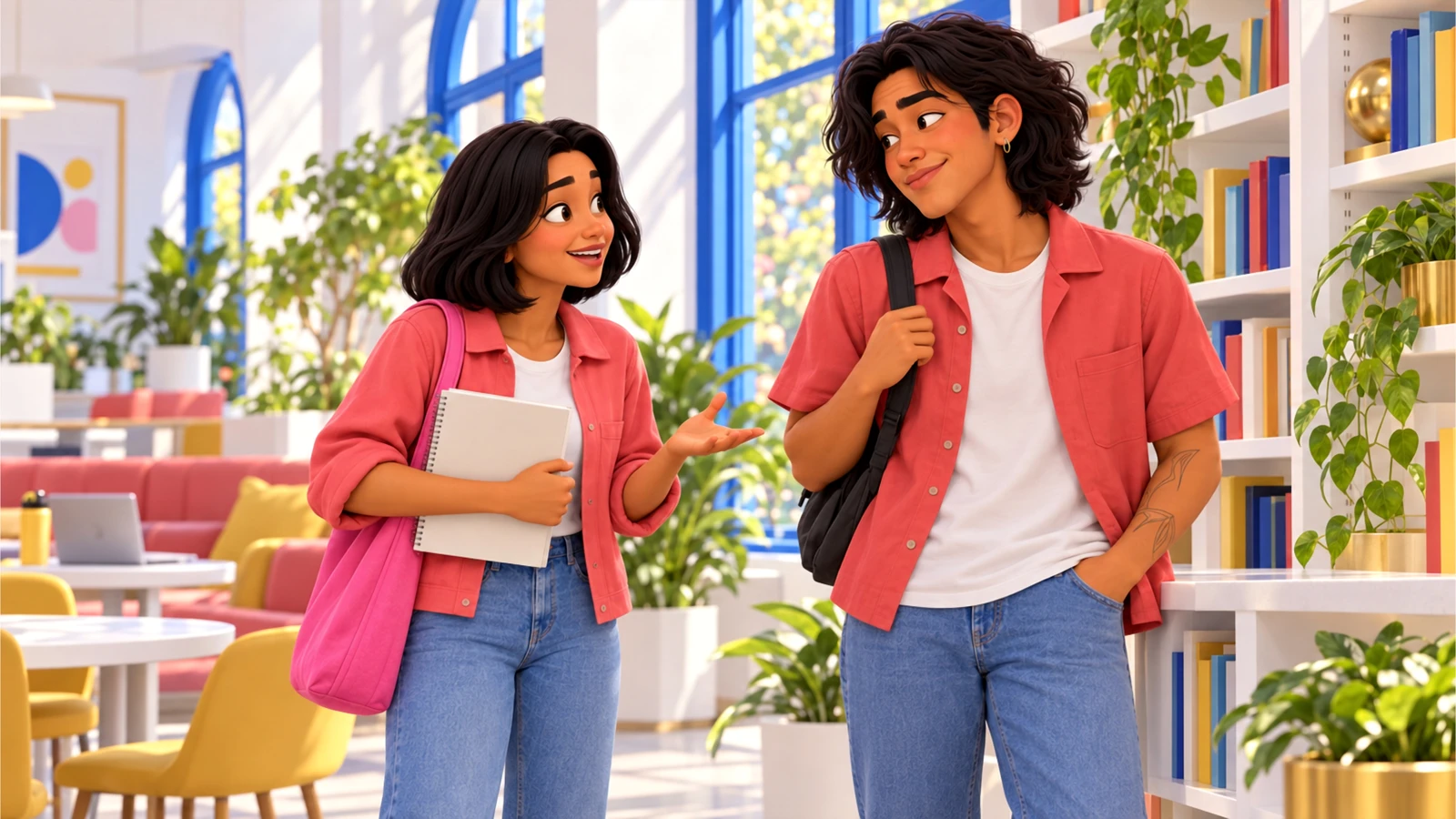
Mari and Caio discuss busy-shift scheduling by the bookshop window.

Sami, Mari and Caio compare possible layouts at a white worktable.

Mari posts a blank meeting notice with Sami beside her.

Sami addresses a small community table as Mari and Caio listen.

Mari and Sami welcome Caio through an accessible doorway.
The Common Room cannot keep every evening free.
The same room is doing different things for different people.
Hear what matters to each person. Choose a question. Notice what their answer adds, then check it against the case materials.
Mari
19, bookseller with an evening shift
“By the time I finish downstairs, this is one of the few places I can still sit and work with people.”
Ask Mari
What would the paid bookings change?
Mari “If they take both late evenings, the room might still be “open” when I am working. That is not the same as being able to use it.”
What to check nextCompare the proposed hours with actual schedules. Do not assume one schedule represents everyone.
Does the room need to stay exactly as it is?
Mari “I want the free time protected, but I know the bookshop has costs. Could we ask which hours earn money and test a different arrangement?”
What to check nextFind the cost information and the decision-maker before choosing an alternative.
Sami
23, uses the room for a print workshop
“I want us to stop solving this for everybody before we ask everybody.”
Ask Sami
Would moving the workshop online help?
Sami “For some people. For others it means finding a device, a quiet space and materials at home. My printing tools do not fit in a video call.”
What to check nextList what each option makes possible and what it moves onto participants.
What would make the meeting useful?
Sami “The actual proposal, a way to contribute without speaking on the spot, and a clear answer about what our input can change.”
What to check nextCheck the process, the available choices and how the final decision will be explained.
Two people to hear from. Start with either one.
Put their perspectives together
A useful proposal names a cost and an affected person, including the costs of the option you prefer. Participation matters even when it does not guarantee your first choice.
A person’s account explains their perspective. It still needs checking where it makes a factual claim.
Optional movie connection: The Lorax
All the evidence needed for this case is in the story. Preview the clip before classroom use, or use the text explanation.
Run that scene back.
The Lorax: How Bad Can I Be?
Watch for the moment the explanation changes.
Movieclips, Dr. Seuss’ The Lorax (2012), Open the source player
Read the scene instead
The Once-ler presents expansion as reasonable while the sequence shows environmental costs. Compare what the message celebrates with what the images reveal. As production expands, the setting changes. Our reading follows consequences across the scene instead of accepting the speaker’s account alone. A neighborhood nonprofit is not the Once-ler’s business. Use the contrast to ask better questions, not to cast everyone who needs revenue as a villain.
1Notice the sales pitch
The Once-ler presents expansion as reasonable while the sequence shows environmental costs. Compare what the message celebrates with what the images reveal.
Whose benefit is easiest to see? Whose loss is left in the background?
2Follow the change
As production expands, the setting changes. Our reading follows consequences across the scene instead of accepting the speaker’s account alone.
What evidence would you want before accepting a real claim of “community benefit”?
3Bring it back carefully
A neighborhood nonprofit is not the Once-ler’s business. Use the contrast to ask better questions, not to cast everyone who needs revenue as a villain.
Can you name a real tradeoff without deciding someone’s motive for them?
Back on the block
The crew needs an option that acknowledges staff time, access and money. The film gives you a question about hidden costs. The proposal and budget are where this decision has to be tested.
Make the short-form version
The budget check
Show the cost, confirmed support and each rental option using the same weekly scale. Name the access tradeoff before making your ask.
Make a version that keeps the meaning
Two rentals could cover the gap. What does that leave out about the people who use those evenings?
Plan three shots: the claim, the evidence and a next move. Keep a text version and source note with your edit. You can make a private storyboard without a social account.
Build the script from your evidenceAn original motion graphic using this case’s fictional records. The same idea works as a Reel, TikTok-style explainer or classroom slide.
The receipts are on the table.
Open each item. Ask what it establishes and what it leaves out.
0 of 3 materials opened
The crew’s documents are story props. Real-world sources are below.Nonprofit board agendaThe proposalOpen this material
Option A keeps the current free evenings with a funding gap. Option B replaces Tuesday and Thursday evenings with paid rentals. Option C pilots one rental evening for six weeks while seeking additional funding. The board will discuss the options; no vote has happened.
An agenda is not an adopted decision. A pilot is still a change with consequences.
Illustrative weekly figuresThe budget noteOpen this material
Evening staffing and utilities: $600. Current grants and donations: $400. Each paid rental is projected to add $120 after its extra costs. Two bookings would add $240; one would add $120. Demand is uncertain.
These are invented estimates for practice. Two bookings could cover the $200 gap if the projection holds; one alone would leave $80.
Listening notesThe missing voicesOpen this material
Sami works afternoons. Dec rehearses on Thursdays. Mari closes the shop. A nearby resident worries about late noise. The proposed meeting time overlaps with several shifts.
Four voices do not represent everyone. Ask who is missing and offer a way to contribute outside the meeting.
Having a voice and having a decision are different things.
A room can be open to everyone on paper and still be difficult to use. Meeting time, transport, language, access and who feels comfortable speaking all affect the conversation. Start by asking the people involved what matters to them. Do not fill in their views from their age, background or disability.
Bacchi’s policy-analysis approach asks what a proposed solution assumes the problem is. If the proposal is “move all events online,” it may treat travel as the main barrier. That leaves you with new questions about devices, connection, privacy and the kind of event people want. Apply the same scrutiny to your own favorite idea.
Finally, find the actual decision process. A bookshop meeting, campus committee and government comment period have different authority and rules. EPA’s guidance is one federal example, not the rule for the crew’s room. Useful input identifies the proposal, explains an effect with evidence and offers a specific question or alternative. Being heard does not guarantee your preferred outcome.
- Authority
- What a person or group has the power to decide.
- Public comment
- Input submitted through a particular public decision process.
- Trade-off
- A benefit gained while accepting a cost or limitation elsewhere.
Un espacio puede estar abierto a todo el mundo en el papel y aun así ser difícil de usar. La hora, el transporte, el idioma, la accesibilidad y la comodidad para hablar influyen en la conversación. Empieza por preguntar a las personas qué les importa. No supongas sus opiniones por su edad, origen o discapacidad.
El enfoque de análisis de políticas de Bacchi pregunta qué idea del problema contiene una solución. Proponer “hacer todos los eventos en línea” puede suponer que el transporte es la barrera principal. Eso abre preguntas sobre dispositivos, conexión, privacidad y el tipo de actividad que la gente quiere. Examina también tu propia propuesta con ese cuidado.
Después, identifica cómo se toma la decisión. Una reunión de una librería, un comité universitario y un período de comentarios del gobierno tienen reglas y facultades diferentes. La guía de EPA es un ejemplo federal, no la regla del espacio de la historia. Un comentario útil identifica la propuesta, explica sus efectos con evidencia y plantea una pregunta o alternativa concreta. Participar no garantiza el resultado que prefieres.
- Facultad de decisión
- Lo que una persona u organismo tiene poder para decidir.
- Comentario público
- Una aportación presentada mediante un proceso público específico.
- Decisión entre ventajas y costos
- Obtener un beneficio aceptando un costo o una limitación en otro aspecto.
What would you say?
Try a response. See who it reaches and what it leaves unresolved. You can change your mind.
What does the crew ask for first?
Which recommendation can you explain?
Put the tradeoff on the table.
More funding can help the room. The hours still matter.
- Problem
The weekly cost is $600. Confirmed support is $400. Who can decide how to cover the gap?
- Options
Compare no rentals, one rental and two rentals using the same weekly figures.
- People
Who loses an evening? Ask whose work, access or travel schedule the proposal misses.
- Recommendation
Defend an option, name its cost and say what new evidence could change your mind.
Where this method comes from
Options and criteria + stakeholder inquiry. This classroom version draws on policy analysis and public participation.
Policy analysis, CDCStakeholder inquiry, EPAPrepare a 90-second comment for the nonprofit board.
Name the proposal, explain one effect, use one figure accurately and ask for a decision or follow-up the board can make.
See one possible response
I use the room after work. Removing both free evenings would leave me with fewer accessible meeting options. A one-night pilot would still leave a projected $80 weekly gap, so I’m asking for a funding plan, input from evening users and a review after six weeks before a longer-term change.
Your wording can be different. The evidence still needs to hold up.
Make it your way
Write a note, record a voice memo, storyboard a short video or sketch the response on paper. Adobe Express, Pages, Keynote and iMovie are optional tools. You do not need a paid app.
Open the making studioWhere do we go from here?
Your choices stay in the conversation. There is room to revise.
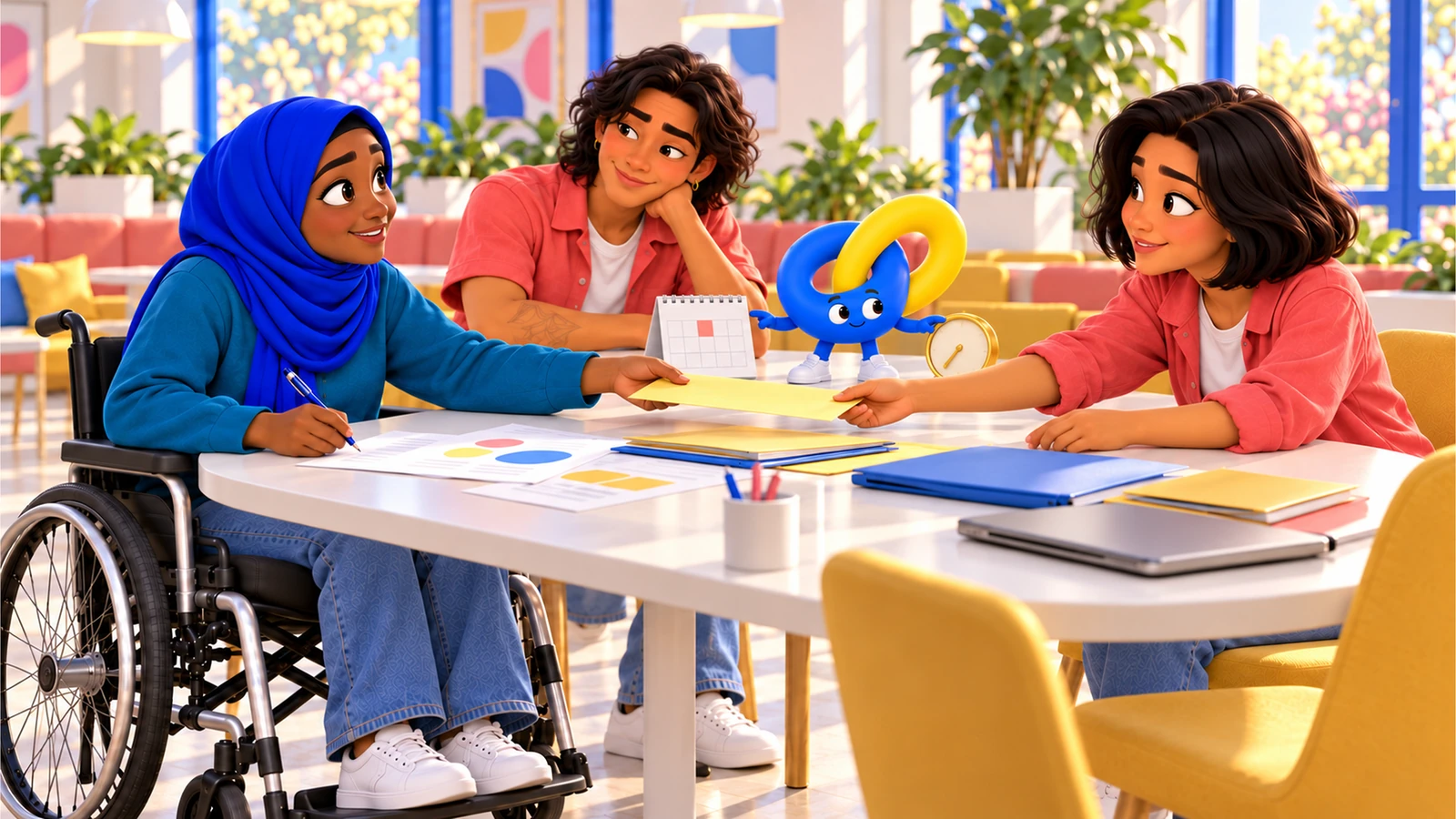
Before the crew moves on.
Try both decisions to see what your response changes and what still needs attention.
One thing to carry forward
Put the funding assumptions beside the access effects. Ask who will check the results and how people outside the meeting can respond.
Give the concern a destination.
- Write down the decision, who can make it and what is still open for discussion. Find the current instructions.
- Ask two people with different experiences what the proposal would change for them. Get permission before sharing their accounts.
- Draft a short comment with a specific effect, its support and a question or workable alternative. Find how the outcome will be recorded.
How you might tell a friend
I agree this needs attention. Before we send everyone the same message, let’s find who decides, what input they are accepting and whose experience we have not heard.
Una forma de decirlo en español
Sí, esto merece atención. Antes de enviar el mismo mensaje a todo el mundo, averigüemos quién decide, qué aportaciones acepta y a quién todavía no hemos escuchado.
Use your own voice. Keep the meaning, the evidence and the limits.
Want to go deeper?
The same case can become a reporting exercise, a policy brief or a communications assignment. Pick a question worth spending more time on.
Public relations
Map who is affected, including people who cannot attend.
A way into Jeong-Nam Kim and James E. Grunig’s Situational theory of problem solving. Explore the foundation
Communication strategy
Write an invitation that says what is still open to influence.
A way into Robert M. Entman’s Framing. Explore the foundation
Law and legal concepts
This fictional nonprofit board controls its own schedule. NYC community boards have advisory roles; they are not interchangeable.
A way into Cornell Legal Information Institute’s Authority and jurisdiction. Explore the foundation
Policy and policy studies
Ask what each proposed solution assumes the problem is.
A way into Carol Bacchi’s What’s the problem represented to be?. Explore the foundation
Education and learning
Revise your recommendation after checking its biggest weakness.
A way into John Dewey’s Reflective inquiry. Explore the foundation
Journalism and reporting
Distinguish an agenda, a projection, a vote and a recorded decision.
A way into Society of Professional Journalists’s Verification, context and accountability. Explore the foundation
Creativity
Make an annotated options sheet or a 90-second comment and test it with a neighbor.
A way into Design Council’s The Double Diamond. Explore the foundation
Keep the source with the story.
Carol Bacchi, WPRA policy-analysis approach that examines the problem represented in a proposed solution.NYC, About community boardsA real local example of advisory authority and public participation. Check your own board’s procedures.Design Council, Double DiamondA framework for exploring a problem and testing responses.About this analysis
The film reading is our interpretation, with the excerpt embedded for you to examine. The Common Room, its documents and the crew’s outcomes are fictional learning scenarios. Sources support the real-world concepts; they do not certify the story or your response. This is general education, not individual legal advice.