
Friday, setting up the Common Room
Before you repost.
The group chat says tonight is cancelled. Mateo is still moving tables. Somebody needs the whole story.
Start the storyOkay, here’s what happened.
The Common Room is a bookshop’s shared event space in Fort Greene. Mateo, 22, booked it for the crew’s first neighborhood screening. Gia, 21, is squeezing setup between class and a café shift. Jordy, 20, is checking the projector and captions.
Then a cropped meeting clip arrives. Its caption says the room is shutting down. Gia wants to warn people before they travel. Mateo wants the post to be wrong. You have ten minutes to give people an update, but you do not have to guess.
Inside the story.
A little more context before you decide.
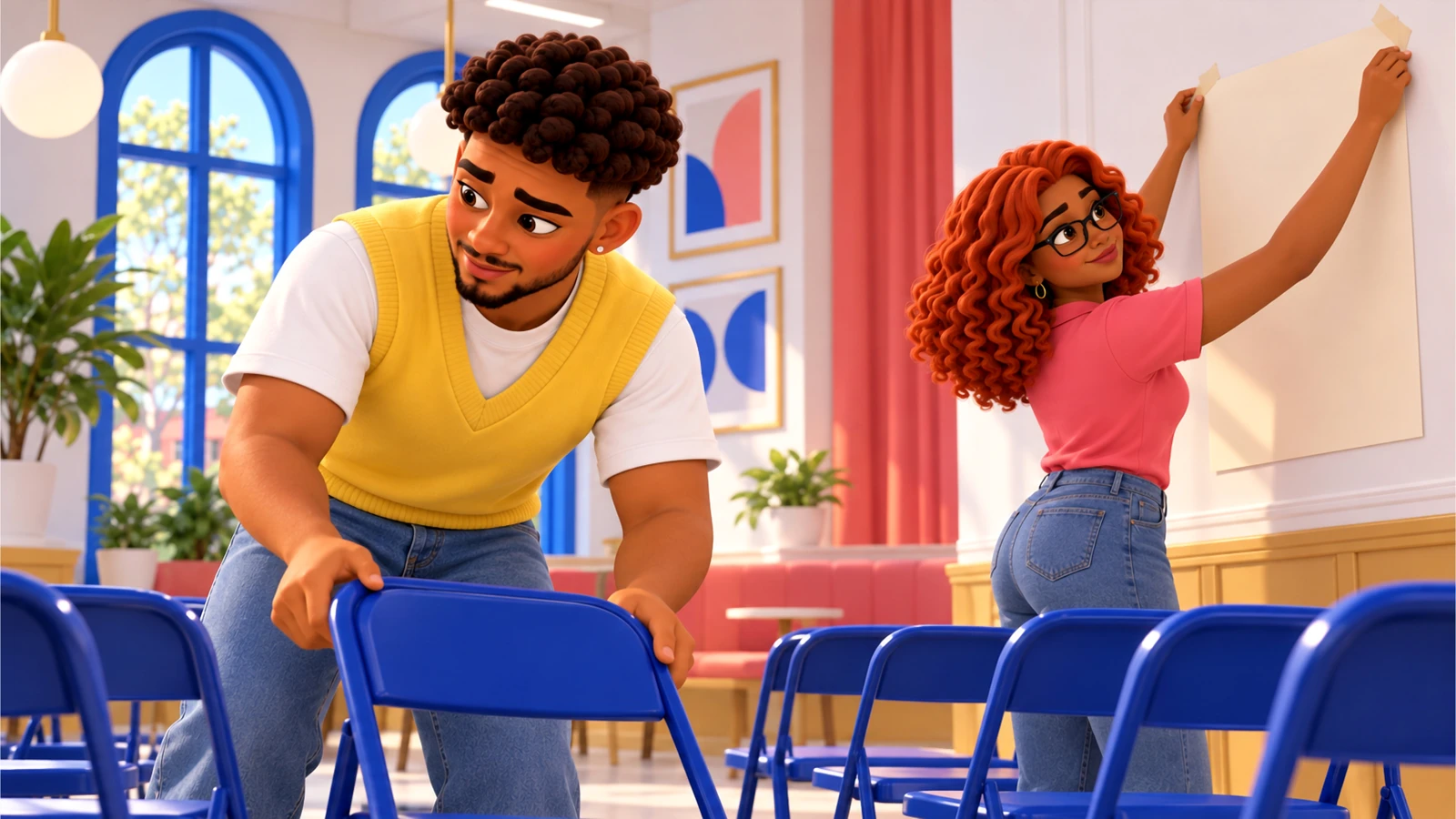
Mateo arranges blue folding chairs while Gia hangs a blank poster.
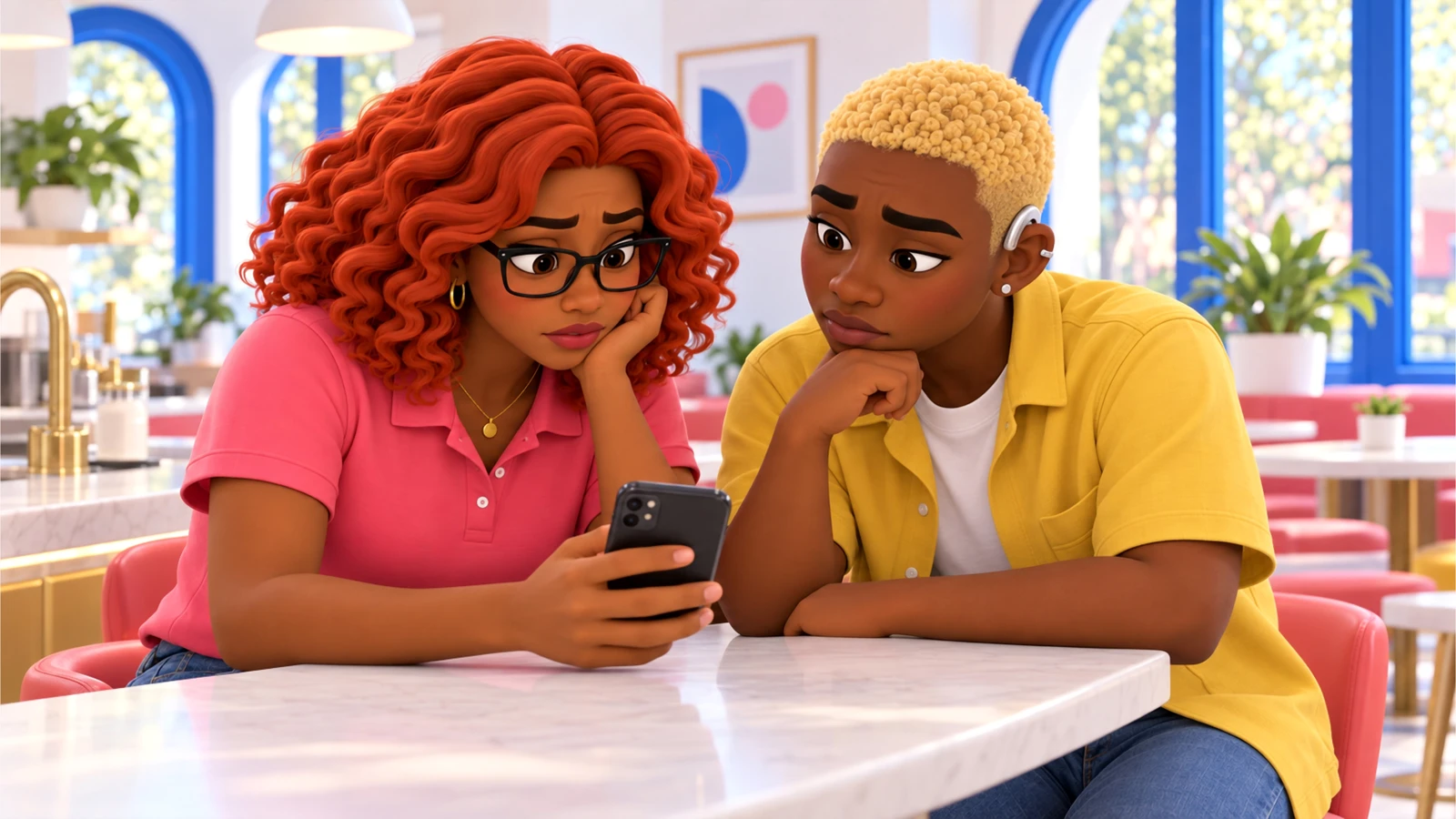
Gia and Jordy look concerned at a phone at the counter.
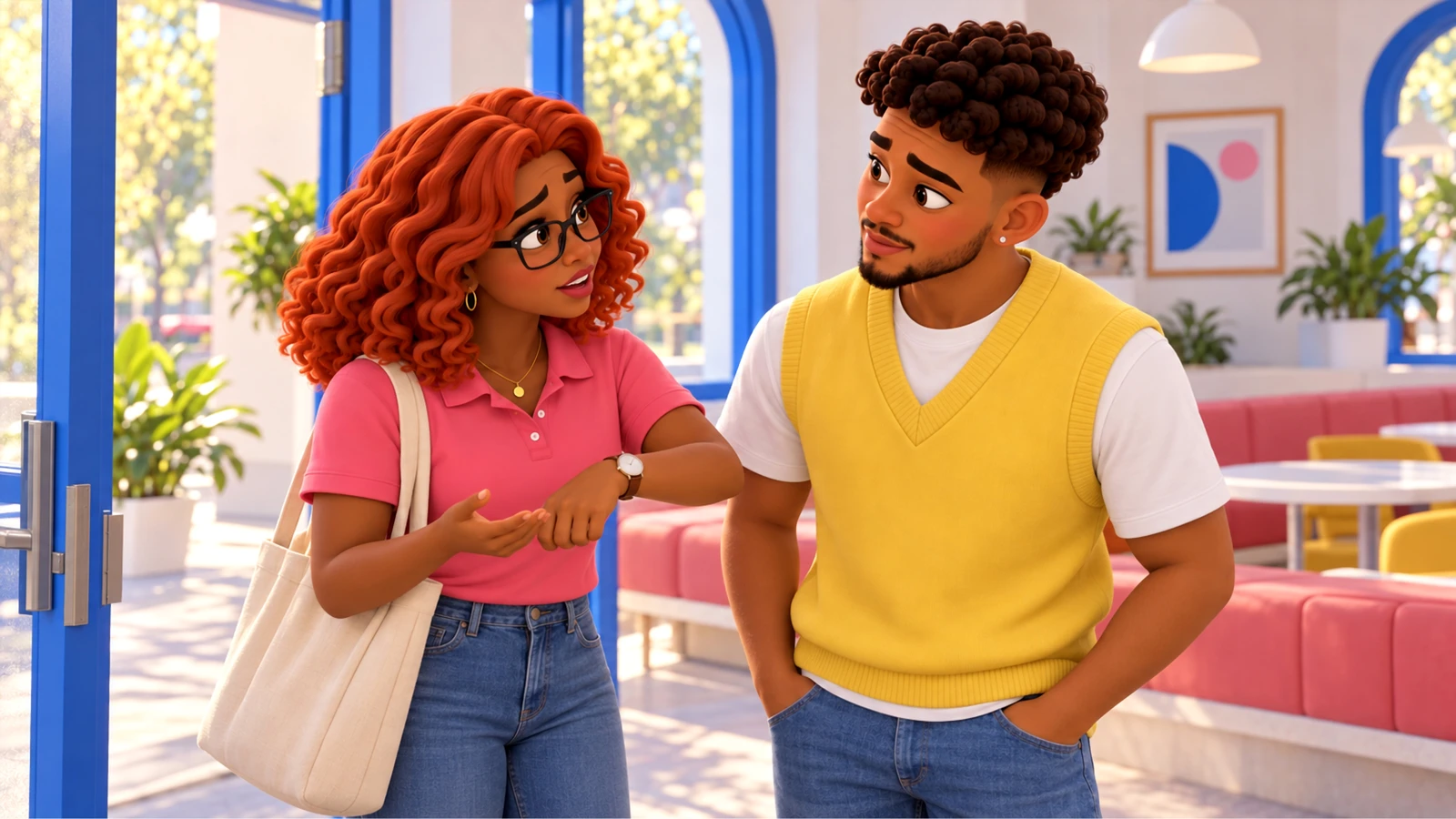
Gia explains her time constraints while Mateo listens at the doorway.
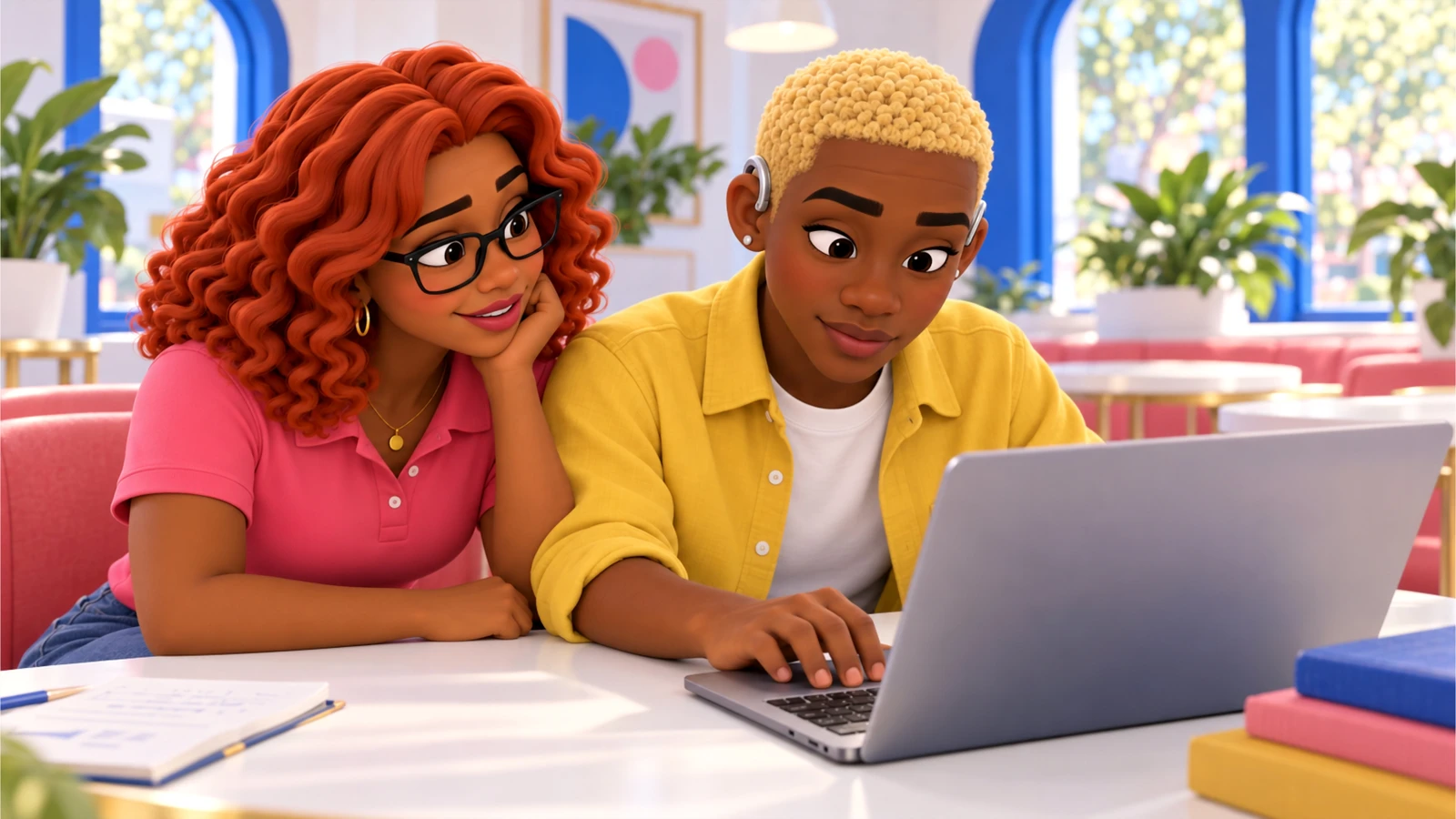
Jordy edits captions at a laptop while Gia watches.
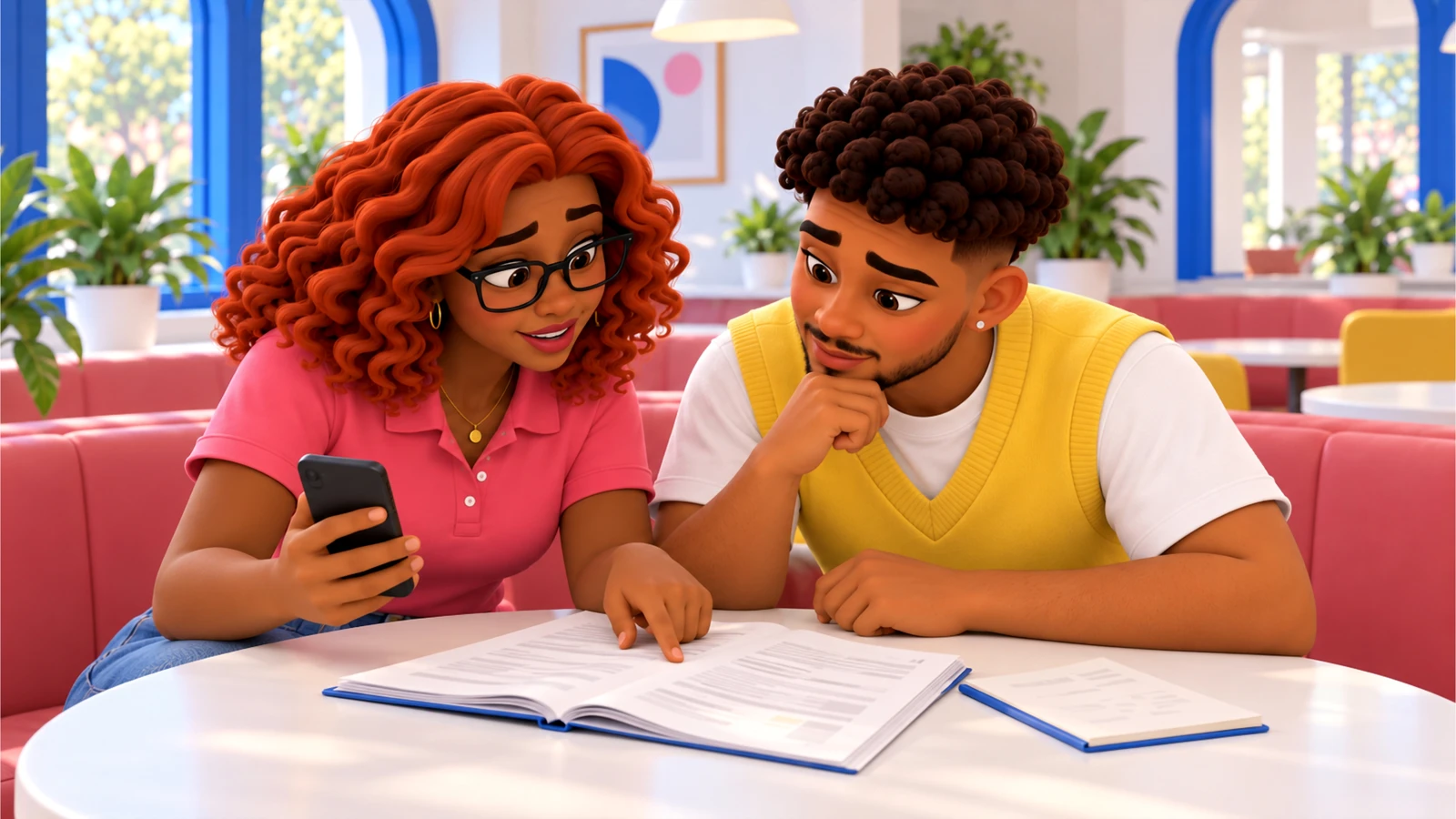
Gia and Mateo compare a phone clip with an open meeting transcript.
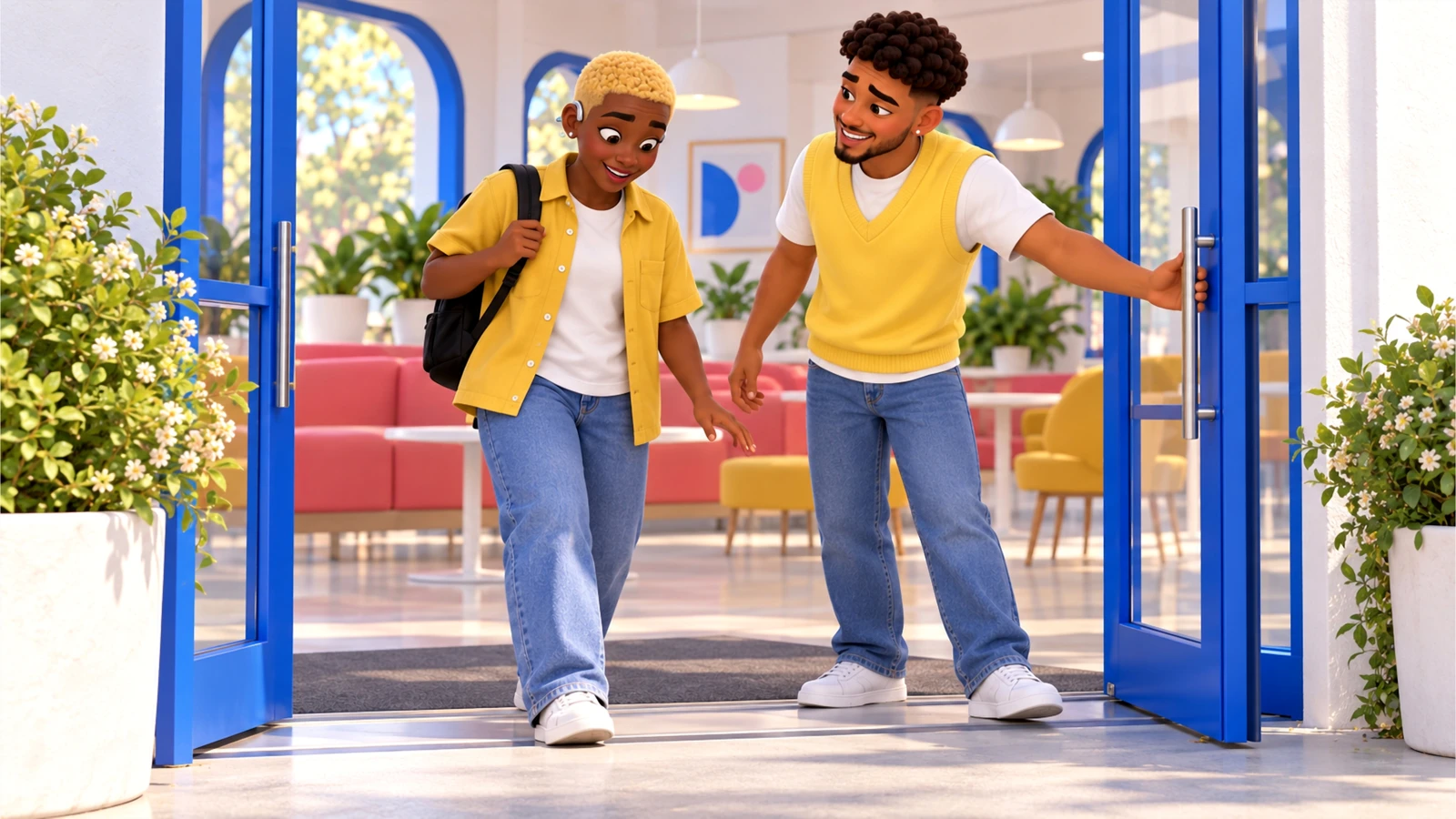
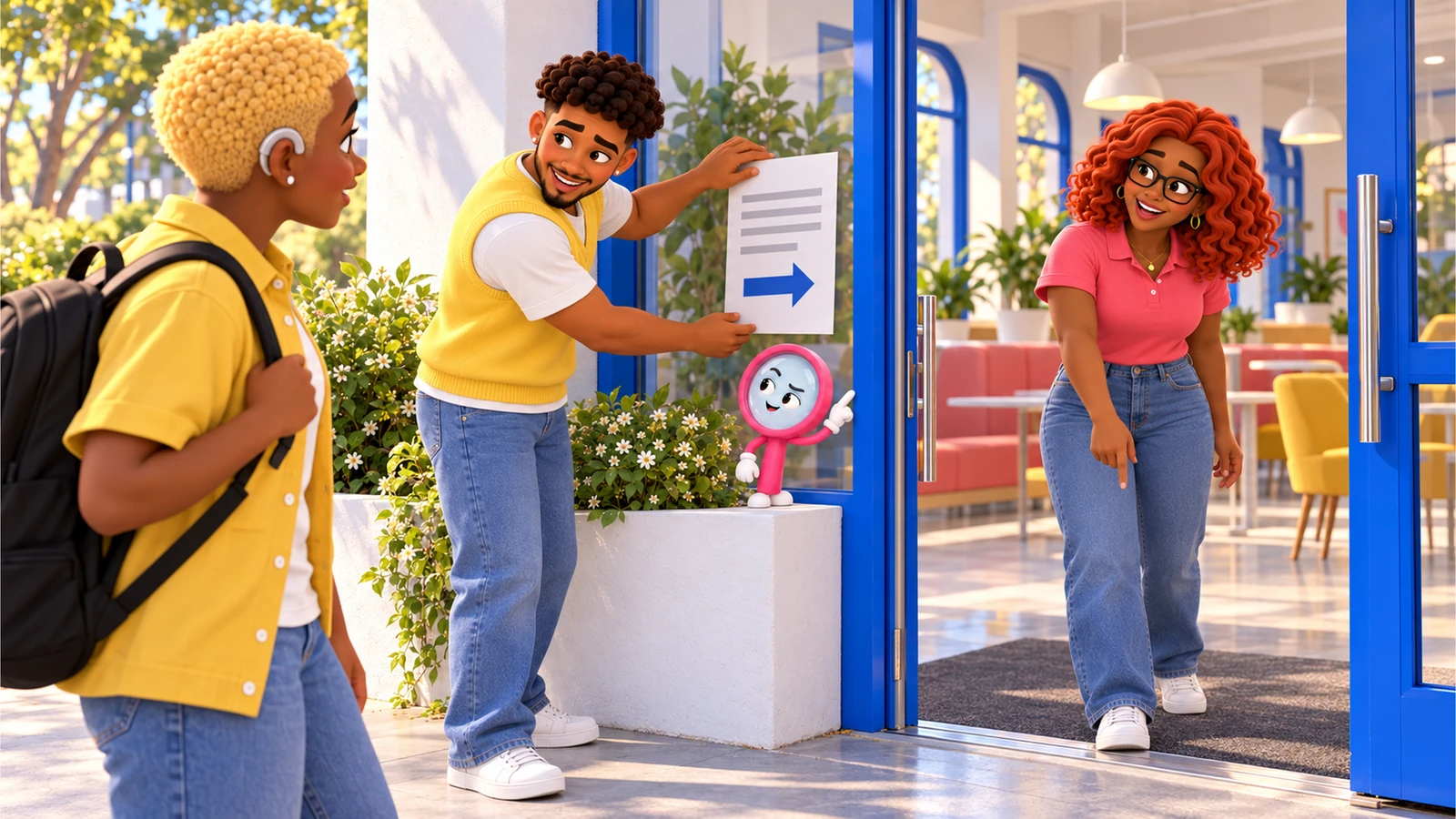
Jordy and Mateo inspect the step-free entrance.
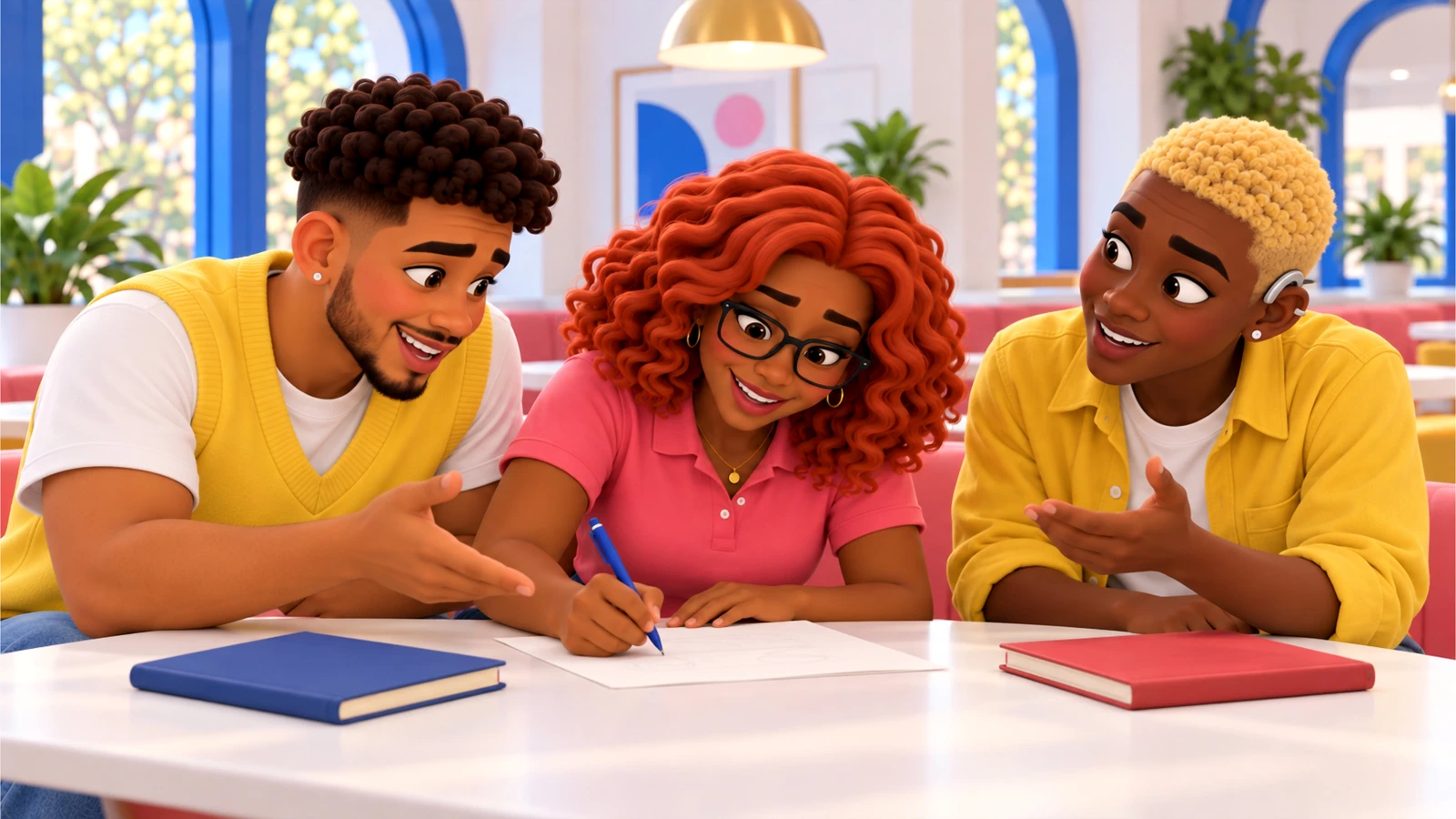
Gia, Mateo and Jordy work together on a correction at a table.
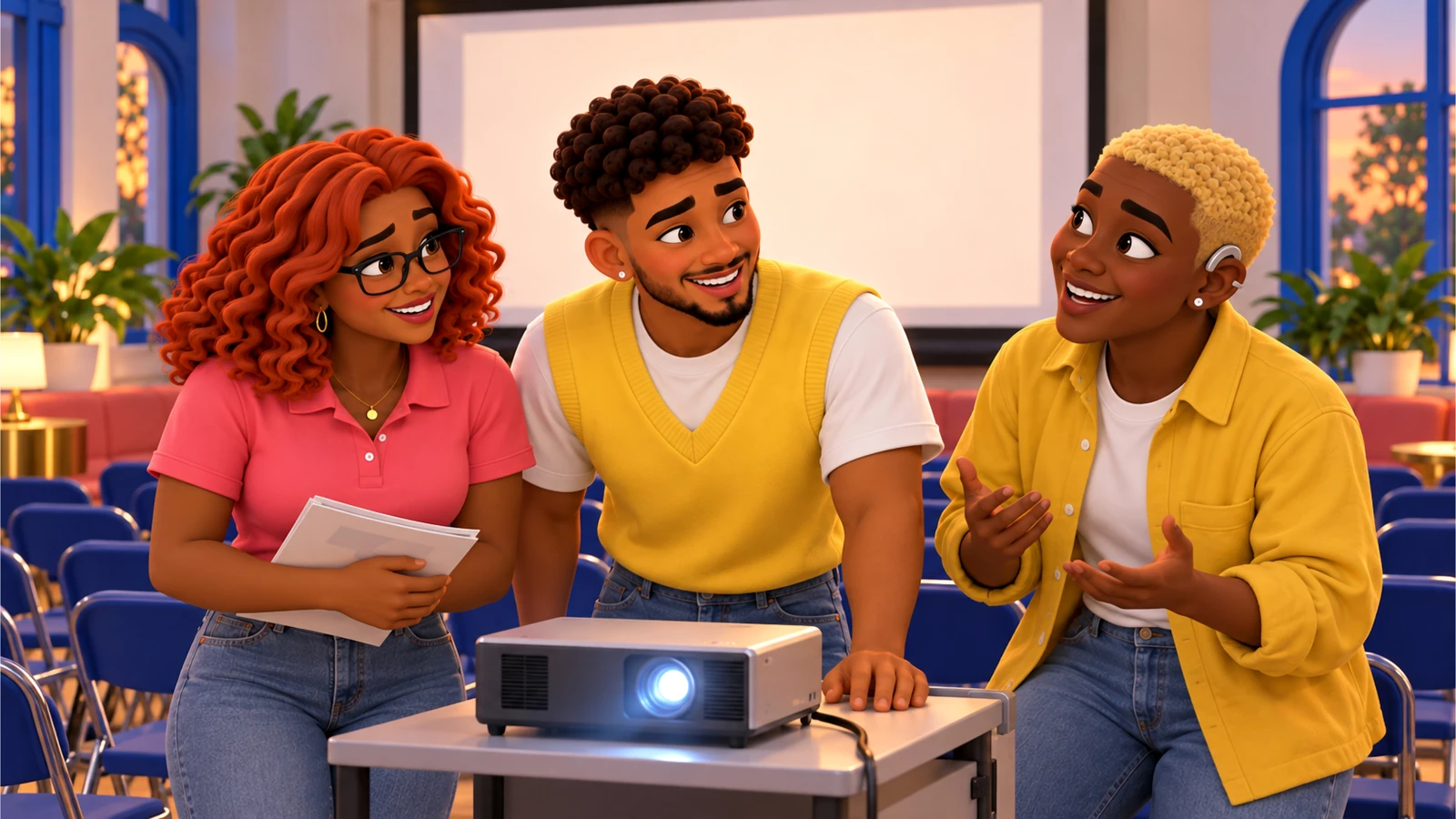
Gia, Mateo and Jordy laugh together beside the ready projector.
The tables are still half set up.
One clip. Two very different reasons to rush.
Hear what matters to each person. Choose a question. Notice what their answer adds, then check it against the case materials.
Mateo
22, setting up after class
“I have been moving these tables all afternoon. Please tell me we did not cancel this in a group chat.”
Ask Mateo
What have you actually confirmed?
Mateo “Only that we booked the room. I saw the clip after everyone else did. I want the event to happen, so yeah, I am tempted to read everything as good news.”
What to check nextCompare the booking with the full update. A reservation alone does not prove that nothing changed.
What could you tell people right now?
Mateo “That we are checking the entrance update and will post the answer here. I can give a time for the next update without pretending I already have it.”
What to check nextWrite what is known, what remains open and when the crew will check back.
Gia
21, leaving for a café shift soon
“My friend is already on the train. “We are figuring it out” does not tell her whether to keep coming.”
Ask Gia
What does your friend need first?
Gia “A confirmed time and a usable way in. And if that route does not work for her, somebody she can actually contact. Not a whole essay about our intentions.”
What to check nextCheck the arrival details with the room coordinator before sending a correction.
Would a reassuring caption solve it?
Gia “Only if it answers the real question. I almost wrote “all good.” But whose good? Somebody could still arrive at the wrong entrance.”
What to check nextAsk a reader unfamiliar with the room to explain where they would go.
Two people to hear from. Start with either one.
Put their perspectives together
Mateo needs the plan to survive. Gia needs people to make a useful travel decision. Your update has to deal with both, using the same checked facts.
A person’s account explains their perspective. It still needs checking where it makes a factual claim.
Optional movie connection: The Hunger Games
All the evidence needed for this case is in the story. This excerpt includes coercion and danger to young people. Educators and families should preview it before use.
Run that scene back.
The Hunger Games: I Volunteer as Tribute!
Watch for the moment the explanation changes.
Movieclips, The Hunger Games (2012), Open the source player
Read the scene instead
Notice the official presentation, then the families in the crowd. The public ritual and the personal stakes do not feel the same. Her decision to take Prim’s place changes the focus from the ceremony to a relationship. A face and an action make a cost visible. The crowd’s response matters alongside the official words. Our reading: control of the microphone is not control of every meaning in the room.
1Watch the ceremony
Notice the official presentation, then the families in the crowd. The public ritual and the personal stakes do not feel the same.
What would disappear if an edit showed only the stage?
2Watch Katniss move
Her decision to take Prim’s place changes the focus from the ceremony to a relationship. A face and an action make a cost visible.
What does the action establish? What would still be an interpretation?
3Watch the response
The crowd’s response matters alongside the official words. Our reading: control of the microphone is not control of every meaning in the room.
Write two accurate captions with different emphasis. What does each make a viewer notice?
Back on the block
The crew’s event is not the Hunger Games. The connection is narrower: selecting a few true moments can still leave someone with a misleading account. Now examine what the group-chat edit removed.
Make the short-form version
The cropped-clip check
First show the claim. Then reveal the sentence it left out. End with the entrance, time and source a visitor actually needs.
Make a version that keeps the meaning
A real clip can still leave the wrong impression. What changes when the full sentence appears?
Plan three shots: the claim, the evidence and a next move. Keep a text version and source note with your edit. You can make a private storyboard without a social account.
Build the script from your evidenceAn original motion graphic using this case’s fictional records. The same idea works as a Reel, TikTok-style explainer or classroom slide.
The receipts are on the table.
Open each item. Ask what it establishes and what it leaves out.
0 of 3 materials opened
The crew’s documents are story props. Real-world sources are below.Group-chat screenshotThe postOpen this material
“They’re removing access tonight. Screening cancelled?” The attached clip starts with “we are removing access” and ends before the next sentence.
It shows a claim being shared. It does not confirm the cancellation.
Coordinator’s meeting transcriptThe full updateOpen this material
“The side-door reader is broken. We are removing access through that reader tonight. Existing room bookings remain in place. Use the staffed front entrance while we repair it.”
It explains the access change. It does not tell us whether every visitor can use the temporary entrance.
Confirmation sent to MateoThe booking emailOpen this material
Friday, 6–9 p.m. Screening confirmed. Front entrance: step-free. Staff member at the desk from 5:30 p.m. Contact the coordinator for arrival support.
It supports the event details. The crew should still check and communicate any access needs.
A real clip can still leave the wrong impression.
“It’s a real video” answers one question: whether that footage is authentic. It does not tell you whether the caption is accurate, whether the clip is complete or whether the situation has changed. Mateo wants the event to happen. Gia wants to keep people from wasting a trip. Both have a reason to rush. Neither reason settles the facts.
Entman’s framing concept helps you ask what a message selects and emphasizes. The crop makes “removing access” stand out and hides which entrance the coordinator meant. You do not have to prove someone intended to deceive people to explain what the edit leaves out. That distinction keeps a correction focused on something you can support.
Now think like a communicator. The people already traveling need time, place and arrival details. The people sharing the clip need the original and a clear correction. A visitor who cannot use the temporary route needs a useful contact. One catchy sentence may not answer all three needs.
- Framing
- Choosing which parts of a situation a message brings forward.
- Verification
- Checking a specific claim against evidence that could support or challenge it.
- Holding statement
- A brief update that says what is known, what is being checked and when people will hear more.
“El video es real” responde una pregunta: si las imágenes son auténticas. No confirma que el texto que las acompaña sea correcto, que el fragmento esté completo o que la situación siga igual. Mateo quiere que el evento se celebre. Gia quiere evitar que la gente haga un viaje en vano. Los dos tienen motivos para apresurarse, pero eso no resuelve los hechos.
El concepto de encuadre de Entman nos ayuda a examinar qué selecciona y destaca un mensaje. El recorte resalta “retirar el acceso”, pero omite a cuál entrada se refiere. No tienes que demostrar que alguien quiso engañar para explicar qué información falta. Así, la corrección se concentra en lo que puedes respaldar.
Ahora piensa en quienes recibirán la información. Quien ya va de camino necesita la hora, el lugar y las instrucciones de entrada. Quien comparte el video necesita la fuente y la corrección. Quien no puede usar la entrada temporal necesita un contacto útil. Una frase llamativa quizás no resuelva las tres necesidades.
- Encuadre
- La selección de los aspectos de una situación que un mensaje destaca.
- Verificación
- Comprobar una afirmación con información que pueda respaldarla o cuestionarla.
- Comunicado provisional
- Un mensaje breve que explica qué se sabe, qué se está verificando y cuándo habrá más información.
What would you say?
Try a response. See who it reaches and what it leaves unresolved. You can change your mind.
What do you send while checking?
You have the full update. Which correction holds up?
Show the part that got cut.
The screenshot is real. The conclusion still needs checking.
- Claim
Write exactly what the post asks people to believe.
- Evidence
Find the words about the side-door reader. Compare them with the booking email.
- Reasoning
Explain why an entrance change does not establish an event cancellation.
- Limit
What do we still need to check about the temporary entrance?
Where this method comes from
Source verification + claim, evidence, reasoning. This classroom version draws on reporting and argument.
Digital Inquiry GroupToulmin argument, Purdue OWLWrite a group-chat update someone can use before leaving home.
Confirm the booking, explain the entrance change, link the original and say where to ask about access.
See one possible response
Tonight’s screening is still on, 6–9 p.m. The clip was about the broken side-door reader. Use the staffed, step-free front entrance. The booking email and full update confirm this. Need help arriving? Contact the coordinator before you travel.
Your wording can be different. The evidence still needs to hold up.
Make it your way
Write a note, record a voice memo, storyboard a short video or sketch the response on paper. Adobe Express, Pages, Keynote and iMovie are optional tools. You do not need a paid app.
Open the making studioWhere do we go from here?
Your choices stay in the conversation. There is room to revise.
Before the crew moves on.
Try both decisions to see what your response changes and what still needs attention.
One thing to carry forward
Put the booking, entrance and support contact in the same message. Then reach the people who saw the original claim.
Turn a repost into a useful update.
- Write the claim in one sentence. Put the original next to it and name the missing context.
- Make two versions of your update: a group-chat message and a short public caption. Keep the facts the same; change the useful detail for each audience.
- Ask a friend to explain where they would go and what they would do next. Revise whatever confused them.
How you might tell a friend
The clip was real, but the caption made the change sound bigger than it was. I checked the full update and the booking. The event is on; the entrance is changing.
Una forma de decirlo en español
El video era real, pero el texto hacía parecer que el cambio era mayor. Revisé el mensaje completo y la reservación. El evento sigue en pie; lo que cambia es la entrada.
Use your own voice. Keep the meaning, the evidence and the limits.
Want to go deeper?
The same case can become a reporting exercise, a policy brief or a communications assignment. Pick a question worth spending more time on.
Public relations
Ask who has already changed plans and how to reach them.
A way into Jeong-Nam Kim and James E. Grunig’s Situational theory of problem solving. Explore the foundation
Communication strategy
Compare two truthful captions: what does each emphasize?
A way into Robert M. Entman’s Framing. Explore the foundation
Law and legal concepts
A booking email and a meeting update have different purposes. Neither proves a legal violation.
A way into Cornell Legal Information Institute’s Authority and jurisdiction. Explore the foundation
Policy and policy studies
What problem does cancelling solve? What new problem could it create?
A way into Carol Bacchi’s What’s the problem represented to be?. Explore the foundation
Education and learning
Record your first assumption, then the evidence that changed it.
A way into John Dewey’s Reflective inquiry. Explore the foundation
Journalism and reporting
Trace the clip to its original and keep the surrounding sentence.
A way into Society of Professional Journalists’s Verification, context and accountability. Explore the foundation
Creativity
Make a 20-second correction with readable captions and a source link.
A way into Design Council’s The Double Diamond. Explore the foundation
Keep the source with the story.
Entman, FramingThe research behind our question about selection and emphasis.SPJ, Code of EthicsProfessional guidance on verification, context and corrections.About this analysis
The film reading is our interpretation, with the excerpt embedded for you to examine. The Common Room, its documents and the crew’s outcomes are fictional learning scenarios. Sources support the real-world concepts; they do not certify the story or your response. This is general education, not individual legal advice.