Saturday, the study table
Same test. More questions.
Dec can explain the circuit out loud. On the worksheet, he gets stuck. “Try harder” is not much of a plan.
Start the storyOkay, here’s what happened.
Anika, 16, and Dec, 17, are studying before theatre rehearsal. They are building a light circuit for a school set. Dec explains the route out loud, then loses track of the crowded written instructions. Anika thinks they should just run the same practice test again.
Mari, 19, is on her bookshop break. She recognizes the frustration, but she does not assume Dec’s difficulty is the same as hers. He wants help with this task, not a diagnosis from the group chat. Pauta opens the assignment so you can work out what it actually measures.
Inside the story.
A little more context before you decide.
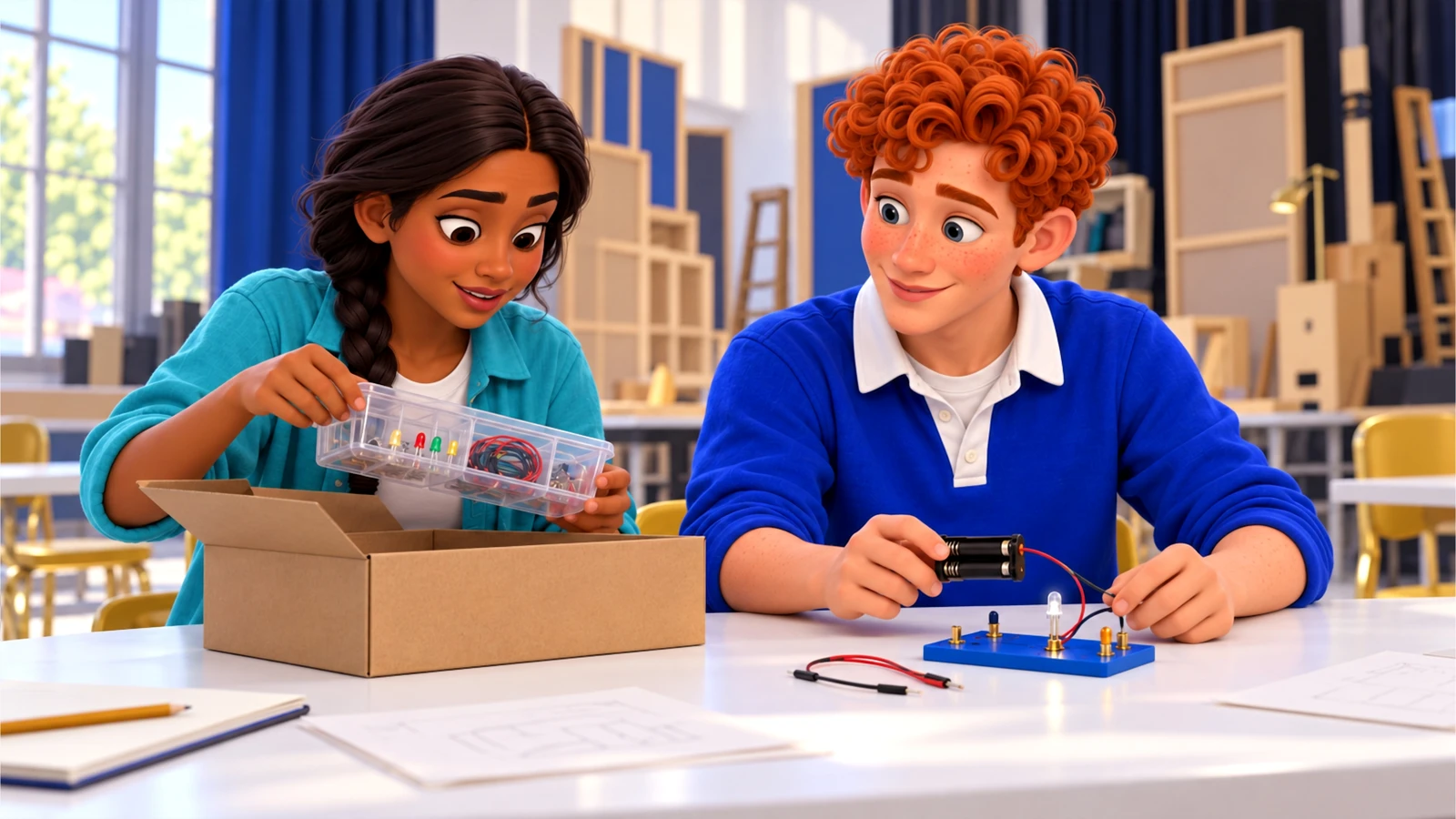
Anika and Dec unpack a small low-voltage LED kit at a study table.
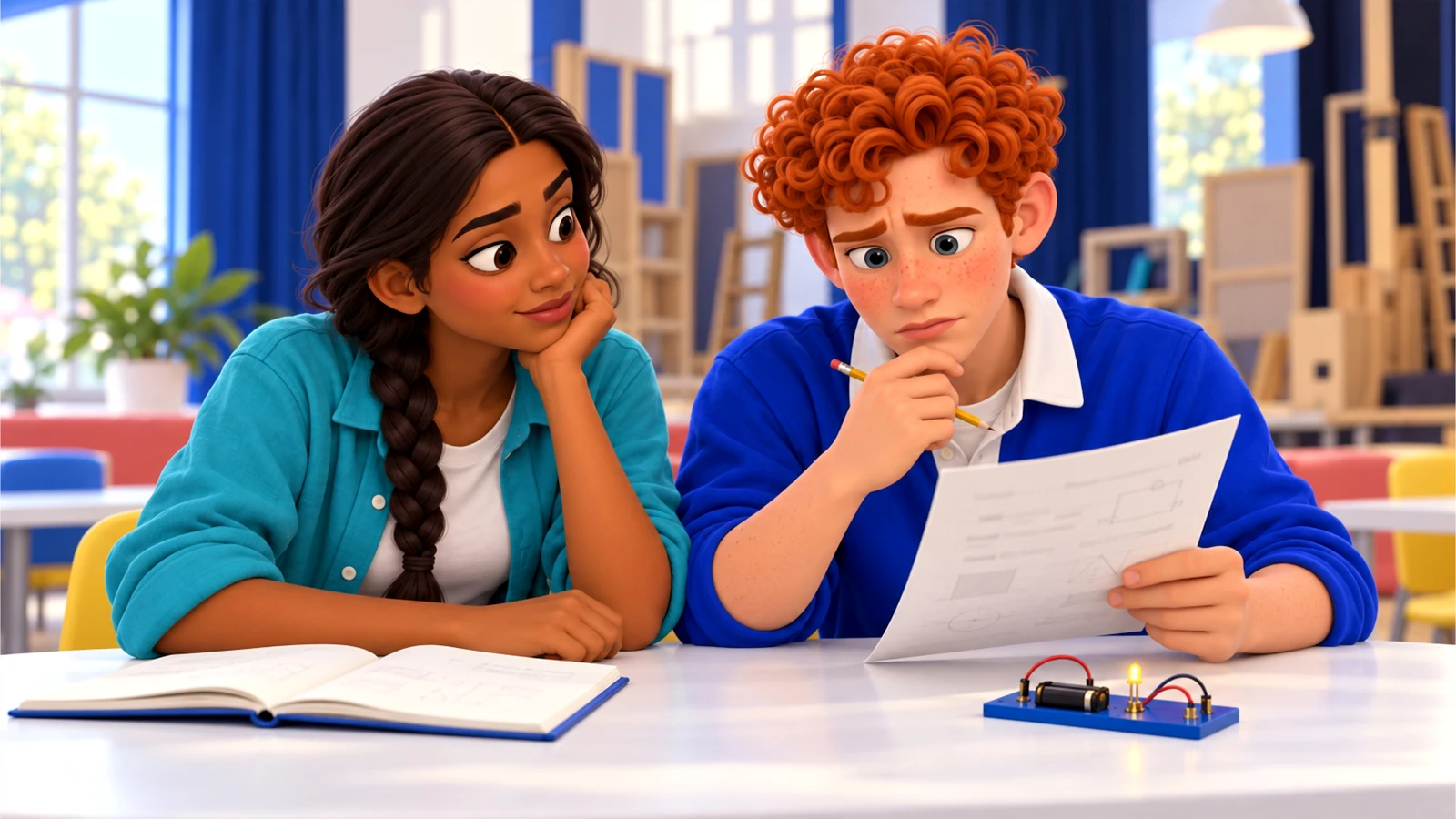
Dec studies a dense worksheet while Anika listens.
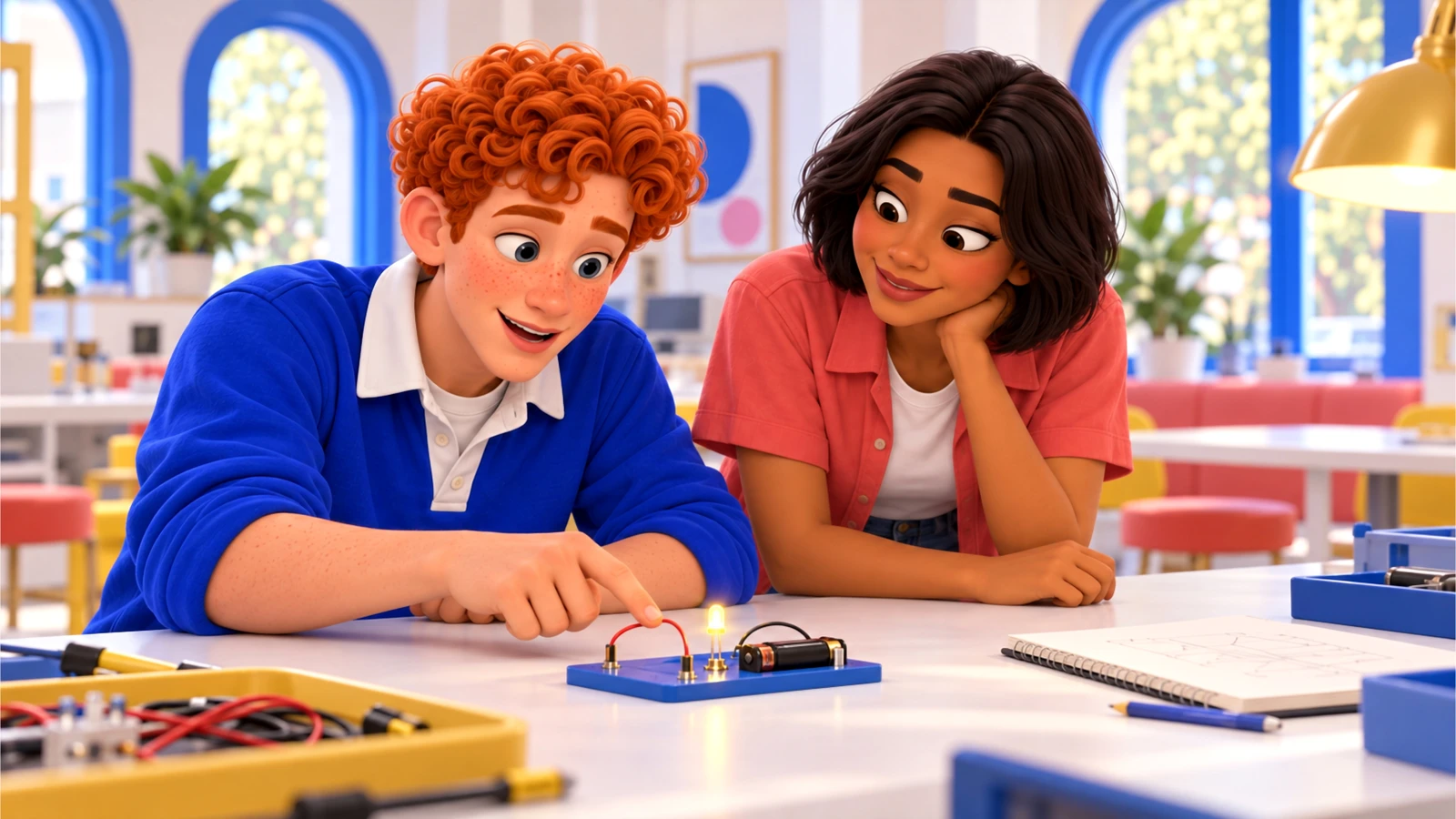
Dec calmly explains a battery-powered circuit to Mari.
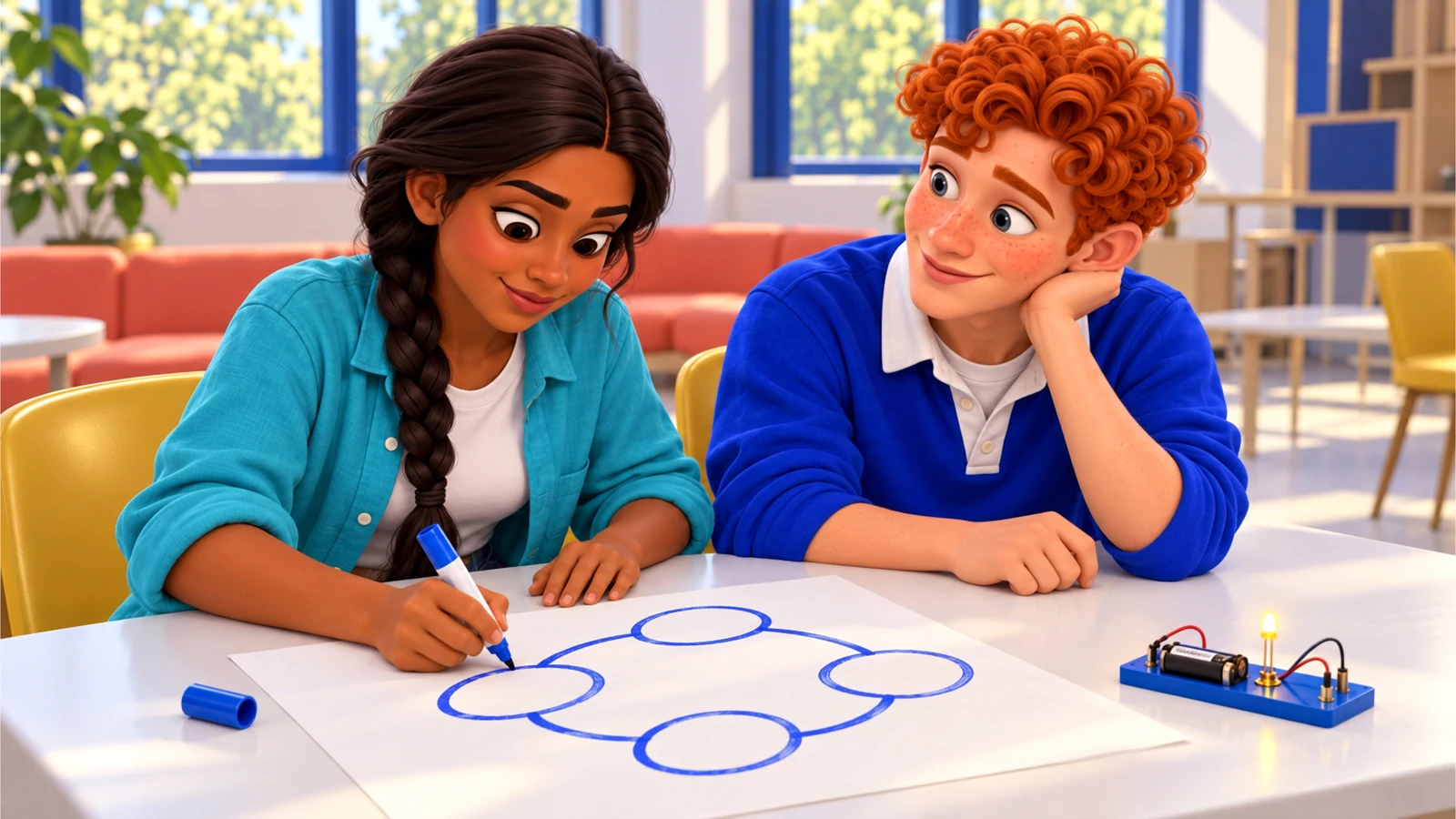
Anika draws a larger circuit sketch while Dec watches.
Mari picks a workbook from a low shelf with Dec beside her.
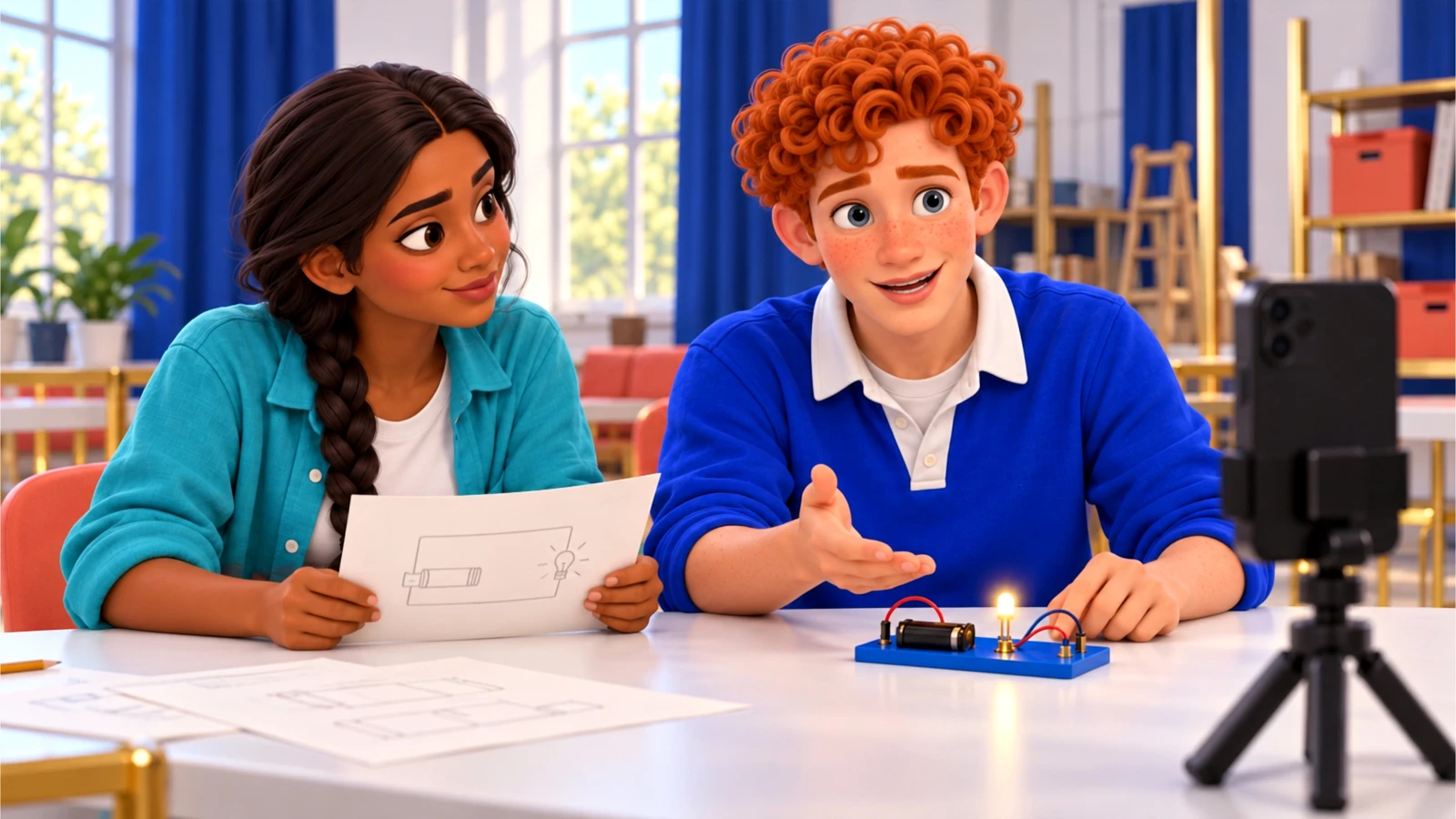
Anika and Dec record a spoken explanation with a phone on a small tripod.
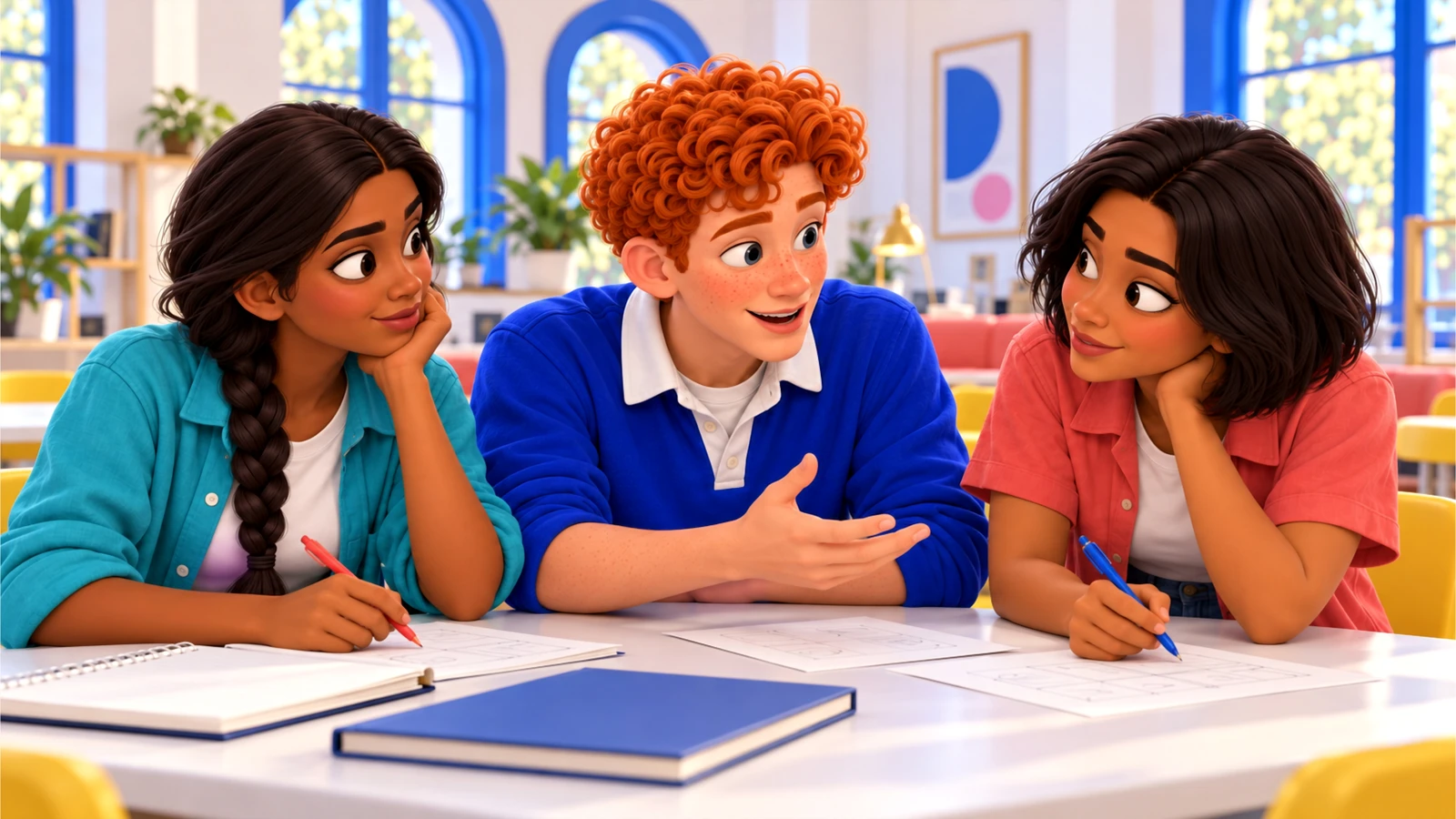
Anika, Dec and Mari discuss a worksheet together.
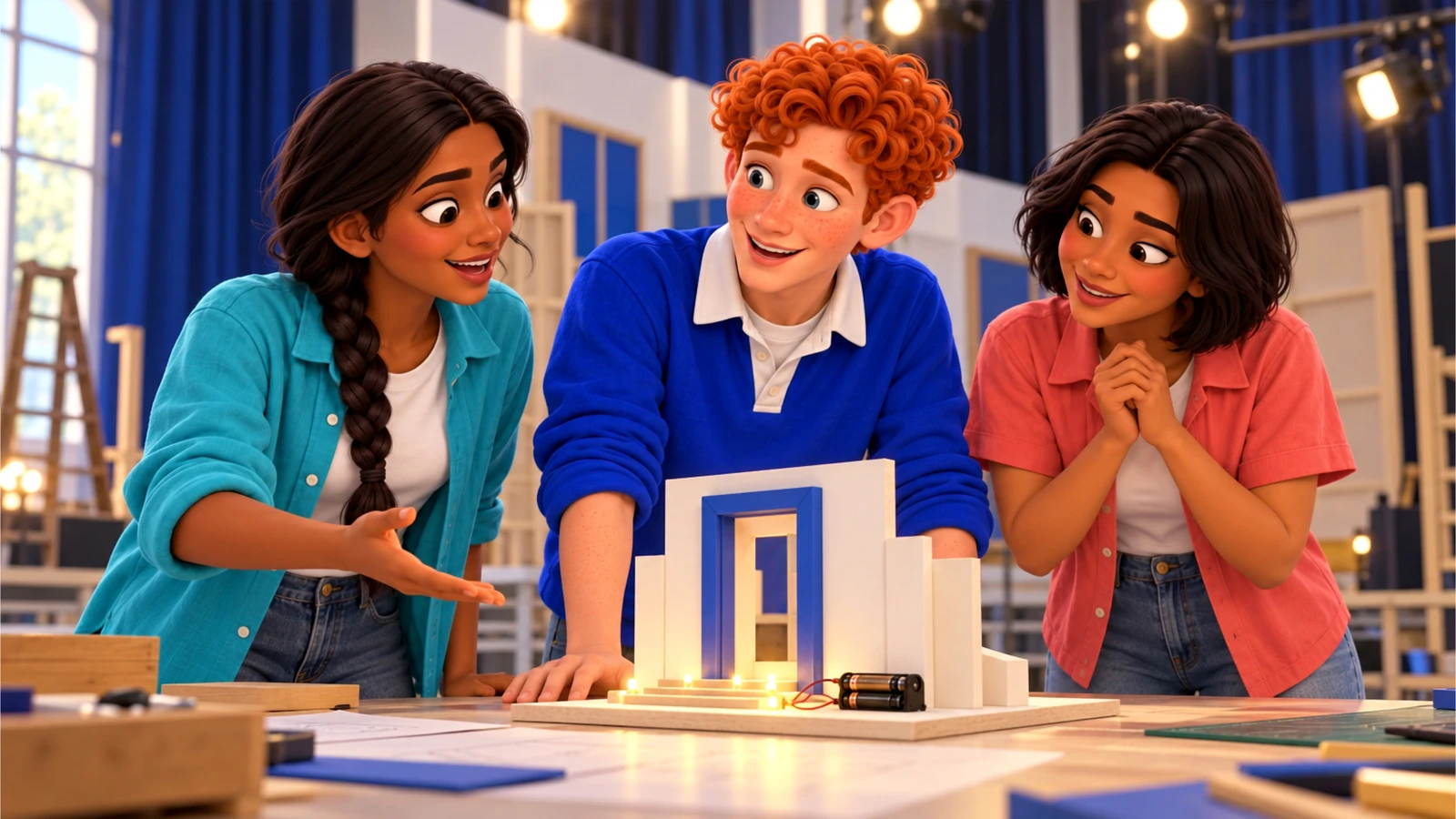
Anika, Dec and Mari laugh while checking their completed LED theatre set piece.
Twenty minutes before theatre rehearsal.
Ask about the task before you explain the person.
Hear what matters to each person. Choose a question. Notice what their answer adds, then check it against the case materials.
Dec
17, theatre crew and a circuits worksheet
“I can show you where the current goes. Then I get halfway through the written question and lose my place.”
Ask Dec
Which part is tripping you up?
Dec “Keeping the long instructions in order. When Anika drew the circuit, I could explain my answer. That does not mean every written question is impossible for me.”
What to check nextCompare the original task and the diagram while keeping the circuit question the same.
Want us to ask for help with you?
Dec “Maybe. Let me read the message first. Say what happened, not that you have figured out what is wrong with me.”
What to check nextLet Dec decide what to share and who should receive it.
Anika
16, knows the circuit but missed the barrier
“I kept saying “it is right there.” That was not helping. I was looking at the answer, not how the question was written.”
Ask Anika
What would you try differently?
Anika “One clear diagram and one instruction at a time. Then Dec explains why it works. I do not want to do the thinking for him.”
What to check nextCheck whether the new format reveals the same knowledge instead of supplying the answer.
Can one study session settle this?
Anika “No. We can describe what we noticed and ask the teacher what to try next. We cannot turn our group chat into an evaluation team.”
What to check nextUse the school’s actual support process if Dec wants formal help.
Two people to hear from. Start with either one.
Put their perspectives together
The useful change is more precise observation, not a label for Dec. A support request can start with what helped him show his thinking.
A person’s account explains their perspective. It still needs checking where it makes a factual claim.
Optional movie connection: SpongeBob SquarePants
All the evidence needed for this case is in the story. Preview the clip before classroom use, or use the text explanation.
Run that scene back.
SpongeBob Fails His Boating Test w/ Mrs. Puff
Watch for the moment the explanation changes.
SpongeBob SquarePants Official, Open the source player
Read the scene instead
Mrs. Puff is assessing driving. Look at what SpongeBob is asked to do and what goes wrong during the attempt. The repeated failure makes a joke. Our reading asks what the joke skips: instruction, conditions, practice and the student’s own account. A cartoon performance cannot establish a disability or eligibility for support. Keep the observation separate from the explanation.
1Watch the task
Mrs. Puff is assessing driving. Look at what SpongeBob is asked to do and what goes wrong during the attempt.
Which skill is being tested? What else could affect the result?
2Watch the reaction
The repeated failure makes a joke. Our reading asks what the joke skips: instruction, conditions, practice and the student’s own account.
What question would you ask before recommending another identical attempt?
3Pause before the label
A cartoon performance cannot establish a disability or eligibility for support. Keep the observation separate from the explanation.
Complete this: “I observed ___. I still need to know ___.”
Back on the block
Back at the table, the goal is to explain a circuit, not to win an argument about Dec. Use the task, his explanation and the instructions together. A new format is useful only if it still measures the intended skill.
Make the short-form version
Show the process
Put the dense prompt beside Dec’s explanation. Let the viewer see the mismatch before suggesting a next step.
Make a version that keeps the meaning
Keep the circuit goal in both versions. Do not turn the edit into a diagnosis.
Plan three shots: the claim, the evidence and a next move. Keep a text version and source note with your edit. You can make a private storyboard without a social account.
Build the script from your evidenceAn original motion graphic using this case’s fictional records. The same idea works as a Reel, TikTok-style explainer or classroom slide.
The receipts are on the table.
Open each item. Ask what it establishes and what it leaves out.
0 of 3 materials opened
The crew’s documents are story props. Real-world sources are below.Practice briefThe assignmentOpen this material
Goal: explain how a simple circuit works. The practice sheet has six dense paragraphs and one small diagram. Speed is not listed as a learning goal.
It gives you a reason to question the format, not permission to change a teacher’s assessment rules on your own.
Study-table notesDec’s explanationOpen this material
Dec correctly traces the circuit aloud. On the written sheet, he skips a line and answers a different question. He says the layout is hard to follow.
A second observation complicates the first score. It does not establish a diagnosis.
Federal source, in plain languageThe evaluation ruleOpen this material
Under IDEA evaluation procedures, a public agency must gather information with varied tools and strategies. One measure cannot be the sole basis for disability eligibility or an appropriate educational program.
This concerns IDEA evaluations. It does not mean every classroom quiz has to be replaced or every struggling student qualifies.
A result is information. It is not the whole explanation.
Dec’s written answer and his spoken explanation give the group different information. The next useful question is not “Who is smart?” It is “What was this task meant to measure, and what got in the way?” Keeping the goal clear lets you investigate the format without assuming that easier work is the answer.
CAST’s Universal Design for Learning guidelines encourage designing for different ways people engage, understand and express learning. Here, a clearer diagram is a practice option to test. It is not a diagnosis, a promise of eligibility or permission to change an official assessment by yourself. Ask Dec what helped and check whether he can still explain the circuit.
The IDEA source makes a narrower legal point: a public agency cannot use one measure as the sole basis for disability eligibility or an appropriate educational program. A study session is not that evaluation. If Dec wants formal support, the next conversation is with the relevant school contact, using the actual process. College disability services operate through different procedures.
- Learning goal
- The knowledge or skill the task is supposed to reveal.
- Barrier
- A feature of the task or setting that makes participation or demonstration harder.
- Eligibility
- Meeting the requirements for a particular service or program.
La respuesta escrita de Dec y su explicación oral aportan información distinta. La pregunta útil no es “¿Quién es inteligente?”, sino “¿Qué se supone que mida esta tarea y qué dificultó demostrarlo?”. Tener clara la meta permite examinar el formato sin asumir que la solución es bajar la dificultad.
Las pautas de Diseño Universal para el Aprendizaje de CAST proponen considerar distintas formas de participar, comprender y expresar lo aprendido. Aquí, un diagrama más claro es una opción para practicar y observar qué cambia. No es un diagnóstico, una garantía de elegibilidad ni permiso para modificar por cuenta propia una evaluación oficial. Pregúntale a Dec qué le ayudó y comprueba si puede explicar el circuito.
La fuente de IDEA establece algo más específico: una agencia pública no puede basar únicamente en una medida la elegibilidad por discapacidad ni un programa educativo apropiado. Una sesión de estudio no es esa evaluación. Si Dec quiere solicitar apoyo formal, debe consultar el proceso de su escuela. Los servicios de discapacidad universitarios siguen procedimientos distintos.
- Meta de aprendizaje
- El conocimiento o la destreza que la tarea busca demostrar.
- Barrera
- Un aspecto de la tarea o del entorno que dificulta participar o demostrar lo aprendido.
- Elegibilidad
- Cumplir los requisitos de un servicio o programa específico.
What would you say?
Try a response. See who it reaches and what it leaves unresolved. You can change your mind.
What do you try at the study table?
What should a message to the teacher say?
Same goal. Better evidence.
A low score is information. It is not the whole explanation.
- Issue
Are we checking circuit understanding, reading speed, or both?
- Rule
Separate the task goal from IDEA rules for a formal evaluation.
- Application
Compare Dec’s spoken explanation with his written attempt. Name what the mismatch leaves unresolved.
- Conclusion
Propose a demonstration of the same goal and one question to ask next.
Where this method comes from
Issue, rule, application, conclusion. This classroom version draws on legal reasoning and learning design.
IRAC, American Bar AssociationIDEA evaluation rulesMake a short support conversation starter, with Dec’s permission.
Name the learning goal, two observations, one unknown and a question for the teacher. Keep private records out.
See one possible response
We were practicing how circuits work. I could trace the route aloud, but lost my place in the written layout. Could we discuss how the task measures that goal and what support options are available? I can bring both examples.
Your wording can be different. The evidence still needs to hold up.
Make it your way
Write a note, record a voice memo, storyboard a short video or sketch the response on paper. Adobe Express, Pages, Keynote and iMovie are optional tools. You do not need a paid app.
Open the making studioWhere do we go from here?
Your choices stay in the conversation. There is room to revise.
Before the crew moves on.
Try both decisions to see what your response changes and what still needs attention.
One thing to carry forward
Describe what he could explain and where he got stuck. Ask what the task measures, and let him help shape the request.
Make the support request specific.
- Describe the task and two observations. “Lost his place in the paragraphs” tells the teacher more than “bad at science.”
- Ask the learner what they want to try. Keep the same learning goal and record what changes with the new practice format.
- Draft a question for the teacher or support office. Let the person whose experience it describes review it and decide whether to share.
How you might tell a friend
One score doesn’t tell us why this was hard. Let’s compare what the task asked for, what you could explain and what got in the way. Then we can ask about support.
Una forma de decirlo en español
Una nota no explica por qué se hizo difícil. Comparemos lo que pedía la tarea, lo que pudiste explicar y lo que se interpuso. Con eso podemos preguntar por opciones de apoyo.
Use your own voice. Keep the meaning, the evidence and the limits.
Want to go deeper?
The same case can become a reporting exercise, a policy brief or a communications assignment. Pick a question worth spending more time on.
Public relations
Ask the student what they want help communicating.
A way into Jeong-Nam Kim and James E. Grunig’s Situational theory of problem solving. Explore the foundation
Communication strategy
Replace “bad at this” with a precise description of the task.
A way into Robert M. Entman’s Framing. Explore the foundation
Law and legal concepts
Separate a classroom result, a formal evaluation and an eligibility decision.
A way into Cornell Legal Information Institute’s Authority and jurisdiction. Explore the foundation
Policy and policy studies
What does “repeat the same test” assume the problem is?
A way into Carol Bacchi’s What’s the problem represented to be?. Explore the foundation
Education and learning
Compare the two observations before revising your explanation.
A way into John Dewey’s Reflective inquiry. Explore the foundation
Journalism and reporting
Attribute the legal rule to its federal source, not to a cartoon.
A way into Society of Professional Journalists’s Verification, context and accountability. Explore the foundation
Creativity
Prototype two practice formats that keep the same learning goal.
A way into Design Council’s The Double Diamond. Explore the foundation
Keep the source with the story.
IDEA, 34 CFR § 300.304Federal requirements for special-education evaluation procedures.CAST, UDL Guidelines 3.0Design guidance for reducing barriers while keeping learning goals clear.About this analysis
The film reading is our interpretation, with the excerpt embedded for you to examine. The Common Room, its documents and the crew’s outcomes are fictional learning scenarios. Sources support the real-world concepts; they do not certify the story or your response. This is general education, not individual legal advice.