Sunday, the edit desk
The apology is not the repair.
The crew posts a recap. The caption blames people who were never asked what happened. Now the comments are right to push back.
Start the storyOkay, here’s what happened.
Caio, 24, has edited a short recap of Friday’s screening. Gia writes a caption saying younger visitors caused the slow start. It sounds plausible because a few arrived late. Then Jordy checks the event log: the projector was down for twenty minutes.
Anika messages the group: “We were helping you set up. Why are we the problem in this post?” Gia wants to take responsibility, but her first draft is mostly about how upset she feels. You are helping make the correction useful to the people it affected.
Inside the story.
A little more context before you decide.
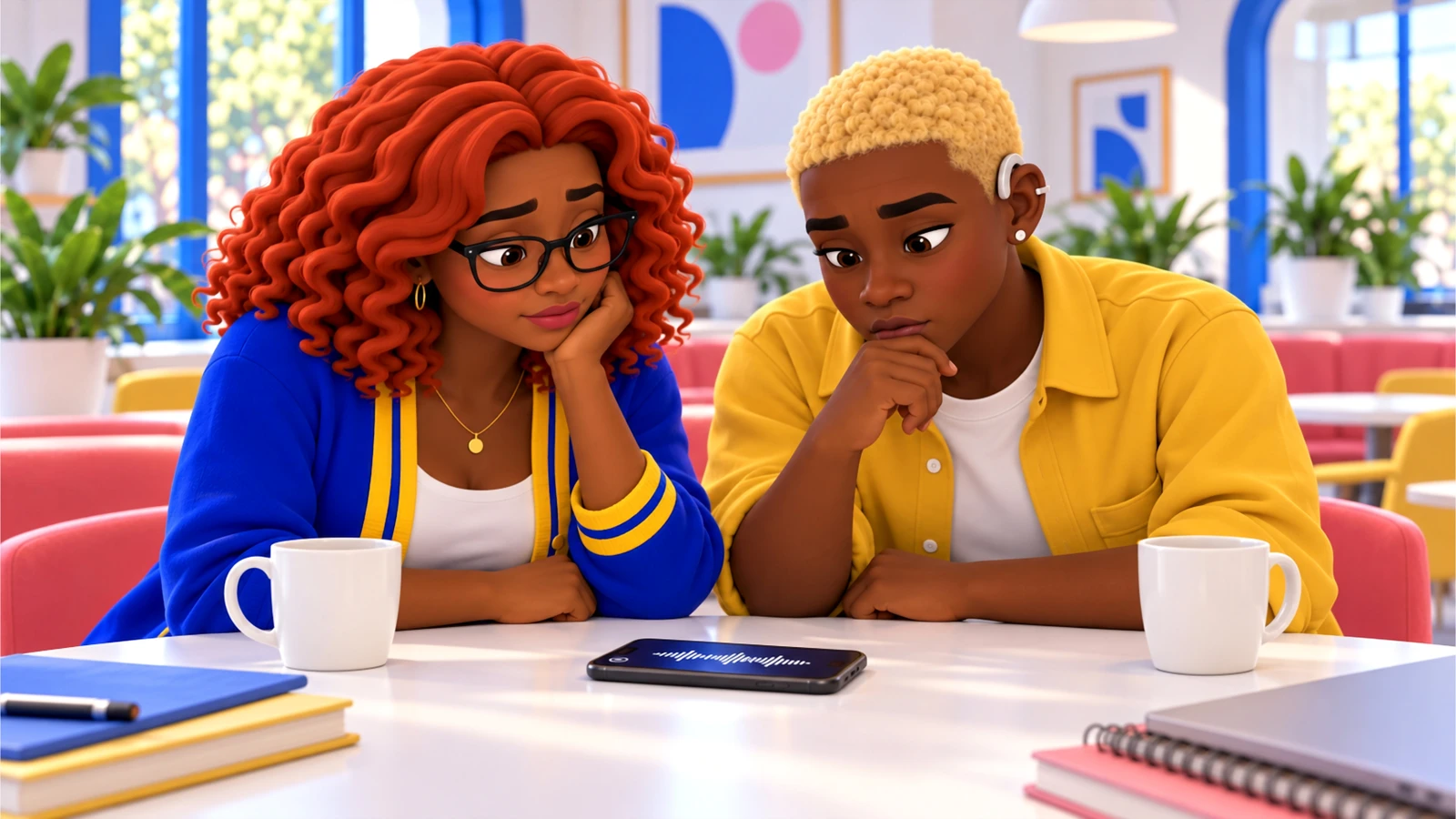
Gia and Jordy listen thoughtfully to a voice note at a white café table.
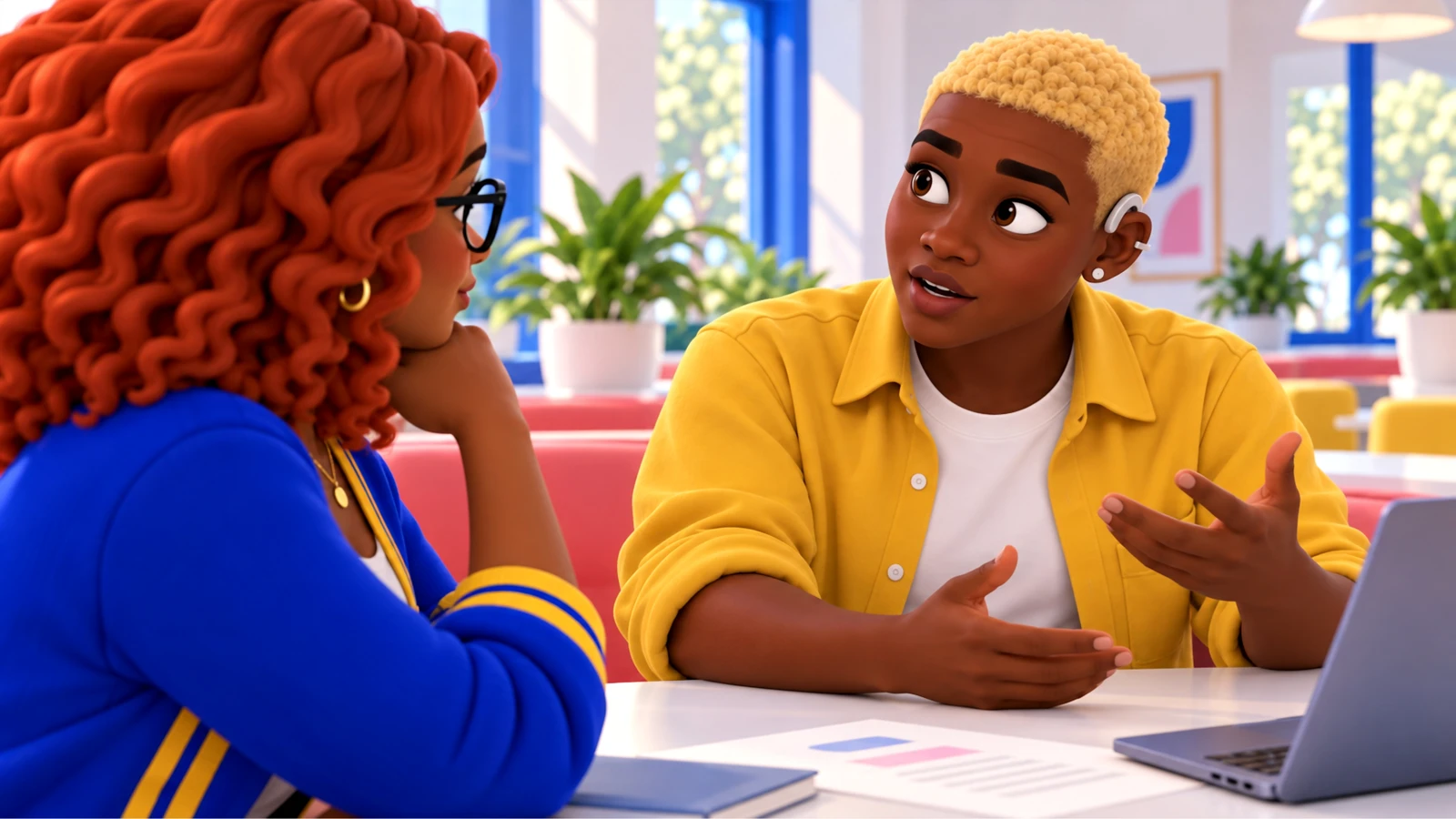
Jordy explains the caption's impact while Gia listens.
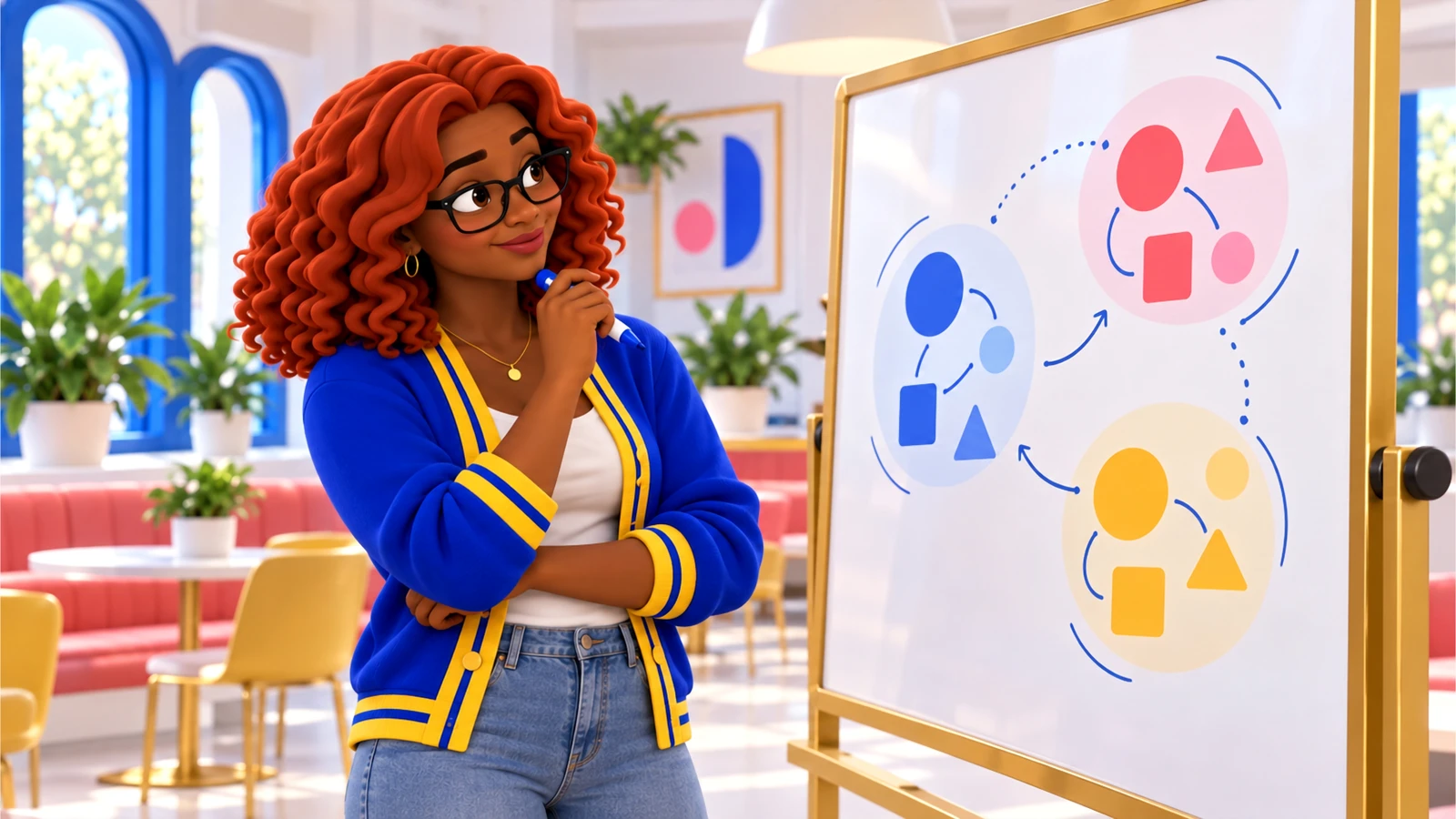
Gia maps different accounts using abstract shapes on a whiteboard.
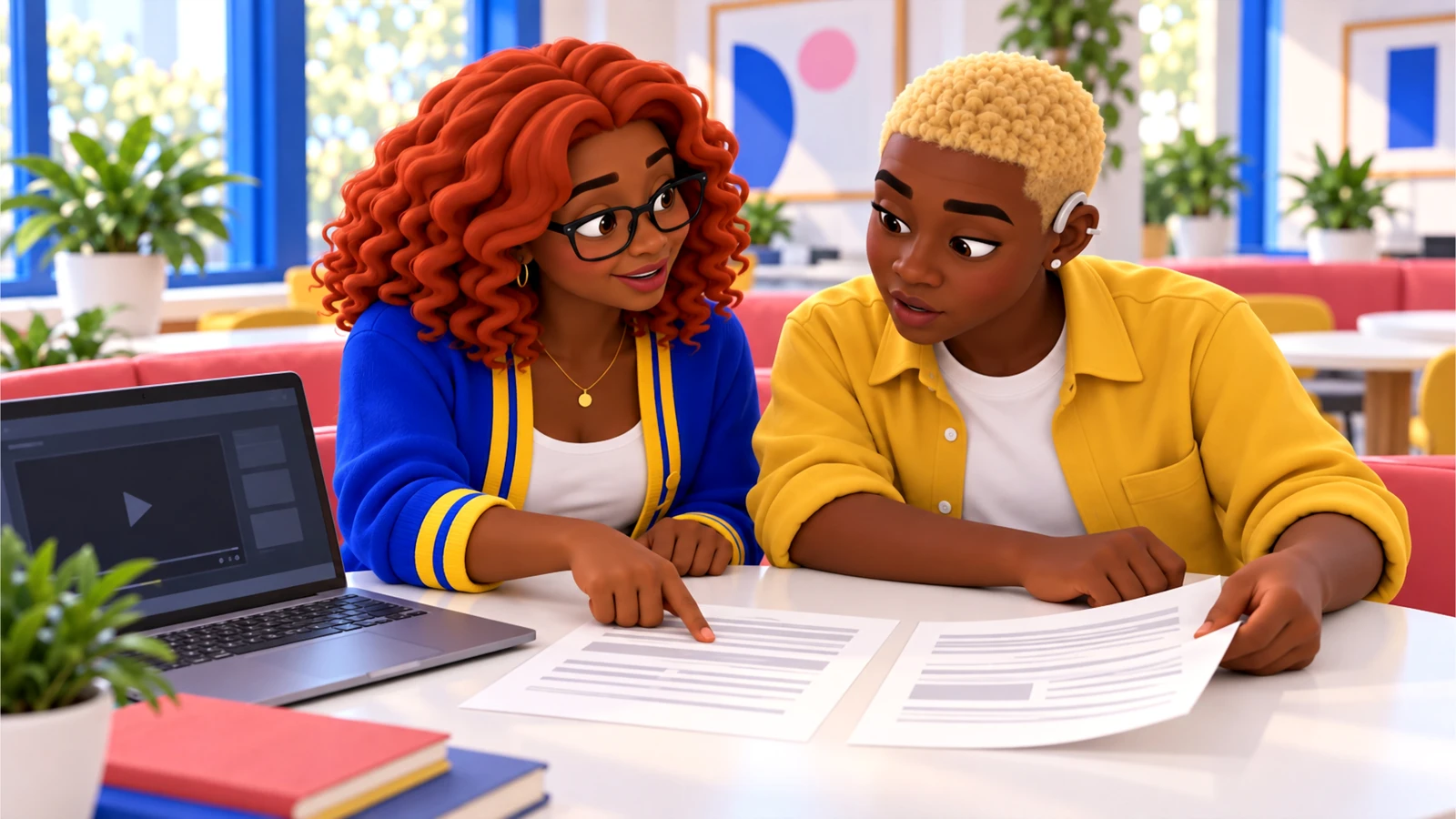
Gia and Jordy compare two draft statements beside a source clip.
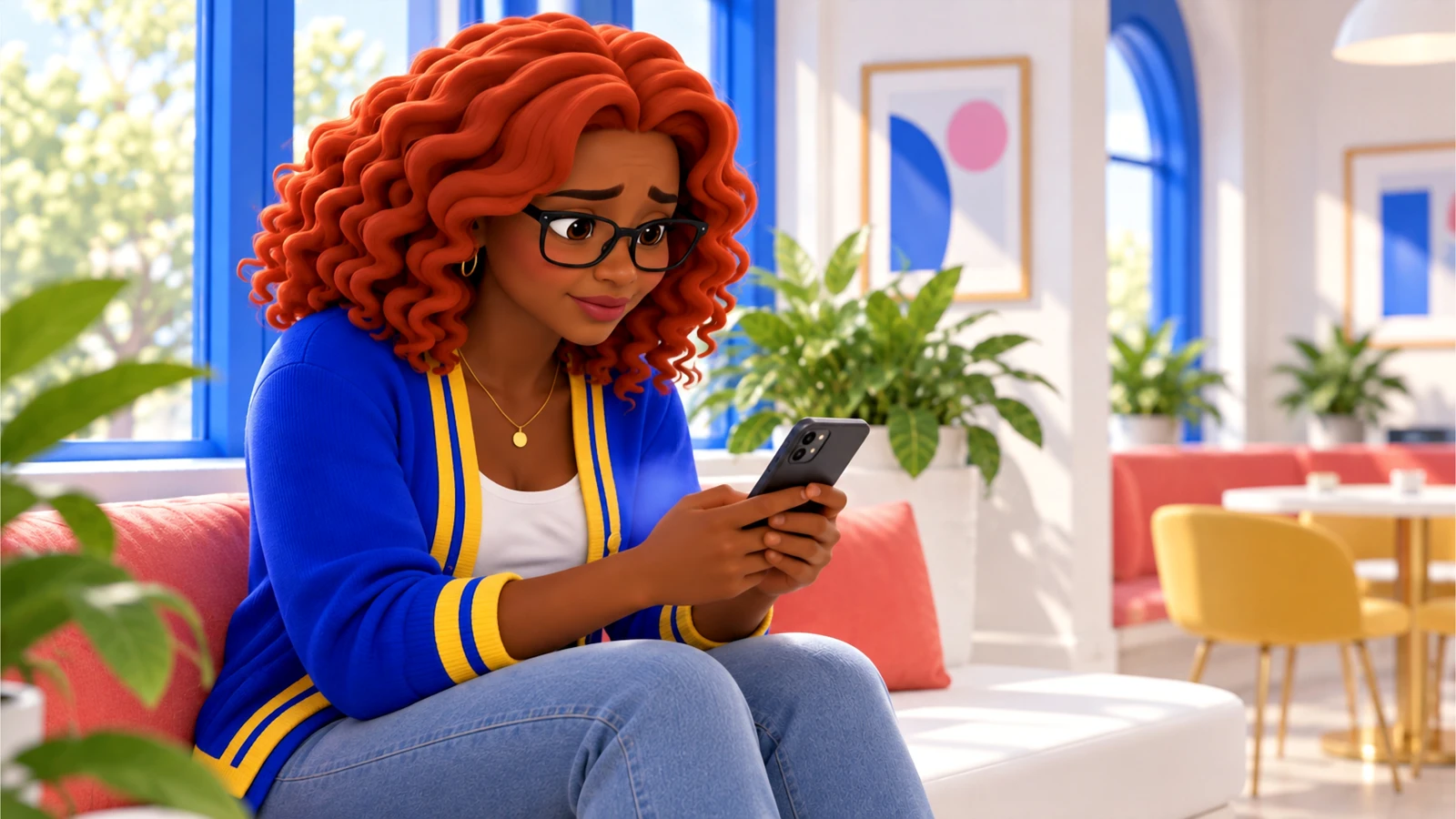
Gia reviews a draft on her phone by the cobalt window.
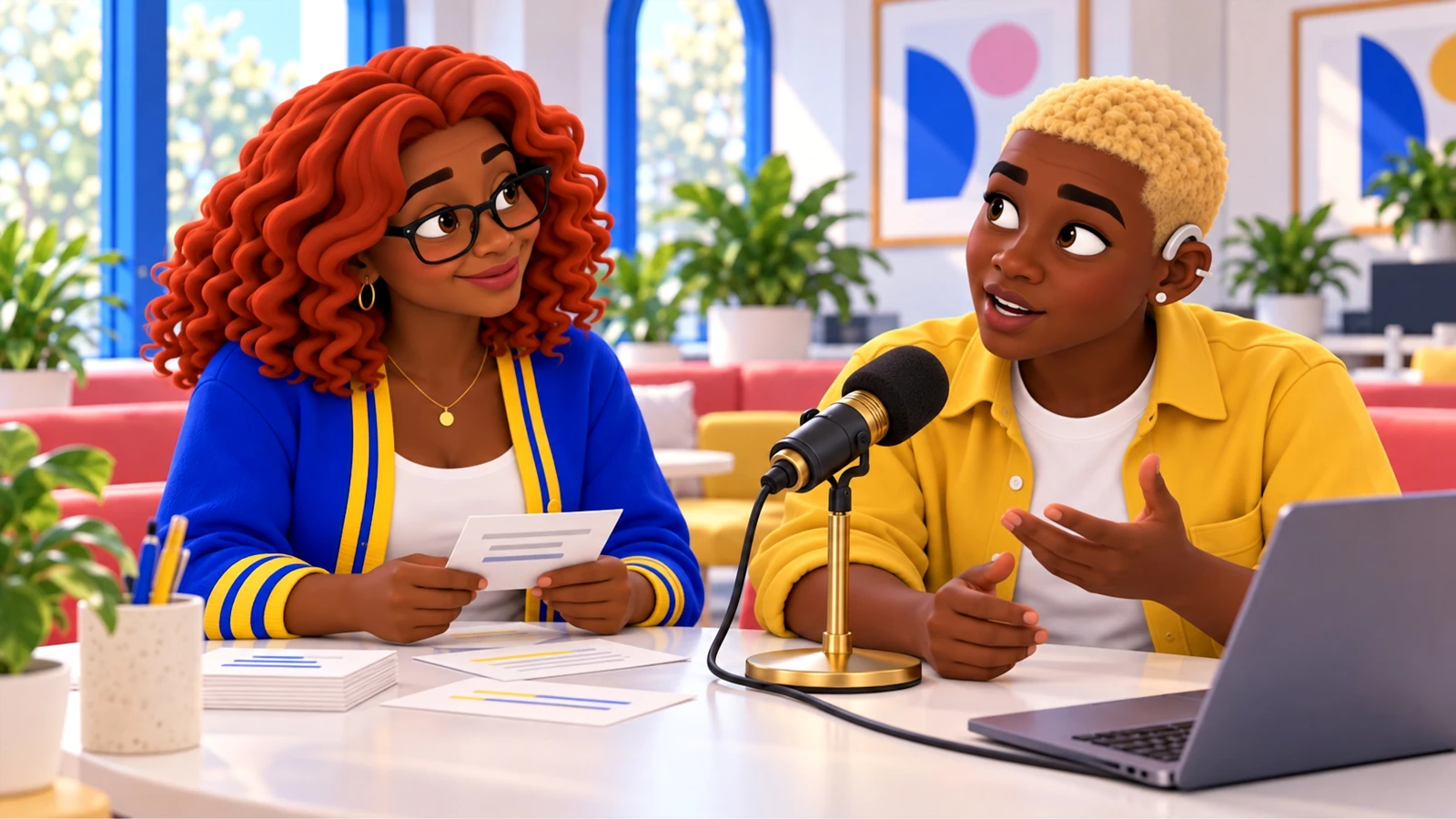
Jordy rehearses at a microphone while Gia checks notes.
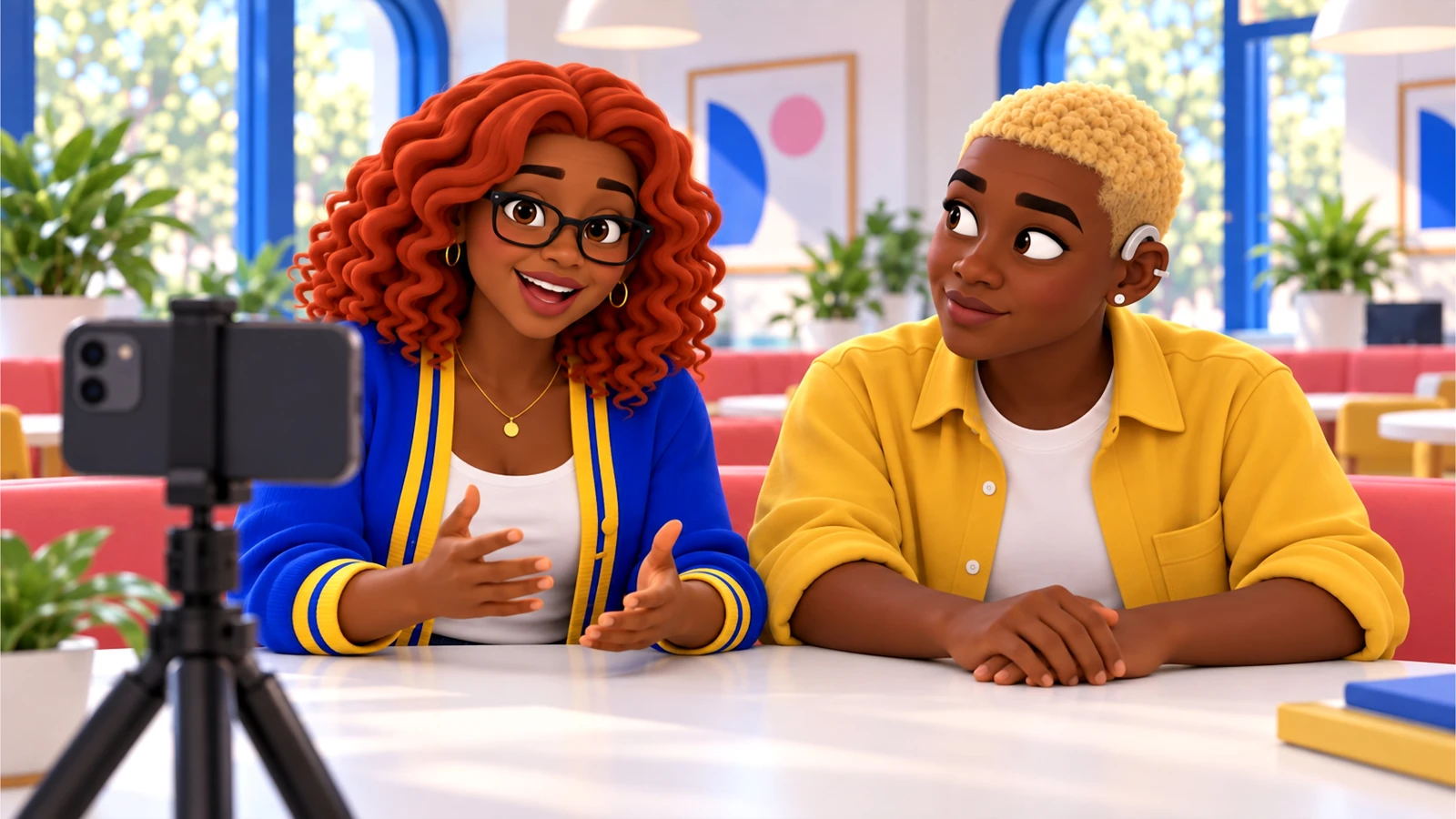
Gia and Jordy record a clear update with a phone on a tripod.
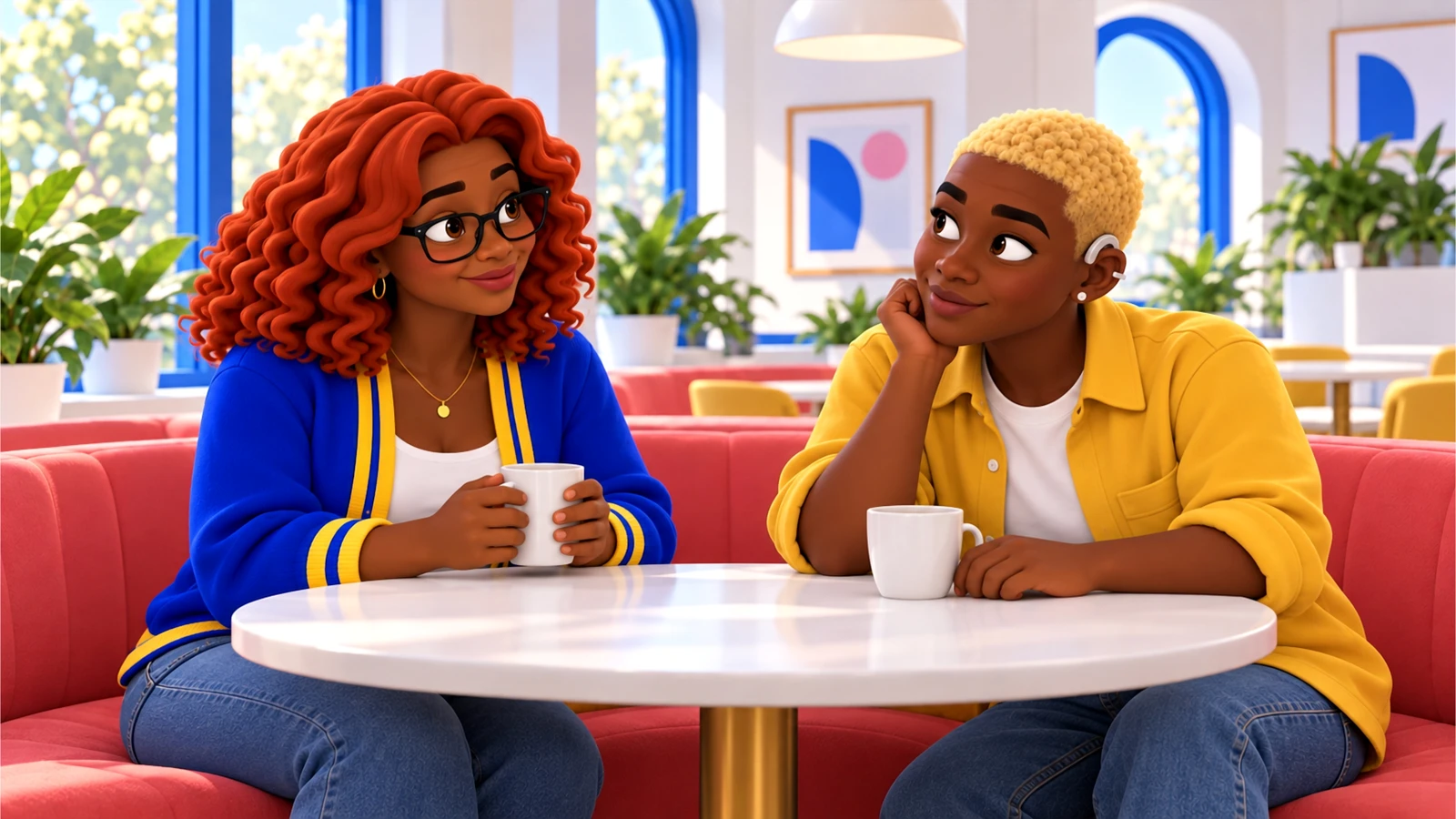
Gia and Jordy debrief over coffee after the correction.
The recap is up. The comments are not wrong.
An apology and a correction have different jobs.
Hear what matters to each person. Choose a question. Notice what their answer adds, then check it against the case materials.
Gia
21, wrote the caption too quickly
“I said the younger attendees held things up. I heard it backstage, assumed it was checked and hit post.”
Ask Gia
What needs correcting first?
Gia “The claim about the delay. The event log points to the projector. I need to put that in the correction before explaining how embarrassed I am.”
What to check nextName the original error and the supported replacement where the original audience can find it.
What would change before your next post?
Gia “Someone checks the account against the event log. That person cannot just be me reading my own draft a second time.”
What to check nextGive the checking step an owner and a point in the publishing process.
Jordy
20, worked the event and edits its captions
“People were tagging Anika like she had caused the whole thing. She should not have to explain the equipment failure for us.”
Ask Jordy
Should Anika approve the apology?
Jordy “We can offer a private way to tell us what we missed. We cannot make her review our homework or perform forgiveness on camera.”
What to check nextCorrect the public record without requiring the affected person to speak publicly.
How would you know the repair happened?
Jordy “Show me the corrected caption and the new checking step being used. Fewer comments might just mean people stopped expecting anything.”
What to check nextLook for the promised actions, not only the reaction count.
Two people to hear from. Start with either one.
Put their perspectives together
Gia can own the mistake without making her feelings the centre of the response. Jordy keeps the repair connected to the people named in the original post.
A person’s account explains their perspective. It still needs checking where it makes a factual claim.
Optional movie connection: Zootopia
All the evidence needed for this case is in the story. Preview the clip before classroom use, or use the text explanation.
Run that scene back.
Zootopia: the press conference
Watch for the moment the explanation changes.
Scene from Zootopia (2016), embedded via Critical Media Project, Open the source player
Read the scene instead
Judy moves from a set of incidents to a proposed biological explanation. Ask which part is established and which part she is assuming. Nick’s reaction reveals a personal cost that the official answer overlooks. The person speaking and the person affected experience the moment differently. Our reading is that good intentions do not erase the effect of an unsupported group claim. Animal categories are not a scientific model of human race.
1Listen for the leap
Judy moves from a set of incidents to a proposed biological explanation. Ask which part is established and which part she is assuming.
Where does a guess start sounding like a finding?
2Look away from the microphone
Nick’s reaction reveals a personal cost that the official answer overlooks. The person speaking and the person affected experience the moment differently.
Who has to live with the explanation after the camera leaves?
3Think beyond intent
Our reading is that good intentions do not erase the effect of an unsupported group claim. Animal categories are not a scientific model of human race.
What would a correction need to say without asking the harmed person to make the speaker feel better?
Back on the block
The crew’s post is smaller in scale, but the communication problem is concrete: a public claim blamed a group without enough evidence. Work from the event record. Do not turn a correction into a performance about being a good person.
Make the short-form version
The correction update
Show the exact claim, replace it with the event record and say what the crew will do differently.
Make a version that keeps the meaning
“We meant well” is not the missing information. What would Anika need corrected?
Plan three shots: the claim, the evidence and a next move. Keep a text version and source note with your edit. You can make a private storyboard without a social account.
Build the script from your evidenceAn original motion graphic using this case’s fictional records. The same idea works as a Reel, TikTok-style explainer or classroom slide.
The receipts are on the table.
Open each item. Ask what it establishes and what it leaves out.
0 of 3 materials opened
The crew’s documents are story props. Real-world sources are below.Original statementThe published captionOpen this material
“Great night, once the younger crowd finally got organized.” The caption names no evidence for the delay and gives viewers a group to blame.
The statement itself is evidence of what the crew communicated, not proof of the cause.
Jordy’s setup recordThe event logOpen this material
5:40 p.m. projector failure reported. 6:00 p.m. attendees seated. 6:20 p.m. replacement projector connected. Anika and Dec helped carry chairs before doors opened.
It challenges the caption’s explanation. It does not describe every attendee’s experience.
Draft, not postedGia’s first correctionOpen this material
“Sorry if this came across wrong. We love our younger neighbors and would never want anyone to feel excluded.”
The draft describes intent without correcting the cause or naming a practical change.
“My bad” needs something after it.
Gia’s caption did two things: offered an explanation and assigned blame. Replacing it with “we care about everyone” fixes neither. The event log gives the crew a more accurate account of the delay. The correction needs to put that account where the original audience can find it.
PRSA’s ethics guidance emphasizes honest, accurate communication. SPJ’s code connects accountability with correcting mistakes. In this story, those professional principles become concrete tasks: identify the wrong claim, state what supports the correction, preserve a clear correction note and change the checking process. They are ethical guides, not findings that someone broke a law.
Then look at the people involved. Anika should not have to comfort Gia, repeat a painful story publicly or endorse the response. The crew can ask what they missed and offer a way to respond privately. Success is not “the comments stopped.” Ask whether the false explanation was corrected and whether the next post went through the promised check.
- Correction
- Replacing an inaccurate claim with supported information.
- Accountability
- Explaining your actions and following through on what you take responsibility for.
- Outcome
- A change you can examine, beyond how much content was posted.
El texto de Gia hizo dos cosas: ofreció una explicación y culpó a un grupo. Cambiarlo por “nos importa todo el mundo” no resuelve ninguna. El registro del evento permite explicar mejor el retraso. La corrección tiene que llegar al lugar donde la audiencia vio la versión original.
La guía ética de PRSA destaca la comunicación honesta y precisa. El código de SPJ relaciona la responsabilidad con corregir los errores. En esta historia, eso significa identificar la afirmación incorrecta, explicar qué respalda la corrección, dejar constancia del cambio y mejorar la verificación. Son orientaciones profesionales, no conclusiones de que alguien violó una ley.
Piensa también en las personas afectadas. Anika no tiene que consolar a Gia, contar públicamente una experiencia dolorosa ni aprobar la respuesta. El equipo puede preguntar qué pasó por alto y ofrecer una forma privada de responder. Que se acaben los comentarios no demuestra que el problema esté resuelto. Hay que comprobar si se corrigió la explicación y si se cumplió la nueva revisión.
- Corrección
- Sustituir una afirmación incorrecta por información respaldada.
- Rendición de cuentas
- Explicar tus acciones y cumplir los compromisos que asumes.
- Resultado
- Un cambio que puedes examinar, más allá de cuánto contenido publicaste.
What would you say?
Try a response. See who it reaches and what it leaves unresolved. You can change your mind.
What goes first in the correction?
Which repair can the crew actually carry out?
A correction has a job to do.
“That was not my intention” does not tell people what happened.
- Research
Put the recap beside the event log. Ask Anika what the group label changes for her.
- Planning
Name who needs the correction and what they should understand afterward.
- Implementation
Replace the inaccurate claim. State the repair and who will carry it out.
- Evaluation
Ask readers what they now believe caused the delay. Views alone do not show understanding.
Where this method comes from
Research, planning, implementation, evaluation. This classroom version draws on public relations and sociology.
RPIE, Universal Accreditation BoardSociological perspective, OpenStaxWrite a correction and a repair plan that are bigger than “sorry.”
Own the inaccurate claim, replace it with supported information and name who will do what next.
See one possible response
Our recap wrongly blamed younger attendees for the late start. The event log shows a projector failure delayed the screening. We have corrected the original caption and contacted the people it blamed. Gia and Jordy will check factual claims against the event record before the next recap.
Your wording can be different. The evidence still needs to hold up.
Make it your way
Write a note, record a voice memo, storyboard a short video or sketch the response on paper. Adobe Express, Pages, Keynote and iMovie are optional tools. You do not need a paid app.
Open the making studioWhere do we go from here?
Your choices stay in the conversation. There is room to revise.
Before the crew moves on.
Try both decisions to see what your response changes and what still needs attention.
One thing to carry forward
Correct the specific claim where it appeared. Name who will check the next post. Don’t ask the affected people to reassure you.
Write the correction. Assign the repair.
- Underline the sentence that was wrong. Write its supported replacement before explaining anyone’s intentions.
- Name a person, action and check-in: who updates the post, who contacts the people affected and who verifies the next recap?
- Have someone read the revision without the backstory. Can they identify the error, the corrected fact and what happens next?
How you might tell a friend
We blamed the wrong people. The event log shows an equipment delay. We corrected the caption, contacted the people it affected and added a source check before the next post.
Una forma de decirlo en español
Culpamos a quienes no correspondía. El registro muestra que hubo un retraso por el equipo. Corregimos el texto, contactamos a las personas afectadas y añadimos una revisión de fuentes antes de la próxima publicación.
Use your own voice. Keep the meaning, the evidence and the limits.
Want to go deeper?
The same case can become a reporting exercise, a policy brief or a communications assignment. Pick a question worth spending more time on.
Public relations
Ask affected people what the statement missed, without demanding forgiveness.
A way into Jeong-Nam Kim and James E. Grunig’s Situational theory of problem solving. Explore the foundation
Communication strategy
Put the corrected fact where the original audience will see it.
A way into Robert M. Entman’s Framing. Explore the foundation
Law and legal concepts
Professional ethics and legal liability are different questions. Do not label this fictional post unlawful without a relevant rule and facts.
A way into Cornell Legal Information Institute’s Authority and jurisdiction. Explore the foundation
Policy and policy studies
Who can approve a post, and who is responsible for checking its claims?
A way into Carol Bacchi’s What’s the problem represented to be?. Explore the foundation
Education and learning
Compare your first draft with a revision after another person reads it.
A way into John Dewey’s Reflective inquiry. Explore the foundation
Journalism and reporting
Correct the record visibly and preserve enough context to explain the change.
A way into Society of Professional Journalists’s Verification, context and accountability. Explore the foundation
Creativity
Make a caption correction and a short accessible video script with the same facts.
A way into Design Council’s The Double Diamond. Explore the foundation
Keep the source with the story.
PRSA, Code of EthicsProfessional guidance on honesty, accuracy and correcting erroneous communication.SPJ, Code of EthicsVerification, minimizing harm and accountability.Critical Media Project, Zootopia sceneThe embedded press-conference excerpt and its film context.About this analysis
The film reading is our interpretation, with the excerpt embedded for you to examine. The Common Room, its documents and the crew’s outcomes are fictional learning scenarios. Sources support the real-world concepts; they do not certify the story or your response. This is general education, not individual legal advice.