

Teacher Guide
AP English Language
For AP English Language and Composition
20 cases about media, law, policy and the decisions that shape your life. For every case: the opener, the case file, a reasoning page, a worked example and a one-period workshop plan.
How this edition works
AP English Language and Composition classes, and advanced grades 11–12 writing courses. Each case starts from something people actually saw or argued about and works toward something students decide or make. Objectives stay explicit for you; students meet the ideas through what they investigate and create.
- A momentsomething people saw, shared or argued about
- A questionworth investigating
- The evidenceand the context around it
- Your calla decision or something you make
- Feedbackwhat your choice changes, and for whom
- Real worldwhere this decision actually gets made
By the end, students can
- Analyze a text’s rhetorical situation: exigence, audience, purpose, context and message.
- Explain how claims and evidence work, and qualify claims with counterarguments and alternative perspectives.
- Build a line of reasoning with commentary that explains evidence instead of summarizing it.
- Explain how word choice, comparisons and syntax serve a purpose, and use them strategically in their own writing.
- Revise arguments after peer feedback to sharpen commentary and qualification.
What’s different in this edition
- Every route lists the CED skill codes it practices
- Each route names a counterargument to address and a specific revision move
- Practice feedback uses the three free-response scoring rows
- Texts are treated as arguments in a rhetorical situation, not as information
- Timed drafting is followed by targeted revision
Real, or made for this lesson?
Real source links to reporting, research or an official page you can check yourself. Fictional case material was written for the story, so you can practice on it safely.
Plan the edition
Preparation
- Note the route’s CED skill codes and plan one minilesson on the least familiar skill.
- Prepare the texts the route analyzes, including any teacher-written comparison texts it calls for.
- Plan the peer-feedback step named in the route’s revision line.
- Decide whether drafting is timed and how much time revision gets afterward.
Materials
- The texts named in the route’s sources
- Rhetorical situation grid and commentary stems from the route’s supports
- A practice version of the three scoring rows (thesis, evidence and commentary, sophistication)
- Skill-code reference from this edition
Timing
Plan 45–50 minutes: a timed draft of about 35–40 minutes followed by a focused revision, or two shorter sessions for drafting and revision.
Assessment
Give practice feedback on the three scoring rows, then judge the revision separately on whether it strengthens commentary and qualification. Do not convert practice scores into predicted AP scores.
Supports that don’t lower the bar
- VocabularyKeep a list of analytical verbs (concedes, qualifies, redirects) and the big-idea terms visible.
- Read-aloudRead the passage aloud once before annotation; offer recordings of longer texts.
- Bilingual planningAllow annotation and planning in any language; the essay is written in the course language. Never ask a student to disclose a disability, immigration status, family finances or private records to take part.
- Oral rehearsalHave students state their thesis and first line of reasoning aloud to a partner before drafting.
- Other ways to respondFor students with accommodations, allow extended time or dictated drafting during practice; the analytical expectations stay the same.
Framework
AP English Language and Composition Course and Exam Description: big ideas and course skills
- Big ideas: Rhetorical Situation (RHS), Claims and Evidence (CLE), Reasoning and Organization (REO), Style (STL)
- Eight skill categories, each paired as reading and writing: Rhetorical Situation (1, 2), Claims and Evidence (3, 4), Reasoning and Organization (5, 6), Style (7, 8)
- Exam: a multiple-choice section of reading and writing questions and three free-response essays (synthesis, rhetorical analysis and argument)
- Free-response scoring rows: thesis, evidence and commentary, and sophistication
Checked 2026-09-24. Alignment is described here, not certified or endorsed.
The companions in the margins
 LupaEvidence
 DudaQuestions
 PautaRules
 OndaImpact
 NexoConnections
 VozNext steps
What’s inside
 1Before you repostWhat can a screenshot actually prove?5
 2Same test. More questionsDoes this task show what someone knows?12
 3The apology is not the repairWhat makes a correction more useful than “sorry”?19
 4Whose room is it, anyway?Who gets a say when a shared space changes?26
 5Okay… where did the rest of my paycheck go?Why is my deposit smaller than what I earned?33
 6Who gets to see your school records?If your family helps pay for school, what are they allowed to see?40
 7Who decides what stays on the shelf?A group chat says one complaint got a novel “banned.” What actually happened, and who decides?47
 8Is it a recommendation or an ad?If a creator got the product free, do viewers need to know?54
 9Your ballot is more local than your feed.What’s actually on your ballot, and where do you find out?61
 10A city you can actually reachIf the usual route is blocked, whose job is it to make the trip work?68
 11Same work. Different pay. Why?Jordy and Gia worked the same event. Why are their rates different, and how do you ask?75
 12A protest is not one legal questionWhen does a school get to limit what students say?82
 13Before it reaches the binCould the crew make less waste before anyone reaches the recycling bin?89
 14Credit is not the whole copyright answerIf you credit the artist, can you use their track in your film?96
 15Internship, or someone’s unpaid job?When is an unpaid internship really a job that should be paid?103
 16“It’s our policy” is not the endWhen a new building rule appears, who wrote it and who does it affect?110
 17A good choice for whom?Ten free seats, thirty people who want one. How should the crew decide?117
 18Follow the school moneyThe district budget is huge. Why is the theater curtain still falling apart?124
 19Give your comment a destinationHow do you make a public comment that actually lands?131
 20Looks real. What proves it?A realistic image says the courtyard flooded today. What would it take to post that as true?138
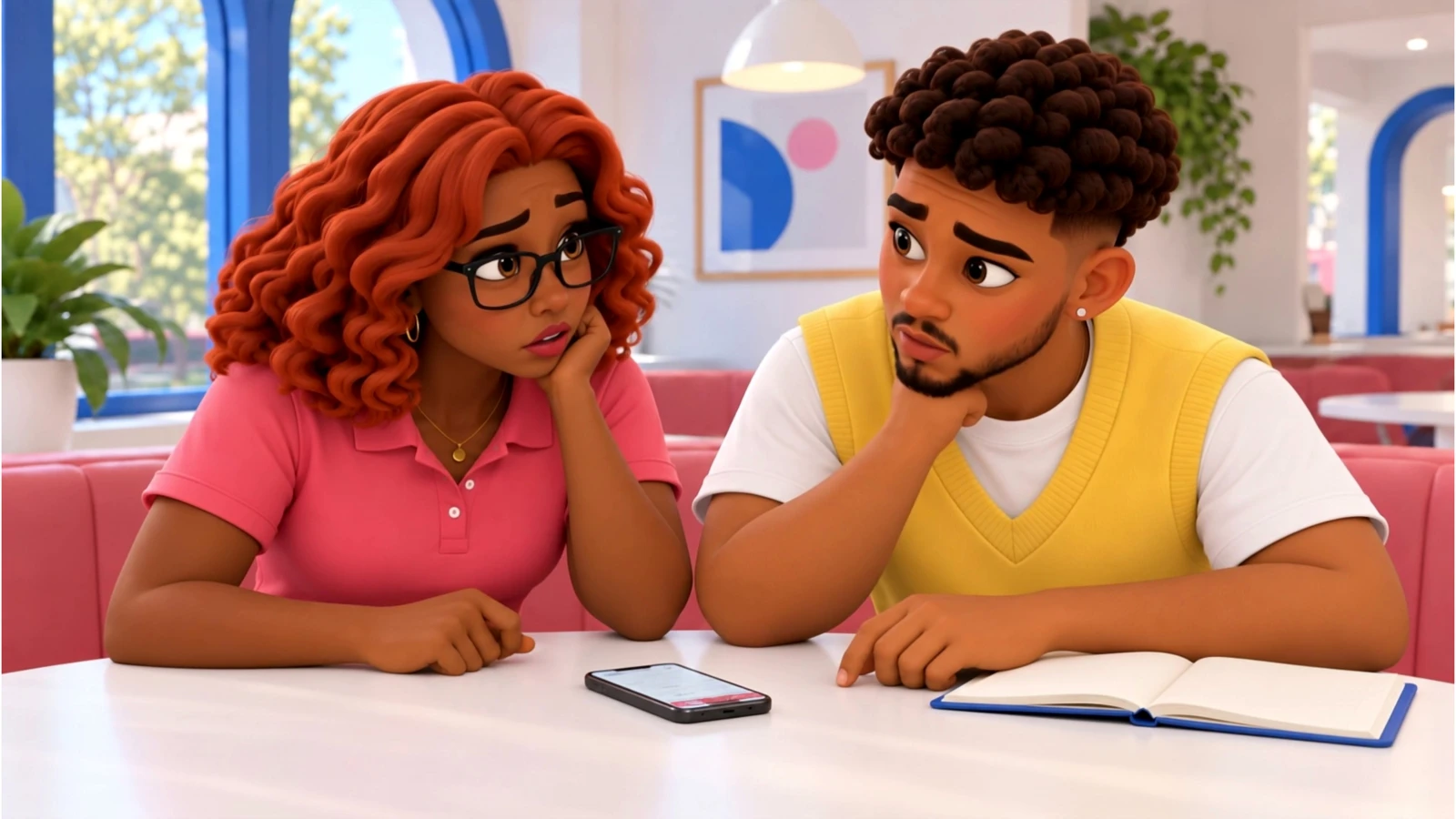
Case 1
Before you repost
What can a screenshot actually prove?
Most news about school closures, rule changes and events reaches students as a cropped clip in a group chat. Checking the original and posting a useful update keeps a whole community from acting on half a sentence.
In the real world
- CrashCourse (YouTube), 2019Check Yourself with Lateral Reading: Crash Course Navigating Digital Information #3
- PolitiFact, 2022Viral image shows fake story from The Atlantic about Biden
- You’ll make
- Rhetorical analysis, 1 thesis + 2 body paragraphs (about 450 words), timed at 35 minutes
- Time
- About 50 minutes
- Level
- AP English Language
MateoDale, I wanted that clip to be fake so badly I almost told everyone to ignore it. Let me find the full transcript first.

The case file
Look at what’s actually here before deciding what it means.
- 1Fictional case material
Forwarded screenshot in the crew’s group chat, Friday 4:52 p.m.
“They’re removing access tonight. Screening canceled?”
Attached clip, 7 seconds.
Coordinator: “…we are removing access—” The clip ends there.
- 2Fictional case material
Room coordinator, full meeting transcript, Friday 3:30 p.m. meeting
“The side-door reader is broken. We are removing access through that reader tonight. Existing room bookings remain in place. Use the staffed front entrance while we repair it.”
- 3Fictional case material
Booking confirmation emailed to Mateo, sent Tuesday 10:14 a.m.
Friday, 6–9 p.m. Screening confirmed. Front entrance: step-free. Staff member at the desk from 5:30 p.m. Contact the coordinator for arrival support.
- 4Fictional case material
Jordy, holding message in the same chat
“We’re checking the original. Hold your plans for a moment.”
- 5Fictional case material
“My friend is already on the train. “We are figuring it out” does not tell her whether to keep coming.”
Gia, 21, leaving for a café shift
Outside the story
The case is fictional. The questions in it are not. Here is where they show up in the real world.
Still missing
Whether every visitor can use the staffed front entrance (the email says step-free, not that every arrival need is covered), who first cropped the clip and why, and how many people already changed their plans.
Real-world evidence

Real sourceSociety of Professional Journalists, SPJ Code of EthicsSummary, not a quotation: the code asks journalists to take responsibility for the accuracy of their work, verify information before releasing it and avoid distorting facts or context, including visual information.

videoCheck Yourself with Lateral Reading: Crash Course Navigating Digital Information #3CrashCourse (YouTube), 2019-01-22Shows the move the crew makes: leave the screenshot, open new tabs and check who made it and what other sources say.

articleViral image shows fake story from The Atlantic about BidenPolitiFact, 2022-08-01A real fact-check of a fabricated news screenshot: the image looked official, but the outlet never published it.
Discuss before deciding
- Which item did you trust first, and why?
- What would you need to see before repeating the strongest claim?
- Who is missing from these documents?
What the evidence can hold up
Draw an arrow from each piece of evidence to the claim it supports or challenges. Which claim is left standing, and which gap still needs a check before you post?
| Evidence | Claim 1The screening is canceled. | Claim 2The screening is on; use the staffed front entrance. |
|---|---|---|
| 1The clip: “we are removing access…” ends mid-sentence. | Supports | — |
| 2The transcript: access is removed “through that reader,” and existing bookings remain in place.Also narrows evidence 1 | Challenges | — |
| 3The booking email: Friday 6–9 p.m., screening confirmed, step-free front entrance. | Challenges | Supports |
Still open
- Can every visitor use the temporary entrance?
One student’s draft
Write a holding statement and a follow-up correction for the same chat, twenty minutes apart. Add a two-sentence rationale.
Message 1 (5:05 p.m.): Hey everyone, we saw the clip about the Common Room. We’re checking the full meeting update right now, so please don’t cancel your plans yet. We’ll post again by 5:25 with a real answer.1 Message 2 (5:25 p.m.): Update: the screening is NOT canceled3. It’s still Friday 6–9 p.m. The clip cut off the part where the coordinator said they’re removing access “through that reader,” meaning the broken side door2. Use the front entrance instead. It’s staffed from 5:30 and it’s step-free. I think whoever posted it was trying to start drama.4 Rationale: I didn’t repeat the word “canceled” in my first message because people might only read that one word. I gave a time for the next update so people know when to check back.
- 1Strong holding move: a specific time tells people already traveling when to look again.
- 2Precise evidence. Quoting the exact words the crop removed shows readers why the clip misled them.
- 3A clear verdict, but naming the booking email or the transcript here would let readers check it for themselves.
- 4Revise: nothing in the sources tells us why the clip was shared. A guess about motive weakens the correction and can start a new argument.
Works wellUses evidenceGap to fixThink about the reader
One revision
BeforeI think whoever posted it was trying to start drama.
AfterI checked the coordinator’s full transcript and Mateo’s booking email. Need help getting in? Message the coordinator before you leave.
The revision swaps an unsupported guess for a named source and a contact, which gives readers something to verify and something to do.
Teacher commentary
This response handles the holding statement well and uses the transcript precisely, and the rationale explains a real word choice. The correction slips by adding a motive and never naming its source or a contact for arrival help. One targeted revision moves it from Developing to Proficient on the Evidence and Audience rows.
Teach it in one period
AP English Language
Write a rhetorical analysis of Gia’s final correction: how does it rebuild trust with readers who saw the original screenshot?
- Sources
- Gia’s correction, the original screenshot and Jordy’s holding statement as the rhetorical context.
- Product
- Rhetorical analysis, 1 thesis + 2 body paragraphs (about 450 words), timed at 35 minutes
- Objective
- Students analyze how Gia’s correction answers its exigence and audience, treating order of information and concision as rhetorical choices with effects.
- Assessed by
- The timed draft gets practice feedback on the three AP Lang scoring rows (thesis, evidence and commentary, sophistication), and the revision is judged on how it strengthens commentary.
| 45 minutes | You | Students | Check for |
|---|---|---|---|
| 5 minHook: the post only | Project evidence A alone. Ask: what would you do if this landed in your chat right now? | Write privately: what happened, and what am I assuming? | Each student has one observation and one assumption written separately. |
| 8 minQuestion the clip | Introduce Lupa’s question: where is the original? Model turning a reaction into a checkable question. | Pairs write one question that could change their view. | Questions are answerable with a document, not a vote on the poster. |
| 12 minOpen the receipts | Hand out the transcript and booking email on separate pages. Read the transcript aloud. | Highlight the words that narrow “access.” Place each document beside the claim it supports. | Pairs point to “through that reader” and “Existing room bookings remain in place.” |
| 10 minChoose the message | Walk through decision 1: cancel now, holding message, or “it’s fake.” Ask what each makes a reader do. | Vote, then defend the choice with one line of evidence. | Students explain why “fake” overstates: the clip is real, the context is missing. |
| 7 minDraft the update | Give the frame: “The post claims __. The original says __. We still need __.” | Write a 40–70 word group-chat update. | Draft names the screening time, the entrance change and a contact. |
| 3 minExit ticket | Ask for one detail that changed their mind. | Write the exact words that changed their interpretation. | Quotes a phrase from the transcript or email, not the screenshot. |
Before class
Prepare the case documents, one set per pair:
- Forwarded screenshot in the crew’s group chat, Friday 4:52 p.m.
- Room coordinator, full meeting transcript, Friday 3:30 p.m. meeting
- Booking confirmation emailed to Mateo, sent Tuesday 10:14 a.m.
- Jordy, holding message in the same chat
Every document is fictional case material, printable from the online field guide.
Questions to keep asking
LupaThe clip ends one sentence early. “Through that reader” is the evidence the screenshot cut.
DudaWhat would the poster have needed to see before adding “canceled?”
Onda“Come like normal” could send Sami to the broken side door. Name the entrance.
Support every student, then assess
Success looks like
- Thesis names Gia’s purpose and the choices that serve it
- Commentary links each choice to the anxious, traveling audience
- Evidence is quoted precisely
- Line of reasoning builds rather than lists
Supports at this level
- Rhetorical situation grid: exigence, audience, purpose, context, message
- List of verbs for analysis (clarifies, concedes, redirects)
Access
- Give the three documents on separate half-pages with the key sentence enlarged
- Read the transcript aloud and provide a recorded version for replay
- Spanish glossary: afirmación, contexto, fuente, entrada
- Students with IEPs or 504 plans may dictate the update or build it from sentence strips
- Reduce the load to the screenshot and booking email only
Stretch
- Map how the rumor would travel through three different chats and who would miss the correction
- Write a one-paragraph policy for how the Common Room posts urgent updates
Challenge: Explain how order of information and concision function as choices, not just list devices; end with one sentence of your own argument about correction ethics.
| Rubric | Beginning | Developing | Proficient | Advanced |
|---|---|---|---|---|
| Evidence | Repeats the screenshot’s claim or ignores the documents. | Mentions a source but not the detail that changes the meaning. | Uses the transcript or email to correct the claim accurately. | Uses both documents and names what they still cannot confirm. |
| Reasoning | Treats the clip as fake or as final. | Corrects the claim but adds a guess about motive. | Explains the difference between an entrance change and a cancellation. | Explains how the crop produced the wrong conclusion and avoids inventing motive. |
| Audience & purpose | Message would not help someone decide whether to leave. | Gives the verdict but leaves out time or entrance. | Gives time, entrance and a contact. | Anticipates access needs and people who saw only the original post. |
| Revision | No change after feedback. | Surface edits only. | Adds a missing fact or removes an unsupported claim. | Explains why each edit makes the update more usable. |
Standards this can show
Rhetorical Situation (RHS)AP LangClaims and Evidence (CLE)AP LangStyle (STL)AP LangRI.11-12.7Common Core 11–12SL.11-12.3Common Core 11–12W.11-12.2Common Core 11–12

Case 2
Same test. More questions
Does this task show what someone knows?
A single score can follow a student into placement, support and how teachers see them. Knowing what the law requires before a school decides a student needs special education helps students ask for support without diagnosing each other.
In the real world
- Education Week, 2025Does Extended Time on Tests Actually Help Students With ADHD?
- K-12 Dive, 2025IDEA at 50: How the landmark law changed education
- You’ll make
- Comparative analysis, about 500 words
- Time
- About 50 minutes
- Level
- AP English Language
DecI can trace the circuit. The six paragraphs are what lose me. Ask me before you tell the teacher what I need.

The case file
Look at what’s actually here before deciding what it means.
- 1Fictional case material
§ Circuit practice brief, handed out Monday, period 4
Goal: Explain how a simple circuit works. Read the six paragraphs below before you answer. Use the diagram to trace the path of the current from the battery through the switch and the LED and back. Answer questions 1–4 in complete sentences. (One small diagram sits below six dense paragraphs. No time limit or speed target is listed.)
- 2Fictional case material
Out loud, with the larger sketch: traced the whole path, battery to switch to LED and back. Correct. Written sheet: skipped a line in the instructions and answered a different question from the one asked. Dec: the layout is hard to follow.
Dec’s study-table notes, Wednesday 3:40 p.m. - 3Fictional case material
“I can show you where the current goes. Then I get halfway through the written question and lose my place.”
Dec, 17, theater crew - 4Fictional case material
“I kept saying “it is right there.” That was not helping. I was looking at the answer, not how the question was written.”
Anika, 16, studying with Dec
Outside the story
The case is fictional. The questions in it are not. Here is where they show up in the real world.
Still missing
Whether Dec wants formal support at all, how the sheet is scored, whether other students lose their place in the same layout, and what the teacher meant the six paragraphs to test.
Real-world evidence

Real sourceIDEA regulations, 34 CFR § 300.304 (evaluation procedures)Summary, not a quotation: when a public agency conducts an IDEA evaluation, it must use a variety of assessment tools and strategies and may not use any single measure or assessment as the sole basis for deciding whether a child has a disability or what educational program is appropriate.

Real sourceCAST, Universal Design for Learning GuidelinesSummary, not a quotation: the UDL Guidelines are design guidance that encourages offering learners more than one way to engage with learning, to take in information and to express what they know.

articleDoes Extended Time on Tests Actually Help Students With ADHD?Education Week, 2025-10-13Asks the case’s question in real life: does a test accommodation help students show what they actually know?
Discuss before deciding
- Which item did you trust first, and why?
- What would you need to see before repeating the strongest claim?
- Who is missing from these documents?
Who actually gets to decide?
Sort who can decide each question. Which decision belongs to the teacher, which to a formal school process, and which only to Dec?
Try a clearer practice format for the circuit goal
The teacher, who sets the practice format and the learning goal
Dec, who decides what to share and whether to ask
Start a formal IDEA evaluation or a Section 504 conversation
The school’s evaluation process, with a parent or guardian for a student under 18
IDEA evaluation rule: varied tools, no single measure as the sole basis
A counselor or special-education coordinator explains how a request starts
One student’s draft
Draft a message to the teacher in Dec’s voice, written with his permission, that describes the observations and asks about support options. Add a two-sentence note on what you left out and why.
Hi Ms. R, I’m working on the circuit practice sheet. The goal says we should explain how a simple circuit works.1 At the study table I traced the whole circuit out loud with a bigger diagram, but on the written sheet I skipped a line and answered a different question.2 I think I might have ADHD or something.3 Could we talk about how the sheet checks the goal and whether there are other ways I could show it? I can bring both tries. Thanks, Dec Note: I left out my old grades and anything about my friends’ support plans because that’s private. I also didn’t say the test was unfair, because we don’t actually know that4.
- 1Strong opening. Leading with the learning goal frames the request around what the sheet is meant to measure, not the score.
- 2Two precise, neutral observations taken from the study-table notes. This is the evidence a teacher can act on.
- 3Revise: the notes cannot establish a diagnosis, and naming one in an email shares health information Dec may not want shared. Describe what happened instead.
- 4Good reasoning in the note: the writer separates what the evidence shows from a conclusion it cannot support.
Works wellUses evidenceGap to fixThink about the reader
One revision
BeforeI think I might have ADHD or something.
AfterThe layout with six long paragraphs is where I lose my place.
The revision keeps the message about the task’s format, which the evidence supports, and leaves any formal evaluation to the school’s process and to Dec’s own choice.
Teacher commentary
The message follows the checklist: a goal, two observations and a specific question, and the note shows real judgment about privacy. The single self-diagnosis line undercuts both accuracy and privacy. Replacing it with an observation about the layout moves the response to Proficient on Reasoning and Audience.
Teach it in one period
AP English Language
Compare the three teacher messages in decision 2 as arguments: which one would a teacher most likely act on, and why?
- Sources
- The three draft messages from the case, with Dec’s notes as context.
- Product
- Comparative analysis, about 500 words
- Objective
- Students evaluate three short arguments by how well their claims, evidence and tone fit a busy teacher audience.
- Assessed by
- Practice feedback uses the three AP Lang scoring rows, with a separate check that the concession names a real limit of the evidence.
| 45 minutes | You | Students | Check for |
|---|---|---|---|
| 5 minMeet the task | Read Dec’s situation aloud. Set the norm: nobody shares their own grades or support plans. | Name what the circuit activity is supposed to show. | Students state the goal without mentioning speed. |
| 10 minSort the observations | Hand out evidence A and B. Draw three columns on the board. | Sort details into observed / possible explanation / not established. | “Dec has a disability” lands in “not established.” |
| 10 minRead the rule | Read the IDEA evaluation excerpt aloud. Explain evaluation, eligibility, IEP and 504 as separate steps. | Paraphrase the rule in one sentence and name one thing it does not require. | Paraphrase includes “more than one measure” and limits it to formal evaluation. |
| 12 minRedesign and request | Model a request using Dec’s voice: goal, two observations, question. | Sketch a clearer practice sheet OR draft a 60–100 word message Dec could approve. | Draft includes a goal, two observations and a question, with no diagnosis. |
| 5 minPeer check | Give the check: would Dec be comfortable with this being sent? | Swap drafts and mark any line that decides something for Dec. | Each pair removes or rewrites one presumptuous line. |
| 3 minExit | Post the frame: “This suggests __. It does not prove __.” | Complete the frame. | Response separates a format barrier from a disability label. |
Before class
Prepare the case documents, one set per pair:
- Circuit practice brief, handed out Monday, period 4
- Dec’s study-table notes, Wednesday 3:40 p.m.
- Dec, 17, theater crew
- Anika, 16, studying with Dec
Every document is fictional case material, printable from the online field guide.
Questions to keep asking
PautaIDEA’s varied-measures rule covers formal evaluations, not every classroom quiz.
LupaDec traced the circuit aloud. That’s a second observation the score doesn’t show.
DudaIs the sheet checking circuits, reading speed or both? The brief lists only circuits.
Support every student, then assess
Success looks like
- Defensible thesis about effectiveness
- Analyzes claims and evidence in each message
- Links choices to the teacher audience
- Concedes limits of the evidence
Supports at this level
- Claim/evidence/reasoning chart for each message
- Stems for evaluating tone
Access
- Offer the enlarged diagram and a numbered version of the practice sheet
- Read legal text aloud with a plain-language paraphrase beside it
- Spanish vocabulary: evaluación, meta de aprendizaje, barrera
- Students may respond in writing instead of role-play
- Never ask students to disclose their own IEP or 504 status
Stretch
- Research how your state describes the timeline for an initial evaluation after a parent consents
- Design a UDL version of a real quiz from another class
Challenge: Analyze how audience (a busy teacher) shapes which claims are persuasive; write a synthesis-style paragraph that concedes what the evidence can’t show.
| Rubric | Beginning | Developing | Proficient | Advanced |
|---|---|---|---|---|
| Evidence | Mentions only the score. | Describes Dec’s explanation vaguely. | Cites the goal and two specific observations. | Uses observations and notes what they cannot show. |
| Reasoning | Concludes Dec has a disability or the test is illegal. | Suggests easier content without linking to the goal. | Connects a possible format barrier to the learning goal. | Distinguishes classroom support from IDEA evaluation accurately. |
| Audience & purpose | Message speaks for Dec without his input. | Mentions Dec but ignores his voice. | Written in Dec’s voice with his permission. | Respects Dec’s control and gives the teacher a clear next step. |
| Revision | No change. | Removes one problem line. | Replaces the diagnosis with an observation. | Explains how each change protects Dec’s privacy and agency. |
Standards this can show
Claims and Evidence (CLE)AP LangReasoning and Organization (REO)AP LangRhetorical Situation (RHS)AP LangRI.11-12.4Common Core 11–12W.11-12.1Common Core 11–12SL.11-12.1Common Core 11–12
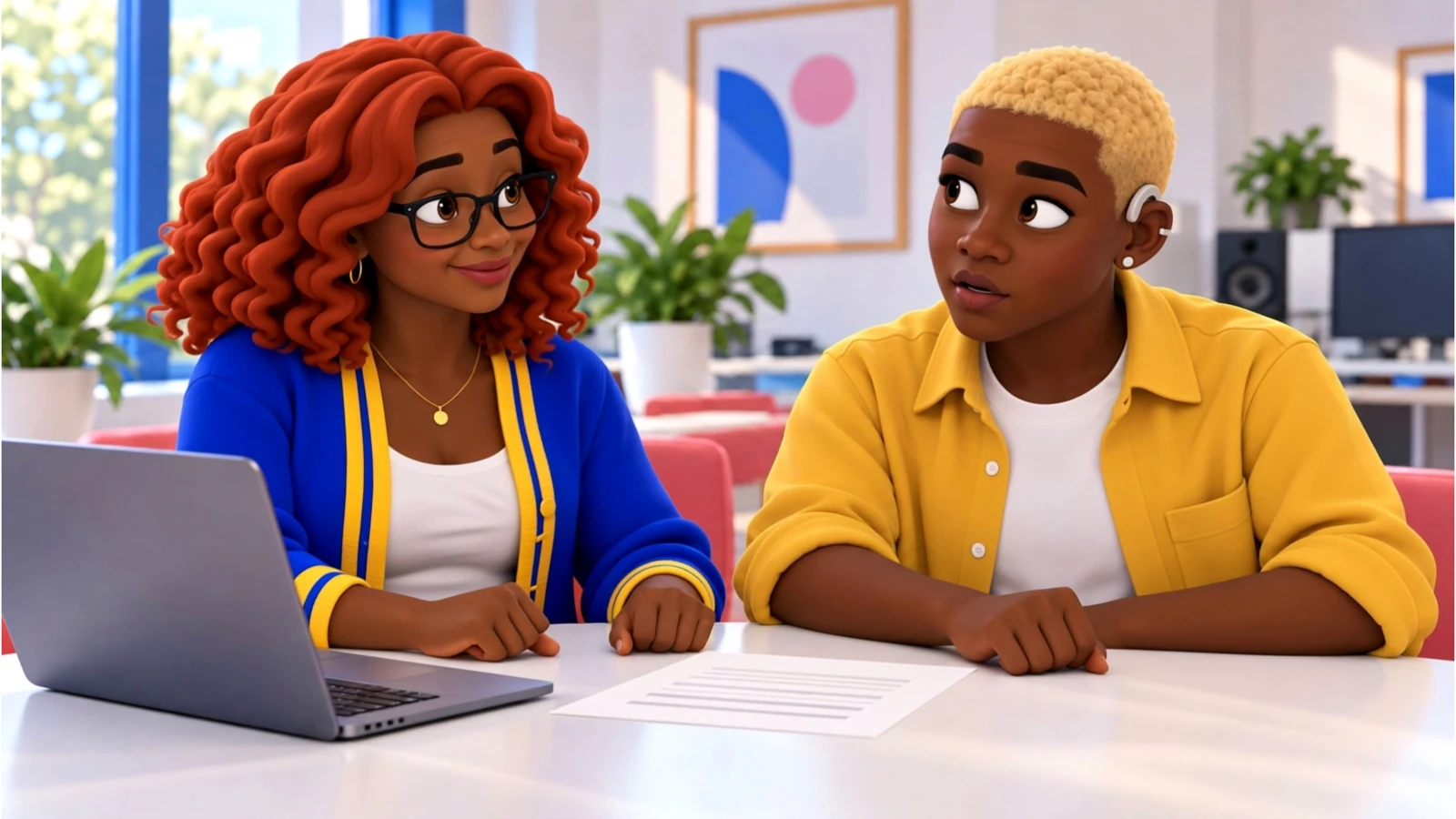
Case 3
The apology is not the repair
What makes a correction more useful than “sorry”?
Clubs, schools and companies all post things that turn out to be wrong, and how they fix it decides who keeps trusting them. Students who can tell a real correction from a nice-sounding apology can hold groups, including their own, to a higher standard.
In the real world
- NPR Public Editor, 2022That was wrong
- NPR, 2017Dove Expresses 'Regret' For Racially Insensitive Ad
- You’ll make
- Comparative rhetorical analysis, about 500 words, 40 minutes
- Time
- About 50 minutes
- Level
- AP English Language
AnikaWe were carrying chairs at 5:30. Don’t tell me how sorry you feel. Tell people what actually happened.

The case file
Look at what’s actually here before deciding what it means.
- 1Fictional case material
The crew’s published recap caption, Saturday 11:08 a.m.
“Great night, once the younger crowd finally got organized.”
- 2Fictional case material
Jordy’s setup log, Friday evening
5:40 p.m. Projector failure reported. 6:00 p.m. Attendees seated. 6:20 p.m. Replacement projector connected. Note: Anika and Dec helped carry chairs before doors opened.
- 3Fictional case material
Anika, 16, message to the crew
“We were helping you set up. Why are we the problem in this post?”
- 4Fictional case material
Gia’s first correction, drafted Saturday 2:15 p.m., not posted
“Sorry if this came across wrong. We love our younger neighbors and would never want anyone to feel excluded.”
- 5Fictional case material
“My log says Anika and Dec were carrying chairs before doors opened. The caption turned them into the reason we started late.”
Jordy, 20, kept Friday’s setup log
Outside the story
The case is fictional. The questions in it are not. Here is where they show up in the real world.
Still missing
What each attendee actually experienced, whether any latecomers affected the start at all, how far the recap was reshared, and whether Anika wants any public response.
Real-world evidence

Real sourcePublic Relations Society of America, PRSA Code of EthicsSummary, not a quotation: the code names honesty among its core values and, in its provisions of conduct, expects members to correct promptly any erroneous communication they are responsible for.

articleThat was wrongNPR Public Editor, 2022-10-21How a real newsroom corrects mistakes: name the error, fix it on the story and keep a public list.

articleDove Expresses 'Regret' For Racially Insensitive AdNPR, 2017-10-08A real brand apology after an ad played into a racial stereotype; compare the words with what changed afterward.
Discuss before deciding
- Which item did you trust first, and why?
- What would you need to see before repeating the strongest claim?
- Who is missing from these documents?
Same moment, different accounts
Place the four accounts side by side. Where do they agree, where do they split, and which one was written down at the time?
Caption: the night went well once the younger crowd got organized.
Event log: projector failed at 5:40; replacement connected at 6:20; Anika and Dec carried chairs.
Anika: “We were helping you set up.”
Where they agree
The screening started late.
Where they differ
What caused the delay: a group’s behavior or an equipment failure?
Check: Which account was recorded at the time rather than remembered afterward?
One student’s draft
Write a correction and a short repair plan with a named owner and a date to check it.
Correction: Our recap said the screening started late because the younger crowd wasn’t organized. That was wrong, and we’re sorry.1 Jordy’s event log shows the projector failed at 5:40 p.m.2 and the new one wasn’t connected until 6:20. Anika and Dec actually helped carry chairs before doors opened. Repair plan: Gia will edit the original caption today so the correction is where people saw the mistake. We will also ask Anika to post that she’s okay with the correction so people know it’s resolved.3 Before we post any recap, Jordy will check claims about what caused a problem against the event log. We’ll check on Friday whether the next recap went through that step.4
- 1Good order: the correction names the error before it apologizes, so it does its main job first.
- 2Precise evidence with a time lets readers see why the caption’s explanation doesn’t hold.
- 3Revise: this puts repair work on the person who was blamed. The crew can offer a private way to respond, but Anika shouldn’t have to vouch in public.
- 4Strong measure: it checks whether the promised process happened, not just whether the comments stopped.
Works wellUses evidenceGap to fixThink about the reader
One revision
BeforeWe will also ask Anika to post that she’s okay with the correction so people know it’s resolved.
AfterWe’ll message the people the caption blamed to say it’s corrected, and they can reply privately if we missed something.
The crew still reaches the people who were harmed, but the work of fixing the record stays with the crew.
Teacher commentary
The correction is accurate, leads with the error and cites the log with times. The repair plan names an owner, a process and a date, which many drafts miss. Asking Anika to vouch for the crew is the one line that shifts the burden onto the person harmed; fixing it moves the plan to Advanced on Audience.
Teach it in one period
AP English Language
Write a rhetorical analysis comparing Gia’s first draft with the model correction.
- Sources
- Gia’s first draft and the model correction from the case.
- Product
- Comparative rhetorical analysis, about 500 words, 40 minutes
- Objective
- Students analyze how two texts construct the writer’s ethos differently and explain why conceding a specific error earns credibility with a wronged audience.
- Assessed by
- The 40-minute draft receives practice feedback on the three AP Lang scoring rows, and the revision is judged on sharper commentary about audience.
| 45 minutes | You | Students | Check for |
|---|---|---|---|
| 5 minRead the caption | Show the caption alone. Keep discussion on the fictional event. | Silently note the claim and the group it blames. | Students name “younger crowd” as the group blamed. |
| 10 minBuild the timeline | Hand out Jordy’s event log. | Build a timeline from 5:40 to 6:20 and mark which entry challenges the caption. | Timelines show the projector failure as the cause of delay. |
| 8 minExamine the apology | Project Gia’s first draft. Ask: what does it correct? | Highlight words about intent in one color, facts in another. | Students find zero corrected facts in the draft. |
| 15 minWrite the plan | Introduce the plan parts: goal, audience, key message, channel, repair owner, measure. | Draft a 70–100 word correction plus one repair with an owner and a check. | Correction names the error, the evidence, the fix and who does what. |
| 5 minEditorial desk | Assign roles: fact-checker, reach-checker, responsibility-checker. | Partners check one role each and suggest one edit. | Each draft receives one specific edit tied to a role. |
| 2 minExit | Frame: “Our next recap will change because __.” | Complete the frame. | Answer names a repeatable process, not a feeling. |
Before class
Prepare the case documents, one set per pair:
- The crew’s published recap caption, Saturday 11:08 a.m.
- Jordy’s setup log, Friday evening
- Anika, 16, message to the crew
- Gia’s first correction, drafted Saturday 2:15 p.m., not posted
Every document is fictional case material, printable from the online field guide.
Questions to keep asking
Lupa5:40 p.m. projector failure. The log answers the question the caption guessed at.
OndaAnika helped set up and got blamed in public. That shapes whether she comes back.
PautaA wrong post isn’t automatically a legal problem. It’s still an ethical one to fix.
Support every student, then assess
Success looks like
- Thesis explains how purpose differs between drafts
- Analyzes specific word choices
- Links choices to Anika and other readers
- Commentary explains effect, not just device
Supports at this level
- Side-by-side annotation sheet
- Commentary stems: “This choice positions readers to…”
Access
- Pre-build the timeline with blanks for three times
- Read Anika’s message aloud in a neutral voice
- Spanish vocabulary: corrección, estereotipo, reparación
- Allow students to annotate a provided draft instead of writing from scratch
- Reduce the plan to three parts: fix, owner, check
Stretch
- Draft how the crew would measure whether younger neighbors come back
- Compare a real published correction policy from a newsroom with the crew’s plan
Challenge: Explain how each text constructs the speaker’s ethos, and why the model earns credibility by conceding error.
| Rubric | Beginning | Developing | Proficient | Advanced |
|---|---|---|---|---|
| Evidence | No evidence about the delay. | Mentions “technical issues” vaguely. | Cites the projector failure from the log. | Cites specific times and corrects who actually helped. |
| Reasoning | Apologizes for feelings only. | Admits error but not what it was. | Names the inaccurate claim and replaces it. | Explains why the claim harmed a group and how the repair prevents a repeat. |
| Audience & purpose | Does not consider who saw the post. | Speaks to readers in general. | Reaches the people who were blamed. | Reaches the original audience and the blamed group through appropriate channels. |
| Revision | No change. | Softens tone only. | Adds facts and a repair. | Adds facts, an owner, a check and removes shifting of blame. |
Standards this can show
Rhetorical Situation (RHS)AP LangReasoning and Organization (REO)AP LangStyle (STL)AP LangRI.11-12.6Common Core 11–12W.11-12.1Common Core 11–12SL.11-12.4Common Core 11–12
Case 4
Whose room is it, anyway?
Who gets a say when a shared space changes?
Libraries, rec centers and after-school rooms change hours and fees all the time, and those changes land hardest on people with the least flexible schedules. Learning to read a budget and ask the right decision-maker lets students defend a shared space without pretending money doesn’t matter.
In the real world
- Education Week, 2023Letting Students Decide Where Money Should Go: How One District Did It
- First Alert 4 (KMOV), 2026St. Louis shuts down streets to cars, hands them over to neighbors
- You’ll make
- Synthesis essay, about 550 words, 40 minutes
- Time
- About 50 minutes
- Level
- AP English Language
MariMira, “keep it free” doesn’t pay the person closing up, and I’m that person. So what’s our plan for the gap?

The case file
Look at what’s actually here before deciding what it means.
- 1Fictional case material
§ Nonprofit board agenda, board meeting Wednesday 6:30 p.m.
Evening rentals, for discussion. Option A: keep the current free evenings; the funding gap remains. Option B: replace Tuesday and Thursday evenings with paid rentals. Option C: pilot one rental evening for six weeks while seeking additional funding. No vote has been taken.
- 2Fictional case material
Illustrative weekly budget note prepared for the board (invented figures for practice)
Evening staffing and utilities: $600. Current grants and donations: $400. Each paid rental is projected to add $120 after its extra costs. Two bookings would add $240; one would add $120. Demand is uncertain.
- 3Fictional case material
Sami works afternoons. Dec rehearses on Thursdays. Mari closes the shop. A nearby resident worries about late noise. The proposed meeting time overlaps with several shifts.
Listening notes from evening users, collected over the weekend - 4Fictional case material
“If they take both late evenings, the room might still be “open” when I am working. That is not the same as being able to use it.”
Mari, 19, bookseller who closes the shop - 5Fictional case material
“I want us to stop solving this for everybody before we ask everybody.”
Sami, 23, uses the room after her print-shop shift
Outside the story
The case is fictional. The questions in it are not. Here is where they show up in the real world.
Still missing
Who uses the room on other evenings, whether the $120 projection rests on any past bookings, what the board will do if the pilot underperforms, and the views of evening users who were not in the listening notes.
Real-world evidence

Real sourceCarol Bacchi, “What’s the problem represented to be?” approachSummary, not a quotation: Bacchi’s policy-analysis approach asks how a proposed solution represents the problem it claims to solve and what that representation leaves unexamined.

articleLetting Students Decide Where Money Should Go: How One District Did ItEducation Week, 2023-02-06A real district let students propose and vote on how shared school spaces and money would change.

articleSt. Louis shuts down streets to cars, hands them over to neighborsFirst Alert 4 (KMOV), 2026-06-04A city pilot that changes a shared space for a trial run, so neighbors can test trade-offs before anything is permanent.
Discuss before deciding
- Which item did you trust first, and why?
- What would you need to see before repeating the strongest claim?
- Who is missing from these documents?
If this, then what?
Follow each option to its consequences. Which consequences depend on a projection, and who carries the cost if it misses?
Option B: paid rentals replace Tuesday and Thursday evenings
A projected $240 would cover the $200 gap if both evenings book
Check: What happens if bookings fall short of the projection?Dec loses Thursday rehearsals and Mari’s late evenings stop being usable
Evening users, including people who cannot attend the meeting
Option C: one rental evening piloted for six weeks
A projected $80 gap remains while the board seeks funding and reviews the pilot
Check: What happens if bookings fall short of the projection?
One student’s draft
Prepare a 90-second public comment recommending an option, using at least one figure accurately.
Good evening. I use the Common Room on weeknights, and I’m here about the evening rental options. I think the board should choose Option C, the six-week pilot.1 Option B would replace both Tuesday and Thursday free evenings, and Dec rehearses on Thursdays, so he would lose his spot2. The budget note says each rental will add $120, so the pilot will bring the gap down to $803. That still leaves a gap, but the board could ask local businesses to sponsor the room. Also, a lot of people who use the room are working during this meeting. Could the board accept written comments for two weeks so they can be heard too?4 Thank you.
- 1A clear position on a specific option, stated early enough for a listener to follow.
- 2Good use of the listening notes: an affected person tied to a specific evening.
- 3Revise: the budget note calls $120 a projection and says demand is uncertain. Say “is projected to” and “if bookings hold.”
- 4Strong request: the board can act on it, and it reaches people the meeting time leaves out.
Works wellUses evidenceGap to fixThink about the reader
One revision
BeforeThe budget note says each rental will add $120, so the pilot will bring the gap down to $80.
AfterThe budget note projects $120 per rental, so if bookings hold, the pilot would bring the weekly gap down to about $80.
The revision matches the source’s own uncertainty, which makes the speaker more credible to a board that knows demand could fall short.
Teacher commentary
The comment is organized for listening: position, affected person, figure, request. Its one weakness is treating a projection as a promise, which a board member would catch at once. With the figure stated conditionally it reaches Proficient on Evidence, and naming the resident’s noise concern would move it toward Advanced on Reasoning.
Teach it in one period
AP English Language
Write a synthesis-style argument: should the board adopt Option C?
- Sources
- The three evidence cards treated as sources A, B and C.
- Product
- Synthesis essay, about 550 words, 40 minutes
- Objective
- Students practice synthesis by integrating at least two sources into a qualified argument that concedes what a projection cannot guarantee.
- Assessed by
- The draft receives practice feedback on the three AP Lang scoring rows, with source use judged on the quality of commentary rather than the number of citations.
| 45 minutes | You | Students | Check for |
|---|---|---|---|
| 5 minName the decision | Read the agenda aloud. Ask: is this a final vote? Who decides? | Identify the decision-maker and the stage of the proposal. | Students say “nonprofit board, discussion only, no vote yet.” |
| 10 minWork the numbers | Model $600 − $400 = $200. Provide calculators. | Model zero, one and two rentals; underline “demand is uncertain.” | Correct figures: a $200 gap, an $80 gap with one rental, a $40 surplus with two. |
| 10 minPeople map | Draw the map: who uses the room, when, and who might miss the meeting. | Add Sami, Dec, Mari and the resident; add missing voices as questions. | Map includes at least one missing voice written as a question. |
| 12 minDraft the comment | Share the four parts: position, effect, figure, request. | Write a 90-second comment or 120–160 word letter. | Comment uses one figure accurately and asks for something the board can do. |
| 6 minBoard test | Partners play board members. | Ask one good-faith question; the speaker revises one line. | Each comment shows one revision made in response. |
| 2 minExit | Ask for a person affected who may miss the meeting. | Name them and one alternate way to contribute. | Answer names a real route, like a written comment. |
Before class
Prepare the case documents, one set per pair:
- Nonprofit board agenda, board meeting Wednesday 6:30 p.m.
- Illustrative weekly budget note prepared for the board (invented figures for practice)
- Listening notes from evening users, collected over the weekend
- Mari, 19, bookseller who closes the shop
Every document is fictional case material, printable from the online field guide.
Questions to keep asking
NexoThis is a nonprofit board, not a city community board. Different bodies, different rules.
Lupa$600 − $400 = $200. One rental leaves $80, if the projection holds.
OndaSami works afternoons, Dec rehearses Thursdays. The same evening means different things to each.
Support every student, then assess
Success looks like
- Defensible, qualified thesis
- Integrates two or more sources with commentary
- Line of reasoning addresses the budget constraint
- Concedes uncertainty precisely
Supports at this level
- Source citation practice: (Source B)
- Thesis frame with a qualifier
Access
- Provide a calculator and a worked $600 − $400 example
- Read one option at a time aloud
- Spanish vocabulary: propuesta, proyección, autoridad, equidad
- Offer a written comment instead of public speaking
- Pre-fill two people on the people map
Stretch
- Model what happens if only four of six pilot rentals are booked
- Research the difference between a nonprofit board and a public community board in your area
Challenge: Cite at least two sources and concede what the projection cannot guarantee.
| Rubric | Beginning | Developing | Proficient | Advanced |
|---|---|---|---|---|
| Evidence | No figures or perspectives. | Mentions money or people vaguely. | Uses one figure and one affected perspective accurately. | Uses figures conditionally and names an uncertainty. |
| Reasoning | Assigns bad motives to the board. | States a preference without addressing the gap. | Recommends an option and addresses the gap. | Weighs trade-offs across options and explains the choice. |
| Audience & purpose | Speaks to the wrong decision-maker. | Addresses the board but asks for nothing specific. | Makes a request the board can act on. | Requests a process that includes people who can’t attend. |
| Revision | No change. | Tone edits only. | Replaces a motive claim with evidence. | Adds a figure, a perspective and a follow-up request. |
Standards this can show
Claims and Evidence (CLE)AP LangReasoning and Organization (REO)AP LangRhetorical Situation (RHS)AP LangRI.11-12.7Common Core 11–12W.11-12.1Common Core 11–12SL.11-12.3Common Core 11–12
Case 5
Okay… where did the rest of my paycheck go?
Why is my deposit smaller than what I earned?
Many students start working in high school, and a pay statement is often the first place they meet labor law and the social safety net. Reading each line lets a worker spot a real error and understand what their Social Security and Medicare contributions are for.
In the real world
- Two Cents / PBS (YouTube), 2019How Do Your Tax Dollars Get Spent?
- NPR, The Indicator from Planet Money, 2018Social Insecurity
- You’ll make
- Rhetorical analysis, about 450 words
- Time
- About 45 minutes
- Level
- AP English Language
GiaI counted my hours twice. Okay, the Saturday shift was after the cutoff. One more question: what’s this withholding line?

The case file
Look at what’s actually here before deciding what it means.
- 1Fictional case material
Illustrative pay statement, pay period ending Friday the 12th, paid the following Thursday
Hours: 15.00 at $17.00. Gross pay: $255.00. Social Security tax: $15.81. Medicare tax: $3.70. Federal income tax withheld: $8.40. State and local income tax withheld: $6.10. Net pay: $220.99. (Invented withholding amounts for practice; they do not predict anyone’s taxes.)
- 2Fictional case material
Gia’s shift log in her notes app, last two weeks
Mon the 8th: 4 hrs. Wed the 10th: 4 hrs. Thu the 11th: 3 hrs. Fri the 12th: 4 hrs. Sat the 13th: 3 hrs. My total: 18 hrs.
- 3Fictional case material
Gia and Jordy comparing deposits, Thursday 7:20 p.m.
Gia: my deposit is way less than what I worked out??
Jordy: Mine looks different too. But comparing just our deposits is going to send us in circles.
Jordy: Please don’t post the whole statement. Just tell me which line.
- 4Fictional case material
“Just did. The period ended Friday the 12th. My Saturday shift was the 13th. So it’s probably on the next statement. Probably. I still want payroll to confirm.”
Gia, 21, café worker
Outside the story
The case is fictional. The questions in it are not. Here is where they show up in the real world.
Still missing
Whether the Saturday shift will appear on the next statement, what Gia entered on her W-4, whether any other deductions such as benefits apply to her job, and the minimum wage where she works.
Real-world evidence

Real sourceInternal Revenue Service, Understanding employment taxesSummary, not a quotation: the IRS explains that employers generally withhold federal income tax and the employee’s share of Social Security and Medicare taxes from wages, and that federal income-tax withholding is figured partly from the employee’s Form W-4.

Real sourceInternal Revenue Service, Understanding Taxes tutorial on gross and net paySummary, not a quotation: the tutorial defines gross pay as earnings before deductions and net pay as what remains after deductions, the amount often called take-home pay.

videoHow Do Your Tax Dollars Get Spent?Two Cents / PBS (YouTube), 2019-04-10Starts with a first paycheck that’s smaller than expected and explains FICA and income tax withholding.
Discuss before deciding
- Which item did you trust first, and why?
- What would you need to see before repeating the strongest claim?
- Who is missing from these documents?
What the evidence can hold up
Before calling it an error, sort the evidence. Which facts explain the smaller deposit, and which question is still worth asking payroll?
| Evidence | Claim 1Payroll shorted Gia’s pay. | Claim 2The missing 3 hours belong on the next statement. |
|---|---|---|
| 1Shift log shows 18 hours; the statement shows 15 | Supports | — |
| 2The period ended Friday the 12th; the 3-hour shift was Saturday the 13th | Challenges | Supports |
| 3Gross pay of $255.00 matches 15 × $17.00 | Challenges | — |
| 4FICA and withholding lines account for the gap between gross and net | Challenges | — |
Still open
- Will the Saturday shift actually appear next time? Ask payroll.
One student’s draft
Write Gia’s payroll question and a short explainer for a friend starting their first job.
Payroll message: Hi, I’m checking my statement for the pay period that ended Friday the 12th. My shift log shows 18 hours, but the statement shows 15.1 Was my Saturday shift on the 13th after the cutoff?2 If so, will it be on my next check? Thanks, Gia Explainer for Jordy: Your deposit is net pay, which is what’s left after deductions. Gross pay is your hours times your rate. FICA is the tax for Social Security and Medicare, and income-tax withholding is basically the same thing, just another name for it3. So before you think payroll messed up, match the dates first and then read each line4.
- 1Precise evidence from both records: the exact comparison payroll can check.
- 2Good reasoning: the writer tests the pay-period explanation before assuming an error.
- 3Revise: federal income-tax withholding is a separate line from FICA, and its amount depends partly on the W-4.
- 4Useful, sequenced advice a new worker can actually follow.
Works wellUses evidenceGap to fixThink about the reader
One revision
BeforeFICA is the tax for Social Security and Medicare, and income-tax withholding is basically the same thing, just another name for it.
AfterFICA is the tax for Social Security and Medicare. Federal income-tax withholding is a separate line, and the amount depends partly on the W-4 you filled out.
The revision fixes a factual error that would confuse a first-time worker looking at two different lines on the same statement.
Teacher commentary
The payroll message is excellent: it names the period, both hour counts and a specific question, and keeps private details out. The explainer is clear and well sequenced but merges FICA with income-tax withholding. Correcting that sentence moves the response to Proficient on Evidence and Reasoning.
Teach it in one period
AP English Language
Analyze the rhetoric of Rachel’s FICA moment in Friends: how does humor shape what viewers learn and miss about pay?
- Sources
- The Friends scene description from the case and the IRS explanation.
- Product
- Rhetorical analysis, about 450 words
- Objective
- Students analyze how comic timing shapes what an audience learns and misses, then apply the analysis by writing an accurate joke.
- Assessed by
- The analysis receives practice feedback on the three AP Lang scoring rows, and the rewritten joke is checked for accuracy about pay.
| 45 minutes | You | Students | Check for |
|---|---|---|---|
| 5 minThe deposit | Show Gia’s bank deposit and her notes: 18 hours worked. | Predict: why might the deposit be smaller? | Predictions include taxes and at least one non-tax reason. |
| 10 minRead the statement | Hand out the illustrative pay statement. Define gross, net, FICA and withholding. | Label each line and calculate 15 × $17.00. | Students get $255.00 gross and find the FICA lines. |
| 8 minFind the three hours | Show the pay-period dates and Gia’s shift log. | Compare dates and explain the missing hours. | Students find the Saturday shift after the cutoff. |
| 10 minWhy FICA? | Explain Social Security and Medicare as social insurance and the federal minimum wage vs. local rates. | Write one sentence on what FICA pays for and one question about the local minimum. | Sentences name retirement, disability or health care accurately. |
| 9 minWrite the payroll question | Model a line-specific question. | Draft a private message to payroll about any unexplained line. | Message names a period, a line and a document. |
| 3 minExit | Ask: what would you check before saying payroll made a mistake? | Write two things. | Answers include pay period and hours/rate. |
Before class
Prepare the case documents, one set per pair:
- Illustrative pay statement, pay period ending Friday the 12th, paid the following Thursday
- Gia’s shift log in her notes app, last two weeks
- Gia and Jordy comparing deposits, Thursday 7:20 p.m.
- Gia, 21, café worker
Every document is fictional case material, printable from the online field guide.
Questions to keep asking
LupaHer log says 18 hours; the statement says 15. Check the pay-period dates first.
PautaFICA funds Social Security and Medicare. It’s a separate line from income-tax withholding.
OndaThose FICA dollars pay for today’s retirees and people with disabilities, and Gia’s future benefits.
Support every student, then assess
Success looks like
- Thesis on how humor serves purpose
- Analyzes specific choices
- Evaluates what the audience learns or misses
- Commentary is precise
Supports at this level
- Humor analysis guide
- Commentary stems
Access
- Provide a color-coded statement and calculator
- Read each line aloud and model the first calculation
- Spanish vocabulary: salario bruto, salario neto, retención, período de pago
- Reduce to three lines: gross, FICA, net
- Students with IEPs may use a partially completed table
Stretch
- Use the IRS Tax Withholding Estimator’s public page to list what information it asks for (no personal data)
- Research your state’s minimum wage and pay-statement requirements
Challenge: Argue how the joke’s timing both teaches and obscures, and write a revised one-line joke that is accurate.
| Rubric | Beginning | Developing | Proficient | Advanced |
|---|---|---|---|---|
| Evidence | No specific numbers. | Mentions hours but no period. | Names hours, period and the line in question. | Cites own records and the statement side by side. |
| Reasoning | Assumes an error or theft. | Assumes all difference is tax. | Separates hours, deductions and period timing. | Explains which differences are expected and which need checking. |
| Audience & purpose | Shares private details or demands. | Polite but vague. | Clear question payroll can answer. | Clear, private, and offers the right document. |
| Revision | No change. | Removes one issue. | Adds period and line, removes private data. | Explains why each change helps payroll respond. |
Standards this can show
Claims and Evidence (CLE)AP LangRhetorical Situation (RHS)AP LangStyle (STL)AP LangRI.11-12.7Common Core 11–12W.11-12.2Common Core 11–12SL.11-12.4Common Core 11–12
Case 6
Who gets to see your school records?
If your family helps pay for school, what are they allowed to see?
Grades, schedules and discipline records follow students for years, and the rules about who can see them change at 18 or when a student starts college. Knowing which record, which permission and which office to ask keeps family support from turning into giving away every login.
In the real world
- U.S. Department of Education (YouTube), 2013Student Privacy 101: FERPA for Parents and Students
- U.S. Department of Education, Student Privacy Policy OfficeMust postsecondary institutions provide a parent with access to an eligible student’s education records?
- You’ll make
- Rhetorical analysis, about 450 words
- Time
- About 45 minutes
- Level
- AP English Language
RafaSige, they can help with the bill. I just want to read what I’m signing before I hand over my grades too.

The case file
Look at what’s actually here before deciding what it means.
- 1Fictional case material
§ Parent and family access authorization form mailed to Rafa, August 28 (illustrative)
Section 1, Billing and payments: allow the person named below to view account statements and make payments. Yes / No. Section 2, Academic records: allow the person named below to receive information about grades, enrollment and academic standing. Yes / No. Section 3: this authorization stays in effect until the student changes or withdraws it in writing.
- 2Fictional case material
College annual FERPA notice posted on the registrar’s page, fall term (illustrative)
Students have the right to inspect their education records, to request corrections and to consent to disclosures, except where the law allows disclosure without consent. Questions go to the Office of the Registrar.
- 3Fictional case material
Rafa’s family group chat, Sunday 8:47 p.m.
Mom: Did the tuition form come? We want to help with the bill.
Dad: Send us the login and we’ll take care of everything.
Rafa: Sige, the bill part I can share. Let me read the rest first.
- 4Fictional case material
“Then we need the actual exception and the actual facts. “Privacy law” is not a magic sentence that answers every request.”
Caio, 24, helping Rafa read the request
Outside the story
The case is fictional. The questions in it are not. Here is where they show up in the real world.
Still missing
Which form and exceptions Rafa’s own college uses, whether his family claims him as a tax dependent, exactly what help his family wants, and how the college lets a student change an authorization.
Real-world evidence

Real sourceU.S. Department of Education, Student Privacy Policy Office, FAQ “What is FERPA?”Summary, not a quotation: FERPA gives parents certain rights over their children’s education records, and those rights transfer to the student at age 18 or when the student attends a school beyond the high school level. A student who holds the rights is called an eligible student.

Real sourceAmerican University, parent-access guide (AU Central)Summary, not a quotation: the guide separates parent online access for student-account activity and bill payment from authorization to discuss academic records, and says parent billing access does not include viewing grades.

videoStudent Privacy 101: FERPA for Parents and StudentsU.S. Department of Education (YouTube), 2013-11-07The Education Department’s own short explainer of FERPA rights and when they move from parents to students.
Discuss before deciding
- Which item did you trust first, and why?
- What would you need to see before repeating the strongest claim?
- Who is missing from these documents?
Who actually gets to decide?
Who actually decides each question: Rafa, the rule or the college? Mark where paying the bill and seeing grades split into two separate decisions.
Who may see Rafa’s grades?
Rafa, the eligible student, through written consent
FERPA: rights transfer to the student at 18 or on entering college
Rafa’s family, who help pay tuition
The registrar or records office explains which form and which exceptions apply
Who may see and pay the tuition bill?
Rafa, the eligible student, through written consent
Rafa’s family, who help pay tuition
One student’s draft
Write Rafa a one-page guide separating paying the bill from seeing grades.
Paying vs. Seeing: A Guide for Rafa Since you’re 18 and in college, the FERPA rights to your education records belong to you now, not your parents. The Department of Education FAQ says rights transfer at 18 or when you start college1. Paying tuition is a different thing from seeing your grades. In the university guide, parent access for the bill does not include viewing grades2, so that needs a separate authorization. So your parents can never see your grades unless you say yes.3 Before you sign anything, ask the records office three questions: which record would be shared, who would get it, and how you can change your mind later4. Talk with your family first about what help you actually want.
- 1Accurate statement of the transfer rule, attributed to the right source.
- 2Precise use of the university guide, and the writer correctly presents it as one school’s process.
- 3Revise: this overstates the rule. FERPA has exceptions, including one for parents who claim a student as a tax dependent. Say that exceptions exist and send Rafa to the records office.
- 4Strong next step: specific, answerable questions for the office that actually holds the records.
Works wellUses evidenceGap to fixThink about the reader
One revision
BeforeSo your parents can never see your grades unless you say yes.
AfterUsually your family would need your permission to see grades, but the law has exceptions, so ask the records office which ones your college uses.
The revision keeps the main rule clear while being honest that exceptions exist, which is what the success criteria ask for.
Teacher commentary
The guide gets the transfer rule right, separates billing from grades and ends with a useful set of questions. The one absolute claim, “never,” is the kind of overstatement that can mislead a student in a real situation. Qualifying it moves the guide from Developing to Proficient on Reasoning.
Teach it in one period
AP English Language
Rhetorically analyze the university parent-access guide: how does it manage two audiences at once?
- Sources
- The parent-access guide excerpt.
- Product
- Rhetorical analysis, about 450 words
- Objective
- Students analyze how an institutional text manages two audiences at once through structure and neutral diction.
- Assessed by
- The analysis receives practice feedback on the three AP Lang scoring rows, with commentary judged on how clearly it explains effects on each audience.
| 45 minutes | You | Students | Check for |
|---|---|---|---|
| 5 minOpen the envelope (not literally) | Read the conversation where Rafa hasn’t opened the envelope. Set the norm: no one shares real records. | Write: what does Rafa want his family to help with? | Answers name a specific task, not “everything.” |
| 10 minRead the rule | Read the FERPA FAQ lines on rights and transfer aloud. | Answer the case quiz: a student starts college at 17—who holds the rights? | Students answer “the student” and cite why. |
| 10 minSeparate the routes | Hand out the parent-access guide excerpt. | Sort billing, grades and adviser conversations into “covered by this form” or “needs something else.” | Grades land in “needs separate authorization.” |
| 12 minDraft the question | Model a records-office question: record, recipient, authority. | Write Rafa’s question and the smallest access that would actually help. | Question names one record, one person and asks which permission applies. |
| 5 minCheck the limits | Ask Caio’s question: what if there’s an exception? | Add one line saying what they still need to confirm. | Line admits an exception may apply without guessing which. |
| 3 minExit | Ask for one difference between paying and permission. | Write it in one sentence. | Sentence separates billing access from academic records. |
Before class
Prepare the case documents, one set per pair:
- Parent and family access authorization form mailed to Rafa, August 28 (illustrative)
- College annual FERPA notice posted on the registrar’s page, fall term (illustrative)
- Rafa’s family group chat, Sunday 8:47 p.m.
- Caio, 24, helping Rafa read the request
Every document is fictional case material, printable from the online field guide.
Questions to keep asking
PautaAt 18 or entering college, FERPA rights move to the student. Paying tuition doesn’t move them back.
LupaThe guide says parent billing access does not include viewing grades. That’s a separate form.
DudaWhat is the smallest access that gives Rafa the help he actually wants?
Support every student, then assess
Success looks like
- Thesis identifies the dual-audience purpose
- Analyzes structure and diction with quotations
- Explains effect on each audience
- Commentary goes beyond summary
Supports at this level
- Audience map: parents / students
- Analysis stems on tone and structure
Access
- Provide a one-sentence summary of each source above the original text
- Read the FAQ aloud and show a timeline visual
- Spanish vocabulary: expediente, consentimiento, divulgación, derechos
- Students with IEPs may use a fill-in guide instead of writing from scratch
- Never ask students to describe their own family arrangements
Stretch
- Find your own school’s FERPA notice and summarize what it says about directory information and opting out
- Compare FERPA with your state’s student-privacy law, if it has one
Challenge: Explain how the guide’s neutral tone and structure keep both audiences on board without taking sides.
| Rubric | Beginning | Developing | Proficient | Advanced |
|---|---|---|---|---|
| Evidence | No source cited. | Refers to “privacy law” generally. | Cites the transfer rule and the separate-access guide. | Cites both and notes that exceptions exist. |
| Reasoning | States the rule backwards. | Gets the transfer right but merges billing and grades. | Separates paying from permission correctly. | Explains why least access is a reasonable choice. |
| Audience & purpose | Tells Rafa what to do. | Gives advice without a next step. | Leaves the decision with Rafa and names the records office. | Respects Rafa’s family relationship while protecting his choice. |
| Revision | No change. | Fixes one fact. | Fixes the rule and adds a next step. | Explains why each correction matters for Rafa’s decision. |
Standards this can show
Rhetorical Situation (RHS)AP LangClaims and Evidence (CLE)AP LangReasoning and Organization (REO)AP LangRI.11-12.1Common Core 11–12RI.11-12.7Common Core 11–12W.11-12.2Common Core 11–12

Case 7
Who decides what stays on the shelf?
A group chat says one complaint got a novel “banned.” What actually happened, and who decides?
School and public libraries across the country are deciding how to handle challenges to books, and the rules vary by district and state. Students who can tell a complaint from a final decision, and who know where to speak, can take part without spreading rumors or silencing other readers.
In the real world
- Chalkbeat Colorado, 2025Colorado bill to curb school library book challenges clears first legislative hurdle
- Chalkbeat Tennessee, 2024Under stricter Tennessee law, some school library books quietly disappear
- You’ll make
- Analysis, about 500 words
- Time
- About 50 minutes
- Level
- AP English Language
MariMira, I found a character in a book like this who made me feel less alone. That’s why I care. Now what does the policy actually say?

The case file
Look at what’s actually here before deciding what it means.
- 1Fictional case material
Group chat, Thursday 10:12 p.m.
“One parent complained, so that novel is banned. It’s gone from the library.”
- 2Fictional case material
§ District reconsideration notice, posted Friday by the school library
“A request for reconsideration has been received for one title in the library collection. Under district policy, the title remains available during the review. A review committee will read the full work and evaluate it against the district’s selection criteria. Written input may be submitted by the 15th. The committee’s decision may be appealed.”
- 3Fictional case material
§ Review committee input form, due the 15th
Name and role (student, parent, staff or community member). Have you read the entire work? Yes / No. Which selection criteria does your input address? Comments, 300 words maximum.
- 4Fictional case material
“Mira, I found a character in a book like this who made me feel less alone. That’s why I care. Now what does the policy actually say?”
Mari, 19, bookseller and zine maker
Outside the story
The case is fictional. The questions in it are not. Here is where they show up in the real world.
Still missing
Which novel is under review and what the request says, who sits on the review committee, what the district’s selection criteria say in full, and what state law, if any, adds to the district policy.
Real-world evidence

Real sourceAmerican Library Association, Selection and Reconsideration Policy Toolkit: formal reconsiderationSummary, not a quotation: ALA’s example procedure has a review committee whose members read or view the entire work, evaluate it against the collection policy’s criteria and vote, with the material remaining available until a formal decision and with an appeal route. ALA presents this as guidance for libraries to adapt, not as law.

Real sourceRoald Dahl, Matilda, authorized extract published by PenguinSummary, not a quotation: in the extract, four-year-old Matilda finds the village public library on her own; the librarian, Mrs Phelps, helps her choose books, and over the following months she reads widely, including classic adult novels.

articleColorado bill to curb school library book challenges clears first legislative hurdleChalkbeat Colorado, 2025-02-10A state debated requiring clear reconsideration policies, showing a challenge is a process, not an instant ban.
Discuss before deciding
- Which item did you trust first, and why?
- What would you need to see before repeating the strongest claim?
- Who is missing from these documents?
Who actually gets to decide?
Replace “banned” with the real chain of decisions. Who decides at each stage, which rules bind them, and where can a student’s input land?
Keep, restrict or remove the novel after review
The school review committee, which reads the whole work and votes
District-level appeal and, finally, the school board
District reconsideration policy and selection criteria
State law and unsettled First Amendment case law (Pico had no majority opinion)
Written input on the committee form by the 15th
One student’s draft
Write input to the review committee using the published selection criteria.
To the Review Committee, I’m a student at this school, and I’m writing about the novel under review. The district’s selection criteria ask the committee to judge each book as a whole1, not by one passage. Read as a whole, this book follows a character dealing with isolation2 and slowly finding people she can trust, and that is why readers my age connect with it. I understand the parent who filed the request is worried about one scene with mature content, and that concern deserves a real answer3. But honestly, anyone who wants a book removed is just trying to control what other people read4. I’m asking the committee to keep the novel available and, if the concern is about age level, to consider an age note in the catalog rather than removal. Thank you.
- 1Strong: the argument is anchored in the committee’s own published criterion.
- 2Good use of the whole-work standard, though one specific scene or detail would make the evidence stronger.
- 3Good: the writer acknowledges another reader’s concern with respect.
- 4Revise: this assigns a motive to everyone who files a request and contradicts the respect shown one sentence earlier. The committee needs reasons tied to criteria, not judgments of people.
Works wellUses evidenceGap to fixThink about the reader
One revision
BeforeBut honestly, anyone who wants a book removed is just trying to control what other people read.
AfterBut the criteria ask about the whole work, and that scene is part of how the story shows the character’s isolation.
The revision keeps the disagreement about the book, where the criteria apply, instead of about the parent, which the committee cannot weigh.
Teacher commentary
The input is organized around the committee’s criteria, reads the book as a whole and makes a constructive request. One sentence undoes the respectful acknowledgment by attributing a motive to everyone who files a request. Replacing it with a criteria-based reason moves the input to Advanced on Audience, and adding one specific scene would strengthen Evidence.
Teach it in one period
AP English Language
Rhetorically analyze two public comments to a review committee, one effective and one not.
- Sources
- Two teacher-written comments.
- Product
- Analysis, about 500 words
- Objective
- Students analyze why appeals to shared criteria persuade a divided audience more reliably than appeals to outrage.
- Assessed by
- The analysis receives practice feedback on the three AP Lang scoring rows, with commentary judged on how it accounts for a divided audience.
| 45 minutes | You | Students | Check for |
|---|---|---|---|
| 5 minThe library scene | Read the authorized Matilda extract where Mrs Phelps helps Matilda find books. | Write what the library gives Matilda. | Answers go beyond “books” to access or belonging. |
| 8 minThe chat claim | Show the group chat: “One parent complained, so that novel is banned.” | List what you’d need to know to confirm it. | Lists include stage, policy and who decides. |
| 12 minRead the process | Hand out the district policy excerpt and the ALA reconsideration steps. | Map the stages and mark where the novel is now. | Maps show “under review, still available.” |
| 8 minThe legal layer | Explain Pico in two minutes and that state laws vary. | Write one sentence on what the law does and doesn’t settle. | Sentence avoids claiming the law clearly forbids or allows removal. |
| 9 minPrepare input | Model a comment tied to criteria. | Draft a 90-second comment or written input for the committee. | Input names a criterion and a reader’s perspective without speaking for everyone. |
| 3 minExit | Ask: whose reading experience is missing? | Name one and how to hear it respectfully. | Answer doesn’t put a classmate on the spot. |
Before class
Prepare the case documents, one set per pair:
- Group chat, Thursday 10:12 p.m.
- District reconsideration notice, posted Friday by the school library
- Review committee input form, due the 15th
- Mari, 19, bookseller and zine maker
Every document is fictional case material, printable from the online field guide.
Questions to keep asking
LupaThe notice says “under review.” The chat says “banned.” Those are different stages.
PautaALA guidance isn’t law. The district’s adopted policy and state law govern the process.
OndaMari found a character who made her feel less alone. That’s why readers care.
Support every student, then assess
Success looks like
- Thesis on effectiveness
- Analyzes specific choices
- Considers the divided audience
- Commentary explains effect
Supports at this level
- Comparison chart
- Commentary stems
Access
- Offer an audiobook or read-aloud of the Matilda extract (Mari moves between print and audio)
- Provide the process as a visual flowchart
- Spanish vocabulary: biblioteca, reconsideración, criterios, apelación
- Allow oral input
- Never ask students to share personal reasons a book matters to them
Stretch
- Find your district’s reconsideration policy and summarize its stages
- Research how your state’s laws about school library materials have changed recently
Challenge: Explain how appeals to shared criteria persuade a divided audience better than appeals to outrage.
| Rubric | Beginning | Developing | Proficient | Advanced |
|---|---|---|---|---|
| Evidence | Repeats “banned.” | Mentions a complaint without stage. | States the current stage from the policy. | States stage, next steps and input route. |
| Reasoning | Declares a legal verdict. | Treats outrage as the argument. | Separates complaint, review and decision. | Connects input to criteria and notes legal uncertainty. |
| Audience & purpose | Attacks people. | Rallies without direction. | Gives a useful participation route. | Invites participation while respecting other readers and the parent. |
| Revision | No change. | Tone only. | Corrects the stage and removes attacks. | Explains how each change helps the chat act accurately. |
Standards this can show
Claims and Evidence (CLE)AP LangRhetorical Situation (RHS)AP LangReasoning and Organization (REO)AP LangRI.11-12.8Common Core 11–12SL.11-12.1Common Core 11–12W.11-12.1Common Core 11–12
Case 8
Is it a recommendation or an ad?
If a creator got the product free, do viewers need to know?
Much of what students see online is shaped by relationships between creators and brands, and many students are creators too. Knowing what a clear disclosure looks like helps them judge recommendations and post honestly, whether they have fifty followers or fifty thousand.
In the real world
- NBC News, 2023Influencers warned by FTC over ‘inadequate’ disclosures of artificial sweetener promotions
- ABC News, 2019Popular YouTuber chimes in on federal product disclosure guide for influencers
- You’ll make
- Rhetorical analysis plus argument paragraph, about 550 words
- Time
- About 50 minutes
- Level
- AP English Language
CaioCalma, the cut is good. Watch it once like a stranger with the sound off. Can they tell the book was free?

The case file
Look at what’s actually here before deciding what it means.
- 1Fictional case material
Publisher email offering a review copy, sent two weeks before posting
“Hi Gia, we love your book reviews! We’d be glad to send you a free copy of our spring novel for review. There’s no obligation to post, but if you do, we’d appreciate a tag. Best, the publicity team”
- 2Fictional case material
Gia’s review video, first cut, Friday evening (script and caption)
Spoken: “Okay, you guys, I have to tell you about this book because I literally could not put it down!” On-screen text: none. Caption, below the video: “@publisher #booktok”
- 3Fictional case material
Watch once as a stranger, phone on mute. 0:00–0:03: does anything say free copy? Caption sits below the video; most people won’t open it. Tag = brand name, not relationship.
Caio’s edit notes, Saturday 1:30 p.m. - 4Fictional case material
Viewer comment on a similar review by another creator (illustrative)
“wait was this sponsored?? kind of feels like an ad now”
Outside the story
The case is fictional. The questions in it are not. Here is where they show up in the real world.
Still missing
Whether Gia has any other relationship with the publisher, what label the platform itself would show, how many of her viewers watch without sound, and whether the review’s strongest claims are supported beyond her own reading.
Real-world evidence

Real sourceFederal Trade Commission, Disclosures 101 for Social Media InfluencersSummary, not a quotation: FTC staff guidance says to disclose any financial, employment, personal or family relationship with a brand, including free or discounted products; to place the disclosure where it is hard to miss, with the endorsement; and, in a video, to put the disclosure in the video itself, ideally in both audio and on-screen text, not only in the description.

Real sourceFederal Trade Commission, FTC’s Endorsement Guides: What People Are AskingSummary, not a quotation: the FTC’s question-and-answer guide explains how the agency applies its Endorsement Guides, which interpret the FTC Act’s prohibition on deceptive practices, to reviews, social media posts and other endorsements.

articleInfluencers warned by FTC over ‘inadequate’ disclosures of artificial sweetener promotionsNBC News, 2023-11-15Real creators were warned for not clearly saying they were paid, the exact question this case asks.
Discuss before deciding
- Which item did you trust first, and why?
- What would you need to see before repeating the strongest claim?
- Who is missing from these documents?
If this, then what?
Follow both choices forward. Which consequences can Gia control, which depend on viewers, and what test tells her the disclosure worked?
Post the first cut with only a brand tag in the caption
Sound-off viewers never learn the book was free
Viewers deciding whether to buy or borrow the book
Disclose aloud and on screen in the first seconds
Viewers weigh the recommendation knowing the relationship
Viewers deciding whether to buy or borrow the bookSome viewers may discount the review as an ad
One student’s draft
Write a revised script and caption and a short note on why a tag alone isn’t enough.
Revised script: At 0:00, spoken and on screen: “Heads up, the publisher sent me this book for free1.” Then: “Okay, you guys, I could not put this down. The sisters felt so real, and the ending wrecked me. I finished it in two nights.” Caption: Publisher sent me a free copy for review. @publisher #booktok Note: A tag alone isn’t enough because a lot of people watch with the sound off and never open the caption3, and a tag just names the brand without saying the book was free2. Now the disclosure is spoken and on screen in the first seconds. Honestly the disclosure is just a formality, because my opinion is real either way.4
- 1Plain words that name the relationship, placed at 0:00 where every viewer meets it.
- 2Precise reasoning that matches the case: a tag identifies a brand, not the relationship.
- 3Good audience thinking: the writer considers how viewers actually watch.
- 4Revise: an honest opinion and a disclosed relationship answer different questions. Viewers need the relationship to decide how much weight to give the opinion, so it is not a formality.
Works wellUses evidenceGap to fixThink about the reader
One revision
BeforeHonestly the disclosure is just a formality, because my opinion is real either way.
AfterMy opinion is honest, but viewers still deserve to know the book was free so they can decide how much to trust it.
The revision separates the two ideas the task asks about: whether the opinion is sincere, and whether viewers know the relationship that could shape it.
Teacher commentary
The script puts a plain-language disclosure in the first second, spoken and on screen, and the note explains why a tag alone fails. The closing sentence undercuts the work by calling disclosure a formality, blurring the opinion-versus-relationship distinction the task asks for. With that sentence revised, the response reaches Proficient on Reasoning and Advanced on Audience.
Teach it in one period
AP English Language
Rhetorically analyze Gia’s original review and argue how disclosure changes its ethos.
- Sources
- The original review script and the revised one.
- Product
- Rhetorical analysis plus argument paragraph, about 550 words
- Objective
- Students analyze how disclosure changes a review’s rhetorical situation and argue, with a counterargument, that it can strengthen credibility.
- Assessed by
- The analysis and argument paragraph receive practice feedback on the three AP Lang scoring rows, with the qualification judged on precision.
| 45 minutes | You | Students | Check for |
|---|---|---|---|
| 5 minWatch the review | Describe Gia’s fictional review: enthusiastic, publisher tagged, no mention of free copy. | Rate how much you trust the review, 1–5, and say why. | Ratings come with a reason. |
| 8 minReveal the connection | Reveal the publisher’s email offering the free copy. | Rate again. What changed, and why? | Students explain context, not dishonesty. |
| 10 minRead the guidance | Read the FTC Disclosures 101 key points aloud. | List three things a good disclosure does. | Lists include clear words, in the video itself, noticeable. |
| 12 minBuild the plan | Introduce comms-plan pieces: audience, key message, channel, consistency. | Rewrite the video’s opening and caption with a spoken and on-screen disclosure. | Script names the relationship in plain words in the first seconds. |
| 7 minStranger test | Caio’s check: watch it like a stranger on a phone, sound off. | Swap scripts; can a sound-off viewer catch the connection? | Each partner confirms or suggests a fix. |
| 3 minExit | Frame: “I can like the review and still want to know __.” | Complete the frame. | Answers reference the relationship. |
Before class
Prepare the case documents, one set per pair:
- Publisher email offering a review copy, sent two weeks before posting
- Gia’s review video, first cut, Friday evening (script and caption)
- Caio’s edit notes, Saturday 1:30 p.m.
- Viewer comment on a similar review by another creator (illustrative)
Every document is fictional case material, printable from the online field guide.
Questions to keep asking
LupaThe publisher’s email says “free copy for review.” That’s the relationship to disclose.
PautaFTC guides explain how the FTC Act’s ban on deception applies to endorsements.
DudaWould someone watching with the sound off know the book was free?
Support every student, then assess
Success looks like
- Thesis on how disclosure changes the situation
- Analyzes specific choices
- Addresses a counterargument
- Commentary is precise
Supports at this level
- Rhetorical situation grid for both versions
- Commentary stems
Access
- Provide a storyboard with the first frame completed
- Read the FTC key points aloud with icons
- Spanish vocabulary: anuncio, patrocinado, divulgación, recomendación
- Allow students to record or draw instead of write
- Reduce to one disclosure line and placement
Stretch
- Analyze three real posts from brands’ own accounts (not individual creators) for disclosure
- Compare FTC guidance with another country’s advertising standards body
Challenge: Argue that disclosure can strengthen, not weaken, credibility, with a counterargument.
| Rubric | Beginning | Developing | Proficient | Advanced |
|---|---|---|---|---|
| Evidence | No disclosure or claim support. | Tag only. | Names the relationship clearly. | Names the relationship and supports the product claim. |
| Reasoning | Treats opinion as a substitute for disclosure. | Discloses but can’t explain why. | Explains why placement and clarity matter. | Distinguishes opinion, relationship and product claim. |
| Audience & purpose | Ignores viewers. | Assumes viewers read captions. | Works for sound-off viewers. | Works across channels with consistent wording. |
| Revision | No change. | Adds a hashtag. | Adds spoken and on-screen disclosure. | Explains each placement choice for different viewers. |
Standards this can show
Rhetorical Situation (RHS)AP LangClaims and Evidence (CLE)AP LangStyle (STL)AP LangSL.11-12.2Common Core 11–12RI.11-12.6Common Core 11–12W.11-12.6Common Core 11–12

Case 9
Your ballot is more local than your feed.
What’s actually on your ballot, and where do you find out?
National races dominate feeds, but many decisions that shape students’ lives, like school boards, judges and local measures, appear lower on the ballot. Knowing how to find your own official ballot and deadlines matters whether you’re voting soon or learning how the system works before you can.
In the real world
- NPR, 2023Some states are trying to boost youth voter registration. Here's what they're doing
- Ballotpedia News, 2025Most states allow teenagers to pre-register to vote before turning 18, and some let them vote in primaries
- You’ll make
- Analysis, about 500 words
- Time
- About 50 minutes
- Level
- AP English Language
MateoDec doesn’t need us picking for him. He needs his own ballot and a registration check before November. Honestly, so do I.

The case file
Look at what’s actually here before deciding what it means.
- 1Fictional case material
§ Illustrative sample ballot, November general election
Federal: U.S. Representative. State: State Senator; Superior Court judge (retention). Local: Board of Education, District 3 (vote for two); City Council, Ward 5. Measures: Measure T, transit improvements bond.
- 2Fictional case material
Creator’s voter guide, posted three weeks before the election
“Everything you need for November!! Registration closes the 14th. School board: vote Candidate B, the only one who actually cares about students. Measure T: yes, obviously.”
- 3Fictional case material
Gia’s group-chat reminder draft, Sunday 6:30 p.m.
“Check your registration and your own sample ballot at vote.gov. Deadlines depend on your state. Please don’t post your address here.”
- 4Fictional case material
“I turn 18 in October. I don’t need someone picking for me. I need to know what’s on my ballot and whether I’m registered in time for November.”
Dec, 17, theater crew - 5Fictional case material
“Dec’s feed is all the big race. Then you flip the sample ballot: school board, city council, a transit bond. Nobody’s posting about Measure T.”
Mateo, 22, moved from New Bedford for college
Outside the story
The case is fictional. The questions in it are not. Here is where they show up in the real world.
Still missing
Dec’s own state, registration status and deadline, the actual sample ballot for his address, what each local office is responsible for where he lives, and who wrote and funds the creator’s guide.
Real-world evidence

Real sourceVote.gov, Preparing to vote: age 18 and underSummary, not a quotation: Vote.gov explains that in most states, the District of Columbia and U.S. territories people can preregister before turning 18, that you must be 18 to vote, that several states let 17-year-olds vote in primaries if they will be 18 by the general election, and that each person should check their own state’s rules.

Real sourceU.S. Constitution, Twenty-Sixth Amendment, Section 1 (text as published by the National Constitution Center)“The right of citizens of the United States, who are eighteen years of age or older, to vote shall not be denied or abridged by the United States or by any State on account of age.”

articleSome states are trying to boost youth voter registration. Here's what they're doingNPR, 2023-08-06Explains preregistration and other state steps that let teens sign up before they turn 18.
Discuss before deciding
- Which item did you trust first, and why?
- What would you need to see before repeating the strongest claim?
- Who is missing from these documents?
Who actually gets to decide?
Separate the two questions Dec has: what is on his ballot, and can he vote. Which rules and offices answer each, and which source should he check first?
Which contests and measures appear on Dec’s ballot
His address and district lines, drawn through redistricting
Vote.gov, which links to his state or local election office
Whether Dec can register and vote in November
Twenty-Sixth Amendment: the vote at 18 cannot be denied on account of age
State rules on preregistration, deadlines and 17-year-old primary voting
Vote.gov, which links to his state or local election office
One student’s draft
Write a nonpartisan explainer on one local contest: what the office does, what’s on the ballot and where to verify it. Compare how two guides describe the race.
School Board, District 3 What the office does: The school board sets the district budget, hires the superintendent and approves policies like the school calendar. It doesn’t run individual classrooms.1 What’s on the ballot: Two seats are open, with four candidates. There’s also a transit measure, but that’s a city question, not a school board one2. Where to verify: Look up your own sample ballot through vote.gov, which sends you to your state’s election office. The creator guide says Candidate B is the only one who cares about students, so you should probably vote for her3. Comparing guides: The county guide prints each candidate’s statement in their own words.4 The creator guide adds opinions about who is best.
- 1Good: saying what the office does not control keeps readers from asking it for the wrong things.
- 2Strong jurisdiction thinking: the writer separates two contests on the same ballot.
- 3Revise: an explainer must stay nonpartisan. Report what the guide claims as the guide’s opinion and leave the choice to the reader.
- 4Good comparison: the writer identifies how the two guides differ in purpose.
Works wellUses evidenceGap to fixThink about the reader
One revision
BeforeThe creator guide says Candidate B is the only one who cares about students, so you should probably vote for her.
AfterOne creator guide recommends a candidate; that is the guide’s opinion, so check each candidate’s own statement in the county guide.
The revision keeps the explainer nonpartisan while still teaching readers to tell a recommendation from a fact.
Teacher commentary
The explainer describes the office accurately, including its limits, separates the school board from the city measure and compares the two guides by purpose. One sentence slips from explaining into recommending a candidate, which the task rules out. Replacing it with a clearly labeled description of the guide’s opinion moves the response to Advanced on Audience.
Teach it in one period
AP English Language
Rhetorically analyze a voter guide aimed at young people.
- Sources
- A teacher-selected nonpartisan or advocacy guide.
- Product
- Analysis, about 500 words
- Objective
- Students analyze how a voter guide builds trust with first-time voters and locate precisely where it shifts from informing to persuading.
- Assessed by
- The analysis receives practice feedback on the three AP Lang scoring rows, with commentary judged on how exactly it locates and explains the shift.
| 45 minutes | You | Students | Check for |
|---|---|---|---|
| 5 minYour feed vs. your ballot | Show a feed full of one national race. Ask: what else might be on the ballot? | List guesses. | Lists include local offices. |
| 10 minRead a sample ballot | Hand out an illustrative sample ballot with federal, state and local contests. | Circle one local office and one measure. | Students find the school board race and a local measure. |
| 8 minWhat does the office do? | Model looking up an office’s responsibilities. | Match three offices to three issues students care about. | Matches are accurate (e.g., school board → school budgets). |
| 10 minGuide vs. ballot | Show a creator’s voter guide. | Highlight checkable facts in one color, recommendations in another. | Students separate facts from picks. |
| 9 minOfficial checklist | Show Vote.gov and the age guide; emphasize rules vary. | Write a personal checklist: election office, registration, deadlines, sample ballot. | Checklist uses official sources only. |
| 3 minExit | Ask: if you can’t vote yet, what’s one way to take part? | Write one. | Answer names a real route. |
Before class
Prepare the case documents, one set per pair:
- Illustrative sample ballot, November general election
- Creator’s voter guide, posted three weeks before the election
- Gia’s group-chat reminder draft, Sunday 6:30 p.m.
- Dec, 17, theater crew
Every document is fictional case material, printable from the online field guide.
Questions to keep asking
NexoYour address decides your ballot. A friend two districts over sees different local races.
PautaThe voting age is 18, but some states let 17-year-olds vote in primaries. Check yours.
LupaThe guide’s picks are recommendations. The sample ballot is the official list.
Support every student, then assess
Success looks like
- Thesis on purpose and strategy
- Analyzes specific choices
- Identifies the inform/persuade shift
- Commentary explains effect
Supports at this level
- Rhetorical situation grid
- Commentary stems
Access
- Provide an illustrated sample ballot with offices color-coded
- Read office descriptions aloud
- Spanish vocabulary: papeleta, inscripción, elección, medida
- Many election offices provide Spanish materials; show where
- Reduce to matching two offices
Stretch
- Find your county’s sample ballot for the next election
- Research the history of the Twenty-Sixth Amendment
Challenge: Explain how the guide builds trust with first-time voters and where it shifts from informing to persuading.
| Rubric | Beginning | Developing | Proficient | Advanced |
|---|---|---|---|---|
| Evidence | Copies one person’s deadlines. | Mentions official sources vaguely. | Points to official sources for each person’s state. | Points to official sources and explains why rules differ. |
| Reasoning | Treats a guide as the ballot. | Mentions the ballot but not local contests. | Separates ballot, guide and registration. | Explains why local offices matter to the audience. |
| Audience & purpose | Collects private info. | Generic hype. | Useful, private, nonpartisan. | Includes people not yet eligible. |
| Revision | No change. | Adds a link. | Replaces copied deadlines with official routes. | Explains how each change helps friends in different situations. |
Standards this can show
Rhetorical Situation (RHS)AP LangClaims and Evidence (CLE)AP LangStyle (STL)AP LangRI.11-12.7Common Core 11–12RH.11-12.6Common Core 11–12SL.11-12.2Common Core 11–12

Case 10
A city you can actually reach
If the usual route is blocked, whose job is it to make the trip work?
Getting to school, a library or a city program depends on sidewalks, ramps, buses and information, and when one piece fails, someone’s day falls apart. Knowing which law applies and which office to ask turns frustration into a request that can get a route fixed.
In the real world
- HISTORY, 2020When the ‘Capitol Crawl’ Dramatized the Need for Americans with Disabilities Act
- THE CITY, 2025North Bronx Subway Station to Get Elevators, Nearly a Decade After ADA Lawsuit
- You’ll make
- Comparative analysis, about 500 words
- Time
- About 50 minutes
- Level
- AP English Language
SamiI don’t need a viral video, Mateo. I need to know if there’s a route that gets me to the bus in twelve minutes.

The case file
Look at what’s actually here before deciding what it means.
- 1Fictional case material
Construction detour sign at the corner, posted Monday, photographed Tuesday 4:05 p.m.
“SIDEWALK CLOSED AHEAD. PEDESTRIAN DETOUR →” The arrow points to a path that begins with a flight of stairs.
- 2Fictional case material
Route map, home to the city workshop, drawn by Sami and Mateo
1. Home to the corner of Elm Street and 4th Avenue: sidewalk clear. 2. Northeast curb ramp: blocked by construction fencing. 3. Bus stop: next bus in 12 minutes. 4. Bus to the parks department building. 5. Workshop entrance and room: not yet checked.
- 3Fictional case material
City workshop flyer posted by the parks department
“Free Community Workshop Series. Tuesdays, 5–7 p.m., Parks Department Annex. All welcome! Questions? Call the front desk.” The flyer gives no information about accessible entrances or how to request access.
- 4Fictional case material
“The sign says detour. The detour starts with stairs. So, no. Twelve minutes.”
Sami, 23 - 5Fictional case material
“I had the sign on video before I even thought about it. Sami asked if that gets her on the bus. Fair. Camera down.”
Mateo, 22, already filmed the sign
Outside the story
The case is fictional. The questions in it are not. Here is where they show up in the real world.
Still missing
Whether an accessible detour exists and how it is marked, how long the ramp will be blocked, whether the workshop entrance and room are accessible, and who the city’s ADA coordinator is and how complaints are handled.
Real-world evidence

Real sourceU.S. Department of Justice, ADA Update: The ADA and City GovernmentsSummary, not a quotation: under Title II, city programs, services and activities must be accessible, but program access generally does not require making every facility accessible; a city can, for example, move a service to an accessible place. The guide also covers curb ramps during street and sidewalk work and the city’s duty to communicate effectively.
articleWhen the ‘Capitol Crawl’ Dramatized the Need for Americans with Disabilities ActHISTORY, 2020-07-24A throwback to March 12, 1990, when activists climbed the Capitol steps to show what stairs do to access. The ADA was signed that July.

articleNorth Bronx Subway Station to Get Elevators, Nearly a Decade After ADA LawsuitTHE CITY, 2025-10-03A lawsuit pushed a transit agency to add elevators, showing how the ADA makes access a public duty.
Discuss before deciding
- Which item did you trust first, and why?
- What would you need to see before repeating the strongest claim?
- Who is missing from these documents?
What the evidence can hold up
Sort what the evidence supports. Which claim can you make today, which one needs more facts, and who can supply them?
| Evidence | Claim 1The city is breaking the ADA. | Claim 2On Tuesday, the posted detour did not work for a wheelchair user. |
|---|---|---|
| 1Photo: the northeast curb ramp blocked by fencing on Tuesday at 4:05 p.m. | Narrows | Supports |
| 2Detour sign points to a path that starts with stairs | — | Supports |
| 3DOJ: Title II requires program access, not every facility to be accessible | Narrows | — |
Still open
- Is there another accessible route to the bus and the workshop? Ask the ADA coordinator.
One student’s draft
Write an access report to the city’s ADA coordinator about the blocked route, with one sentence explaining why you ask rather than claim a violation.
To the City ADA Coordinator, I’m writing about the construction at Elm Street and 4th Avenue, next to the bus stop. On Tuesday at about 4:05 p.m., the curb ramp on the northeast corner was blocked by construction fencing1, and the detour sign pointed to a route with stairs. My friend Sami, who uses a wheelchair and said I could mention her2, couldn’t reach the bus stop that way. The city is clearly violating the ADA by blocking the ramp.3 Could you tell us whether there is an accessible detour, how it is marked and how long the ramp will be blocked? We would also like to know how to report this if it happens again. Why I asked instead of claimed: I only saw one corner at one time4.
- 1Precise location, time and observation: the details an office needs to find the problem.
- 2Good: the writer checked with Sami before including her.
- 3Revise: one observation cannot establish a violation, and the sentence contradicts the writer’s own rationale. Program access concerns the whole program, so ask about the detour instead.
- 4An honest statement of the evidence’s limit, which is exactly why a question fits better than a claim.
Works wellUses evidenceGap to fixThink about the reader
One revision
BeforeThe city is clearly violating the ADA by blocking the ramp.
AfterBecause the city runs the workshop and maintains the sidewalk, we understand ADA Title II may apply, so we wanted to ask you directly.
The revision names the relevant law as the reason for contacting this office without declaring a violation the evidence cannot support.
Teacher commentary
The report is specific, respects Sami’s consent and makes a clear, answerable request. One sentence declares a violation that the writer’s own rationale admits the evidence cannot show. Replacing it with a question-framed reference to Title II moves the report to Proficient on Reasoning and protects its credibility with the office.
Teach it in one period
AP English Language
Compare two messages to the city (one angry and absolute, one precise) and argue which is more likely to get the route fixed.
- Sources
- Two teacher-written messages and case evidence.
- Product
- Comparative analysis, about 500 words
- Objective
- Students evaluate how matching claim strength to evidence builds credibility with an institutional audience.
- Assessed by
- The analysis receives practice feedback on the three AP Lang scoring rows, with commentary judged on how clearly it links claim strength to the audience.
| 45 minutes | You | Students | Check for |
|---|---|---|---|
| 5 minThe blocked route | Describe Sami’s trip: blocked curb ramp, detour sign pointing to stairs, bus in 12 minutes. | Write what Sami needs right now and what could be asked later. | Students separate the immediate need from the follow-up. |
| 10 minWhat the photo shows | Show Mateo’s photo. Ask what it proves and what it doesn’t. | Sort statements into “the photo shows” and “we’d need more.” | “The city broke the law” goes in “need more.” |
| 10 minWhich law? | Explain Titles II and III of the ADA and program access using the DOJ page. | Match three places (city workshop, sidewalk, private café) to the right title. | Workshop and sidewalk → Title II; café → Title III. |
| 10 minRoute audit | Model a route audit: find, get there, enter, take part, leave. | Complete an audit for Sami’s trip using case evidence. | Audit lists at least three stages, not just the entrance. |
| 7 minWrite the request | Model a message to the ADA coordinator. | Draft a 60–100 word message with location, observation and request. | Message avoids declaring a violation and makes a specific ask. |
| 3 minExit | Ask: which barrier would a photo miss? | Write one. | Answers include information, timing or communication barriers. |
Before class
Prepare the case documents, one set per pair:
- Construction detour sign at the corner, posted Monday, photographed Tuesday 4:05 p.m.
- Route map, home to the city workshop, drawn by Sami and Mateo
- City workshop flyer posted by the parks department
- Sami, 23
Every document is fictional case material, printable from the online field guide.
Questions to keep asking
PautaTitle II covers city programs and sidewalks. Private businesses are Title III.
LupaThe photo shows one blocked ramp at one time. It can’t show the whole trip.
OndaThe detour sign points to stairs. For Sami, that’s not a detour.
Support every student, then assess
Success looks like
- Defensible thesis about effectiveness
- Analyzes claims and evidence in each
- Links choices to the institutional audience
- Commentary explains effect
Supports at this level
- Claims-and-evidence chart
- Commentary stems
Access
- Provide a printed route map with stages labeled
- Read the DOJ summary aloud with a visual of Titles II and III
- Spanish vocabulary: ruta, barrera, rampa, desvío
- Allow an oral report
- Reduce to mapping two stages
Stretch
- Find your city’s ADA coordinator page and summarize its complaint process
- Research how your city communicates construction detours
Challenge: Explain how matching claim strength to evidence builds credibility with an institutional audience.
| Rubric | Beginning | Developing | Proficient | Advanced |
|---|---|---|---|---|
| Evidence | No location or time. | General description. | Specific location, time and observation. | Specific observation plus what remains unknown. |
| Reasoning | Declares a violation. | Mixes observation and conclusion. | Separates observation from legal question. | Connects observation to program access and asks the right office. |
| Audience & purpose | Threatening or vague. | Polite but no clear request. | Specific, answerable request to the right office. | Request plus how to report future issues. |
| Revision | No change. | Tone only. | Adds specifics and removes the legal conclusion. | Explains how each change helps the city act and respects Sami. |
Standards this can show
Claims and Evidence (CLE)AP LangRhetorical Situation (RHS)AP LangReasoning and Organization (REO)AP LangRI.11-12.7Common Core 11–12RH.11-12.8Common Core 11–12W.11-12.1Common Core 11–12
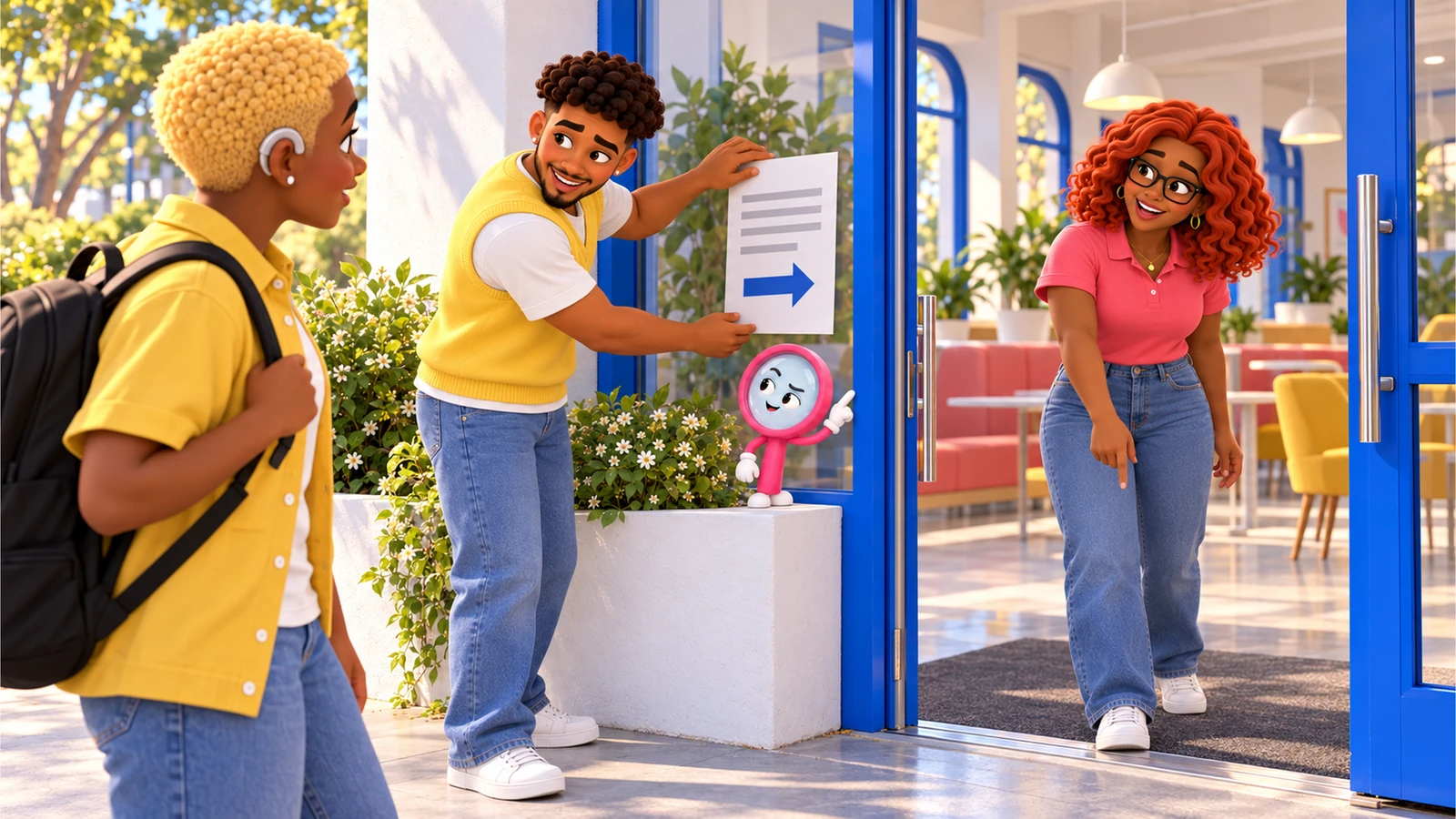
Case 11
Same work. Different pay. Why?
Jordy and Gia worked the same event. Why are their rates different, and how do you ask?
Pay gaps can come from fair criteria, mistakes or discrimination, and workers usually can’t tell which from a paycheck alone. Knowing what the law protects, including the right most private-sector workers have to talk about pay, helps young workers ask without guessing or getting silenced.
In the real world
- NPR, 2022The U.S. national women's soccer team wins $24 million in equal pay settlement
- NPR, 2020Federal Judge Dismisses U.S. Women’s Soccer Team’s Equal Pay Claim
- You’ll make
- Analysis, about 500 words
- Time
- About 45 minutes
- Level
- AP English Language
JordyWe were both there till close. I want to know why the numbers differ. Not my statement in a post before we’ve even asked.

The case file
Look at what’s actually here before deciding what it means.
- 1Fictional case material
Jordy’s pay statement (illustrative), Saturday event, paid the following Friday
Event crew, Saturday. Hours: 8.0 at $16.50. Gross pay for the event: $132.00.
- 2Fictional case material
Event crew schedule with job titles, posted the Wednesday before
Saturday event, 3:00–11:00 p.m. Crew: Gia (shift lead), Jordy and two other crew members. Setup, 3:00–5:00: all crew. Caption and audio check: Jordy. Closing, 10:00–11:00: all crew.
- 3Fictional case material
Jordy and Gia comparing notes, Sunday 1:15 p.m.
Gia: I’m fine with you knowing my rate. I just don’t want my statement posted anywhere.
Jordy: Got it. Did you do anything different as shift lead?
Gia: I opened up and handled one guest issue. Honestly, I don’t know if that’s why. We have a question, not a finding.
- 4Fictional case material
“We were both there till close. I want to know why the numbers differ. Not my statement in a post before we’ve even asked.”
Jordy, 20, event crew and caption editor
Outside the story
The case is fictional. The questions in it are not. Here is where they show up in the real world.
Still missing
What the shift-lead role officially involves and how rates are set, whether Gia’s higher rate reflects experience or other criteria, how other crew members are paid, and whether the company has any written pay policy.
Real-world evidence

Real sourceU.S. Equal Employment Opportunity Commission, Youth@Work: Pay DiscriminationSummary, not a quotation: the EEOC explains that the Equal Pay Act requires men and women to be paid equally for the same work at the same workplace, that other laws it enforces bar pay discrimination based on race, color, religion, sex, national origin, disability, age (40 or older) or genetic information, that compensation includes wages, overtime, bonuses and benefits, and that retaliation for complaining is prohibited.

Real sourceNational Labor Relations Board, Your Right to Discuss WagesSummary, not a quotation: the NLRB says that for employees covered by the National Labor Relations Act, employers may not have rules banning wage discussions or requiring permission for them, and may not punish, question, threaten or monitor employees for such discussions, whether or not they have a union.

articleThe U.S. national women's soccer team wins $24 million in equal pay settlementNPR, 2022-02-22A real ‘same work, different pay’ dispute that ended in a settlement and a promise of equal rates.
Discuss before deciding
- Which item did you trust first, and why?
- What would you need to see before repeating the strongest claim?
- Who is missing from these documents?
Same moment, different accounts
Line up the accounts. Where do they agree, where do they differ, and which difference could be a legitimate factor? What would you need to find out before calling it unfair?
Jordy’s record: 8 hours, setup, caption and audio check, closing, $16.50
Gia’s account: same hours, setup and closing, opened up and handled one guest issue, $18.00
The schedule: Gia listed as shift lead, with no description of the role
Where they agree
Both worked the same event, the same hours, and setup and closing.
Where they differ
Title and rate: shift lead at $18.00 versus crew at $16.50
Check: Ask the supervisor how rates are set and what the shift-lead role requires
One student’s draft
Build a private comparison sheet and draft Jordy’s message to the supervisor.
Comparison sheet: Jordy worked the Saturday event, 3 to 11 p.m.: setup, the caption and audio check, and closing, at $16.50 an hour. Gia worked the same event and hours, setup and closing, at $18.00. The schedule lists Gia as “shift lead.” Message: Hi Dana, I have a question about my rate for Saturday’s event. I worked 3 to 11 p.m., did setup and closing, and ran the caption and audio check1. My statement shows $16.50 an hour2, and I know Gia was paid $18.00 for the same shift3. Could you explain how rates are set for event crew, and what the shift-lead role involves4? Thanks, Jordy
- 1Precise hours and duties: the facts the supervisor needs to compare roles.
- 2Good: Jordy states their own record, which is theirs to share.
- 3Revise: this names a coworker and her pay without her permission. Jordy can raise the question without exposing Gia’s information.
- 4Strong: the question targets the one legitimate factor that might explain the difference.
Works wellUses evidenceGap to fixThink about the reader
One revision
BeforeMy statement shows $16.50 an hour, and I know Gia was paid $18.00 for the same shift.
AfterMy statement shows $16.50 an hour, and I understand another worker on the same shift was paid a higher rate.
The revision keeps the question specific while respecting that Gia’s pay is hers to share, which also keeps the conversation about criteria rather than about a coworker.
Teacher commentary
The sheet is accurate, and the message is specific, respectful and focused on the one legitimate factor that could explain the gap. Naming Gia and her rate without her permission is the one serious miss, because the case makes clear her information is hers to share. With that line revised, the message reaches Advanced on Audience and Proficient on Evidence.
Teach it in one period
AP English Language
Analyze how an employer’s pay explanation (teacher-provided) persuades, then evaluate whether it answers Jordy’s question.
- Sources
- A teacher-written employer reply and the case facts.
- Product
- Analysis, about 500 words
- Objective
- Students analyze how an employer’s explanation persuades and judge whether its criteria are specific enough to answer the worker’s question.
- Assessed by
- The analysis receives practice feedback on the three AP Lang scoring rows, with commentary judged on how precisely it names the missing evidence.
| 45 minutes | You | Students | Check for |
|---|---|---|---|
| 5 minTwo statements | Show illustrative statements: Jordy $16.50/hr, Gia $18.00/hr, same event, same hours. | Write three possible explanations. | Lists include legitimate and illegitimate reasons. |
| 8 minCompare the work | Hand out the event schedule and job titles. | Build a table: duties, hours, title, rate. | Students notice Gia’s “shift lead” title and ask what it involved. |
| 10 minWhat the law covers | Summarize the EEOC youth page: Equal Pay Act, Title VII, legitimate factors. | Match each explanation to “could be lawful,” “could be unlawful” or “need facts.” | Most land in “need facts.” |
| 7 minTalking about pay | Explain that federal labor law protects most private-sector workers who discuss pay. | Discuss: whose choice is it to go public? | Students say Jordy decides. |
| 12 minWrite the question | Model: “We compared these duties and hours. Can you explain the rate?” | Draft Jordy’s message to the supervisor. | Message names duties and hours and asks for the criteria. |
| 3 minExit | Frame: “An explanation that would satisfy me is __. One that wouldn’t is __.” | Complete it. | Answers distinguish legitimate factors. |
Before class
Prepare the case documents, one set per pair:
- Jordy’s pay statement (illustrative), Saturday event, paid the following Friday
- Event crew schedule with job titles, posted the Wednesday before
- Jordy and Gia comparing notes, Sunday 1:15 p.m.
- Jordy, 20, event crew and caption editor
Every document is fictional case material, printable from the online field guide.
Questions to keep asking
PautaEqual Pay Act, Title VII and other laws each cover different reasons for a pay gap.
LupaGia’s title says “shift lead.” Did she do lead work? That could explain it.
OndaGia’s statement is hers to share. Jordy decides whether their own case goes public.
Support every student, then assess
Success looks like
- Defensible thesis
- Analyzes specific claims
- Explains what evidence is missing
- Commentary explains effect
Supports at this level
- Claims-and-evidence chart
- Commentary stems
Access
- Provide a pre-built comparison table
- Read the EEOC page aloud with visuals
- Spanish vocabulary: salario, tarifa, discriminación, criterios
- Allow oral message drafting
- Reduce to comparing duties and rates
Stretch
- Find your state labor department’s page on pay equity
- Research the EEOC’s filing deadlines and how they vary by state
Challenge: Identify vague criteria like “experience” and explain what evidence would make them credible.
| Rubric | Beginning | Developing | Proficient | Advanced |
|---|---|---|---|---|
| Evidence | Relies on assumption. | Mentions the gap only. | Cites duties, hours and rate. | Cites records and acknowledges what isn’t known. |
| Reasoning | Declares discrimination. | Assumes the reason. | Asks for criteria before concluding. | Identifies possible legitimate factors to test. |
| Audience & purpose | Threatens or exposes coworkers. | Polite but vague. | Specific question to the right person. | Specific question that protects coworkers’ privacy. |
| Revision | No change. | Tone only. | Replaces conclusion with a question. | Explains how changes protect Jordy and get an answer. |
Standards this can show
Claims and Evidence (CLE)AP LangRhetorical Situation (RHS)AP LangStyle (STL)AP LangRH.11-12.8Common Core 11–12RI.11-12.7Common Core 11–12W.11-12.1Common Core 11–12

Case 12
A protest is not one legal question
When does a school get to limit what students say?
Students speak up at school through shirts, posters, walkouts and posts, and they often hear either “you have free speech” or “you have no rights here.” Both are too simple, and knowing how precedent really works helps students speak effectively without walking into avoidable trouble.
In the real world
- PBS NewsHour, 2021Student free speech makes it to the Supreme Court in former high school cheerleader's case
- PBS NewsHour (Associated Press), 2021Supreme Court rules in favor of cheerleader who published critical social media post in First Amendment case
- You’ll make
- Rhetorical analysis, about 500 words, 40 minutes
- Time
- About 50 minutes
- Level
- AP English Language
AnikaThe feeling is real. But “free speech, end of story” isn’t a fact pattern. What did the poster say, where did it go up, and under whose rule?

The case file
Look at what’s actually here before deciding what it means.
- 1Fictional case material
Anika’s poster, first version, printed Tuesday 3:15 p.m.
“KEEP OUR LIBRARY OPEN AT LUNCH. Wear blue Thursday.” A photo of the school’s sign and logo runs across the top. No student name or group appears anywhere on the poster.
- 2Fictional case material
§ Student handbook, posting policy, p. 14 (illustrative excerpt)
Students may post materials on the student bulletin boards outside the cafeteria and the library. Materials must be approved by the main office and must show the name of the student or group responsible.
- 3Fictional case material
Group chat suggesting a walkout, Wednesday 9:02 p.m.
“If they take the poster down we walk out Thursday. Tinker says they can’t touch us.”
Reply: “Wait, wear blue AND walk out??”
- 4Fictional case material
“I put the school sign across the top because it looked good. Now it reads like the school is announcing it. It isn’t.”
Mateo, 22, did the photo and layout
Outside the story
The case is fictional. The questions in it are not. Here is where they show up in the real world.
Still missing
What the attendance policy says about leaving class, whether the school has objected to the poster or only might, whether the people shown in the photo agreed to its use, and what process the school follows before any discipline.
Real-world evidence

Real sourceU.S. Courts, Facts and Case Summary: Tinker v. Des MoinesSummary, not a quotation: public-school students were suspended for wearing black armbands to protest the Vietnam War. The Supreme Court ruled for the students, reasoning that a school could not restrict their expression because of a mere fear of disruption.

Real sourceTinker v. Des Moines Independent Community School District, 393 U.S. 503 (1969), majority opinion“It can hardly be argued that either students or teachers shed their constitutional rights to freedom of speech or expression at the schoolhouse gate.” … “But, in our system, undifferentiated fear or apprehension of disturbance is not enough to overcome the right to freedom of expression.”

videoStudent free speech makes it to the Supreme Court in former high school cheerleader's casePBS NewsHour, 2021-04-28Explains the Snapchat case the Court used to ask when a school can punish off-campus student speech.
Discuss before deciding
- Which item did you trust first, and why?
- What would you need to see before repeating the strongest claim?
- Who is missing from these documents?
What the evidence can hold up
Test the slogan against the facts. Which evidence supports each claim, which challenges it, and which fact would you still need?
| Evidence | Claim 1Tinker means nobody can face consequences for walking out. | Claim 2The wear-blue plan closely matches Tinker’s facts. | Claim 3The poster should carry a student byline instead of the school logo. |
|---|---|---|---|
| 1Tinker’s facts: silent armbands, no substantial disruption, a public school | Narrows | Supports | — |
| 2A walkout means leaving class, which falls under the attendance rule | Challenges | — | — |
| 3The logo photo makes the poster look like school-sponsored speech | — | — | Supports |
Still open
- What does the attendance policy say, and what process follows?
One student’s draft
Write a fact-pattern brief comparing Tinker with the wear-blue plan and the walkout.
Facts: In Tinker (1969), public-school students wore black armbands to protest the Vietnam War and were suspended. Rule: The Supreme Court said students keep free-speech rights at school unless their expression would substantially disrupt school or invade others’ rights1. Application: Anika’s wear-blue Thursday plan is a lot like the armbands. It is silent and doesn’t stop class, so Tinker probably protects it.2 The walkout is also protected because it is a protest just like Tinker.3 Open questions: We don’t know what the attendance policy says4 or whether the school would count a walkout as a disruption. We also need to know whether the school has any rule about clothing.
- 1Accurate rule, including the limit most first drafts leave out.
- 2Good application: the writer matches specific facts and says “probably” instead of promising a legal outcome.
- 3Revise: leaving class is conduct under an attendance rule, which Tinker does not settle. Calling both “protest” hides the fact that changes the question.
- 4Strong open question: it names the exact missing fact that would decide the walkout issue.
Works wellUses evidenceGap to fixThink about the reader
One revision
BeforeThe walkout is also protected because it is a protest just like Tinker.
AfterThe walkout is different: the message may be similar, but leaving class is conduct covered by the attendance policy, so Tinker alone doesn’t answer it.
The revision separates the message from the action, which is the distinction the case turns on.
Teacher commentary
The brief states the rule accurately and applies it carefully to the wear-blue plan. It then treats the walkout as the same fact pattern because both are protests, which is the slogan the case warns against. Separating speech from conduct moves it to Proficient on Reasoning, and adding the logo question would reach Advanced.
Teach it in one period
AP English Language
Rhetorically analyze a passage from Justice Fortas’s majority opinion in Tinker.
- Sources
- The “schoolhouse gate” passage and surrounding paragraph.
- Product
- Rhetorical analysis, about 500 words, 40 minutes
- Objective
- Students analyze how a Supreme Court majority opinion balances student rights and school authority for several audiences at once.
- Assessed by
- The 40-minute analysis receives practice feedback on the three AP Lang scoring rows, and the revision is judged on how it explains the opinion’s balance rather than listing devices.
| 45 minutes | You | Students | Check for |
|---|---|---|---|
| 5 minThe slogan | Write on the board: “Tinker means nobody can face consequences for walking out.” | Agree, disagree or unsure, with one reason. | Students commit to a position before reading. |
| 10 minRead the precedent | Read the U.S. Courts Tinker summary aloud: facts, ruling, reasoning. | Fill a fact-pattern card for Tinker: expression, place, school action, reason. | Cards name armbands, public school, suspension, no substantial disruption. |
| 12 minCompare fact patterns | Introduce Anika’s poster, the wear-blue plan and a friend’s walkout idea. | Build a three-column comparison and mark which facts match Tinker. | Students separate quiet expression from leaving class. |
| 8 minThe logo problem | Explain school-sponsored speech (Hazelwood) in one minute. | Decide what to change so the poster reads as student speech, not an official notice. | Revisions remove the logo photo or add a clear student byline. |
| 7 minDraft the next questions | Model: “Which rule is the school citing, and what process follows?” | Write two questions for a school contact about the posting policy. | Questions are about specific rules and procedures, not slogans. |
| 3 minExit | Frame: “A fact that would make Tinker less useful here is __.” | Complete the frame. | Answer names a changed fact like conduct, sponsorship or private school. |
Before class
Prepare the case documents, one set per pair:
- Anika’s poster, first version, printed Tuesday 3:15 p.m.
- Student handbook, posting policy, p. 14 (illustrative excerpt)
- Group chat suggesting a walkout, Wednesday 9:02 p.m.
- Mateo, 22, did the photo and layout
Every document is fictional case material, printable from the online field guide.
Questions to keep asking
PautaTinker covers public schools. A private school isn’t bound by the First Amendment the same way.
LupaThe armbands were silent and caused no substantial disruption. That’s the fact the ruling leaned on.
DudaDoes the logo photo make this look like the school is speaking?
Support every student, then assess
Success looks like
- Thesis on the opinion’s purpose and strategy
- Analyzes diction and structure with quotations
- Considers several audiences
- Commentary explains effect
Supports at this level
- Close-reading guide
- Commentary frames about purpose and audience
Access
- Provide an illustrated two-page Tinker summary
- Read case summaries aloud and pause for paraphrase
- Spanish vocabulary: precedente, expresión, perturbación, política escolar
- Allow oral responses or a chart instead of a paragraph
- Reduce to one comparison: armbands vs. wear-blue
Stretch
- Read about Bethel v. Fraser (1986) and Morse v. Frederick (2007) and add them to the comparison
- Find your district’s student expression or posting policy and compare it with Tinker
Challenge: Explain how the opinion balances student rights with school authority for multiple audiences.
| Rubric | Beginning | Developing | Proficient | Advanced |
|---|---|---|---|---|
| Evidence | No case facts. | Names Tinker without its rule. | States Tinker’s facts and substantial-disruption test. | Adds a second precedent or the walkout exercise accurately. |
| Reasoning | Treats a slogan as the answer. | Applies Tinker to everything. | Compares facts and separates speech from conduct. | Varies facts to show where the precedent stops fitting. |
| Audience & purpose | Tells others to break rules. | Argues for one side only. | Recommends a clear next question for the school. | Balances effective expression with respect for process. |
| Revision | No change. | Softens tone only. | Adds the rule’s limit and removes a legal conclusion. | Explains how each edit makes the argument more precise. |
Standards this can show
Claims and Evidence (CLE)AP LangReasoning and Organization (REO)AP LangRhetorical Situation (RHS)AP LangRI.11-12.8Common Core 11–12RH.11-12.9Common Core 11–12W.11-12.1Common Core 11–12

Case 13
Before it reaches the bin
Could the crew make less waste before anyone reaches the recycling bin?
Cities spend public money collecting and managing waste, and the costs of landfills and pollution don’t land evenly on every neighborhood. Students who look upstream at what gets bought and reused can make real changes at school events and ask better questions of their local government.
In the real world
- NPR, 2018Starbucks To Eliminate Plastic Straws In Its Stores By 2020
- NPR, 2018Why People With Disabilities Want Bans On Plastic Straws To Be More Flexible
- You’ll make
- Analysis (about 350 words) plus revised poster text
- Time
- About 45 minutes
- Level
- AP English Language
DecHalf this box is packaging around tiny parts. Before we redo the recycling sign, can we just order smarter?

The case file
Look at what’s actually here before deciding what it means.
- 1Fictional case material
Screening supply list, last Friday’s event
Single-use cups (plastic-lined paper, labeled “recyclable”): about 120. Paper plates: 80. Printed flyers: 150. Paper straws, on request: 40. Folding chairs: borrowed from the bookshop.
- 2Fictional case material
Parts order with packaging, delivered Tuesday to the theater shop
Three separate orders of small LED connectors and switches, placed over one week and delivered together: one full box, about half of it plastic air pillows and foam around tiny parts.
- 3Fictional case material
§ City accepted-materials list, current sanitation guide (illustrative)
Accepted in recycling: metal cans, glass bottles and jars, rigid plastic bottles and containers, flattened cardboard. Not accepted: plastic-lined paper cups, plastic bags and film, foam, items labeled compostable.
- 4Fictional case material
“Half this box is packaging around tiny parts. Before we redo the recycling sign, can we just order smarter?”
Dec, 17, theater crew - 5Fictional case material
“Before anyone says this saves money or energy, what are we counting? Washing takes water and time too.”
Anika, 16, theater tech crew
Outside the story
The case is fictional. The questions in it are not. Here is where they show up in the real world.
Still missing
How many cups washable reuse would actually replace, what washing costs in water and volunteer time, whether the bookshop can lend cups every time, and where the city’s trash and recycling actually go.
Real-world evidence

Real sourceU.S. Environmental Protection Agency, Sustainable Materials Management: Non-Hazardous Materials and Waste Management HierarchySummary, not a quotation: EPA ranks approaches from most to least environmentally preferred as source reduction and reuse, then recycling and composting, then energy recovery, then treatment and disposal, while noting that no single approach suits all materials and circumstances.
articleStarbucks To Eliminate Plastic Straws In Its Stores By 2020NPR, 2018-07-09A throwback to a company cutting waste at the counter, before anything reached a bin.
articleWhy People With Disabilities Want Bans On Plastic Straws To Be More FlexibleNPR, 2018-07-11The access problem a waste rule can create, and an exemption advocates said few people seemed to know about.
Discuss before deciding
- Which item did you trust first, and why?
- What would you need to see before repeating the strongest claim?
- Who is missing from these documents?
If this, then what?
Follow each choice to its consequences, including new costs. Which consequence would you measure first, and what would count as success?
Keep buying “recyclable” single-use cups
About 120 cups go to the trash because the city does not accept them
The city collection service and the neighborhoods near where waste ends up
Borrow washable cups and run a wash station
Fewer cups in the trash, if people use the washable ones
Check: Count cups and bags after the next event and compare with last timeNew costs: water, washing time and volunteers
Check: Count cups and bags after the next event and compare with last time
Combine parts orders into one shipment
Less packaging arrives before anything reaches a bin
One student’s draft
Write a proposal to the event organizers for one purchasing change, with a measurement plan.
Proposal: Replace most single-use cups at the next screening. Last Friday we used about 120 single-use cups2, and the city’s accepted-materials list doesn’t take that kind of cup1, so they all went to the trash even though they say “recyclable.” We propose borrowing 60 washable cups from the bookshop and running a wash station. We’ll keep compostable cups available for anyone who needs a disposable one3, like people who can’t use a heavy cup. This change will definitely save money and cut our waste in half.4 To measure it, we’ll count the cups used and thrown away after the event and compare with last time.
- 1Strong: the writer checks the local rule instead of trusting the label.
- 2Good use of a count as the baseline for the proposal.
- 3Good: the access concern is built into the plan rather than added as an afterthought.
- 4Revise: nothing has been measured yet, and washing has costs of its own. Say what you expect and let the count after the event decide.
Works wellUses evidenceGap to fixThink about the reader
One revision
BeforeThis change will definitely save money and cut our waste in half.
AfterWe expect fewer cups in the trash, but we won’t claim savings until we compare the counts and the cost of running the wash station.
The revision matches the claim to the evidence and names a cost the original sentence ignored, which makes the proposal more credible to organizers.
Teacher commentary
The proposal picks one specific change, checks local acceptance, uses a baseline count and builds in an access option and a measurement plan. One sentence overclaims results that have not been measured and ignores the cost of washing. Qualifying it moves the proposal to Advanced on Reasoning.
Teach it in one period
AP English Language
Analyze a “be sustainable” poster’s rhetoric and write a more effective, specific version.
- Sources
- A teacher-provided generic poster.
- Product
- Analysis (about 350 words) plus revised poster text
- Objective
- Students analyze why vague appeals underperform and write a specific, accurate alternative aimed at changing one behavior.
- Assessed by
- The analysis receives practice feedback on the three AP Lang scoring rows, and the revised poster text is checked for specificity and accuracy.
| 45 minutes | You | Students | Check for |
|---|---|---|---|
| 5 minThe packaging box | Describe Dec’s full box of packaging from replacement parts. | Guess: where did this waste start? | Guesses point upstream to ordering. |
| 8 minThe hierarchy | Show EPA’s hierarchy; stress it’s a general framework. | Place five items (packaging, cups, chairs, parts, flyers) on the hierarchy. | Students place reduction options above recycling. |
| 10 minCheck local rules | Hand out the city’s illustrative accepted-materials list. | Check whether the “recyclable” cups are accepted. | Students find the label and the local list disagree. |
| 10 minMaterials sheet | Model the event materials sheet. | Fill in item, number used, reduction option, disposal rule, trade-off. | Each row has a trade-off, including access. |
| 9 minOne change | Anika’s rule: pick one repeated item and measure. | Draft a proposal for one change and how to measure it. | Proposal has a before/after number. |
| 3 minExit | Ask: could reducing waste create an access problem? | Name one and how you’d find out. | Answer mentions asking people affected. |
Before class
Prepare the case documents, one set per pair:
- Screening supply list, last Friday’s event
- Parts order with packaging, delivered Tuesday to the theater shop
- City accepted-materials list, current sanitation guide (illustrative)
- Dec, 17, theater crew
Every document is fictional case material, printable from the online field guide.
Questions to keep asking
NexoThe packaging box started at the order form, not at the bin.
LupaThe cup says “recyclable.” The city’s accepted-materials list is what counts.
OndaSome people need a straw or a disposable cup. Keep an option for them.
Support every student, then assess
Success looks like
- Thesis on effectiveness
- Analyzes specific choices
- Revision is specific and accurate
- Commentary explains effect
Supports at this level
- Analysis stems
- Specificity checklist
Access
- Use picture cards for the hierarchy
- Read the local recycling list aloud
- Spanish vocabulary: reducir, reutilizar, reciclar, desecho
- Offer a partially completed materials sheet
- Reduce to one item: cups
Stretch
- Find your city’s recycling rules and compare with a neighboring city
- Research where your area’s trash goes after pickup
Challenge: Explain why vague appeals underperform and how specificity changes behavior.
| Rubric | Beginning | Developing | Proficient | Advanced |
|---|---|---|---|---|
| Evidence | No data. | General claims about recycling. | Uses quantities and local rules. | Uses quantities, local rules and a before/after plan. |
| Reasoning | Treats one fix as solving everything. | Ignores trade-offs. | Applies the hierarchy and names a trade-off. | Weighs trade-offs including access and cost with a measurement boundary. |
| Audience & purpose | Commands people. | Relies on slogans. | Specific change organizers can do. | Specific, inclusive change with roles assigned. |
| Revision | No change. | Wording only. | Narrows to a measurable change. | Explains how narrowing makes success testable. |
Standards this can show
Claims and Evidence (CLE)AP LangReasoning and Organization (REO)AP LangRhetorical Situation (RHS)AP LangW.11-12.7Common Core 11–12RI.11-12.7Common Core 11–12SL.11-12.4Common Core 11–12
Case 14
Credit is not the whole copyright answer
If you credit the artist, can you use their track in your film?
Students remix music, clips and images every day, and many believe credit or “only ten seconds” makes any use okay. Understanding how U.S. copyright and fair use actually work lets creators share their projects without getting taken down, and respect other creators too.
In the real world
- CrashCourse (YouTube), 2015Copyright, Exceptions, and Fair Use: Crash Course Intellectual Property #3
- NPR, 2023Supreme Court sides against Andy Warhol Foundation in copyright infringement case
- You’ll make
- Analysis (about 350 words) plus 100-word correction
- Time
- About 45 minutes
- Level
- AP English Language
CaioCalma, Mateo. The sample makes the scene, I know. But “we credited them” isn’t a reason I can explain. Let’s check the license first.

The case file
Look at what’s actually here before deciding what it means.
- 1Fictional case material
Caio’s rough cut, Friday 9:40 p.m. (edit timeline)
0:00–0:18 crew footage, no music. 0:18–0:38 sampled track, pitched up slightly, under the setup montage. 0:38–1:52 crew footage and interviews. 1:40–1:46 a 6-second clip downloaded from a stitched TikTok post.
- 2Fictional case material
Mateo in the crew chat, Friday 10:02 p.m.
“We’ll credit them in the caption. Post tonight?”
- 3Fictional case material
“Calma, Mateo. The sample makes the scene, I know. But “we credited them” isn’t a reason I can explain. Let’s check the license first.”
Caio, 24, editor and film-night organizer - 4Fictional case material
Rights log template, started Saturday morning
Columns: element, who made it, where it came from, permission or license and date. Row 1: setup-montage music, the recording artist, a streaming download, permission unknown. Row 2: 6-second clip, a TikTok creator, downloaded from TikTok, permission unknown.
Outside the story
The case is fictional. The questions in it are not. Here is where they show up in the real world.
Still missing
Whether the track has any license that covers this use, which part of the song the 20 seconds come from, where the film will be shown, and what the TikTok creator agreed to when the clip was posted.
Real-world evidence

Real sourceU.S. Copyright Office, Fair Use Index overview pageSummary, not a quotation: the Copyright Office explains that fair use is decided case by case with four factors (purpose and character of the use, nature of the copyrighted work, amount and substantiality of the portion used, and effect on the potential market), that no formula guarantees a set amount may be used without permission, and that even a small portion can weigh against fair use if it is the heart of the work.

Real sourceU.S. Copyright Office, Fair Use Index summary of Andy Warhol Foundation for the Visual Arts, Inc. v. Goldsmith (2023)Summary, not a quotation: the Supreme Court held that the first factor did not favor fair use for the specific licensing use at issue, because that use shared substantially the same purpose as the original photograph and was commercial; a new look or meaning alone did not settle the question.

videoCopyright, Exceptions, and Fair Use: Crash Course Intellectual Property #3CrashCourse (YouTube), 2015-05-07Explains why giving credit is not the same as permission, and how fair use is weighed.
Discuss before deciding
- Which item did you trust first, and why?
- What would you need to see before repeating the strongest claim?
- Who is missing from these documents?
What the evidence can hold up
Test the crew’s two assumptions against the sources. Which evidence knocks each one down, and what single check could still make the plan work?
| Evidence | Claim 1Crediting the artist makes the use okay. | Claim 2Twenty seconds is short enough to be fair use. |
|---|---|---|
| 1Credit names the creator but grants no permission | Challenges | — |
| 2Copyright Office: no formula makes a set amount safe; the heart of a work matters | — | Challenges |
| 3The sample is background mood, not commentary on the song | — | Challenges |
| 4Stitch permission applies inside TikTok, not to a downloaded clip in another film | Narrows | — |
Still open
- Does any license cover this use? Check before posting.
One student’s draft
Write a four-factor analysis of the crew’s planned use and recommend a path.
Factor 1, purpose: We’re using about 20 seconds of the song as background mood for our recap, not to comment on the song, so this factor probably weighs against fair use1. Factor 2, nature of the work: The song is a creative recording, which also weighs against us. Factor 3, amount: 20 seconds is a small part, so this factor is fine because anything under 30 seconds is allowed2. Factor 4, market effect: Using it for free as background music could replace a license the artist might sell3. Recommendation: Credit doesn’t equal permission, and Stitch only works inside TikTok4, so we should swap in a licensed track or record our own before posting.
- 1Accurate reading of purpose, with an honest “probably” instead of a verdict.
- 2Revise: there is no safe number of seconds. The Copyright Office says no formula guarantees that a set amount may be used, and even a small portion can count against fair use if it is the heart of the work.
- 3Strong: the writer connects market effect to how artists actually earn from music.
- 4Good: platform permission is correctly limited to the platform.
Works wellUses evidenceGap to fixThink about the reader
One revision
BeforeFactor 3, amount: 20 seconds is a small part, so this factor is fine because anything under 30 seconds is allowed.
AfterFactor 3, amount: 20 seconds is a small part of the song, but the factor also weighs which part is used, and if it is the song’s most recognizable hook, that could count against us.
The revision replaces a myth with the actual factor, which weighs both how much and which part is used.
Teacher commentary
The analysis applies all four factors, marks uncertainty and correctly limits platform permission, and its recommendation is practical. One sentence repeats the seconds myth the case exists to correct. Replacing it with the real amount-and-substantiality factor moves the analysis to Proficient on Evidence and Reasoning.
Teach it in one period
AP English Language
Analyze the persuasive strategy of a common online myth (“10 seconds is fair use”) and write a correction for creators.
- Sources
- A teacher-written myth post and the Copyright Office page.
- Product
- Analysis (about 350 words) plus 100-word correction
- Objective
- Students analyze why a confident, simple myth persuades and write a correction designed to compete with it.
- Assessed by
- The analysis receives practice feedback on the three AP Lang scoring rows, and the correction is checked for accuracy and appeal to the same audience.
| 45 minutes | You | Students | Check for |
|---|---|---|---|
| 5 minThe paused upload | Set the scene: Caio’s film recap uses a sample; Mateo wants to post tonight with a credit. | Vote: is credit enough? One reason. | Everyone commits to a position. |
| 10 minThree questions | Distinguish attribution, permission and fair use. | Sort statements into the three categories. | “We’ll credit them” goes under attribution only. |
| 10 minFour factors | Read the Copyright Office fair-use page together. | Apply each factor to the crew’s use, marking uncertainty. | Students avoid a guaranteed verdict. |
| 7 minMyth check | Test “ten seconds is always fine” and “it’s for school.” | Find what the source says about each. | Students cite that there’s no fixed-length rule and education isn’t automatic. |
| 10 minRights log and alternative | Model a four-column rights log. | Complete the log and propose a licensed or original alternative. | Log is complete; alternative is realistic. |
| 3 minExit | Ask: what changes if the class draft becomes a public post? | Write one change. | Answer mentions audience, market or platform terms. |
Before class
Prepare the case documents, one set per pair:
- Caio’s rough cut, Friday 9:40 p.m. (edit timeline)
- Mateo in the crew chat, Friday 10:02 p.m.
- Caio, 24, editor and film-night organizer
- Rights log template, started Saturday morning
Every document is fictional case material, printable from the online field guide.
Questions to keep asking
PautaCredit answers “who made it.” Permission and fair use are separate questions.
LupaThe Copyright Office names four factors. It names no safe number of seconds.
NexoStitch permission works inside TikTok. A downloaded clip in a festival film is different.
Support every student, then assess
Success looks like
- Thesis on persuasion
- Analyzes choices
- Correction is accurate and appealing
- Commentary explains effect
Supports at this level
- Myth anatomy chart
- Correction model
Access
- Provide a three-box visual: credit / permission / fair use
- Read the Copyright Office summary aloud
- Spanish vocabulary: derechos de autor, licencia, atribución, uso justo
- Allow the rights log to be completed orally
- Reduce to one element: the music track
Stretch
- Compare Creative Commons license types and what each allows
- Research how your school’s media policy handles copyrighted material
Challenge: Explain why the myth persuades (simplicity, confidence) and how your correction competes.
| Rubric | Beginning | Developing | Proficient | Advanced |
|---|---|---|---|---|
| Evidence | Relies on myths. | Cites credit as permission. | Uses the four factors or license terms. | Uses factors, license terms and platform differences. |
| Reasoning | Assumes any use is fine. | Applies one factor. | Separates credit, permission and fair use. | Weighs factors honestly and chooses a lower-risk path. |
| Audience & purpose | Ignores the artist. | Considers only the crew. | Considers the artist and the audience. | Balances creative goals with respect for the original creator. |
| Revision | No change. | Adds a credit. | Replaces myths with a rights plan. | Explains each step and a realistic alternative. |
Standards this can show
Claims and Evidence (CLE)AP LangReasoning and Organization (REO)AP LangRhetorical Situation (RHS)AP LangW.11-12.8Common Core 11–12RI.11-12.8Common Core 11–12W.11-12.1Common Core 11–12
Case 15
Internship, or someone’s unpaid job?
When is an unpaid internship really a job that should be paid?
Internships open doors, but unpaid ones favor people who can afford to work for free, and some “internships” are just unpaid jobs. Knowing the questions the law asks helps students ages 16–24 evaluate an offer before they give it a summer.
In the real world
- PBS NewsHour (YouTube), 2023Why unpaid internships still exist despite hardships for young workers
- NPR, 2013Internships: Low-Paid, Unpaid Or Just Plain Illegal?
- You’ll make
- Analysis (about 400 words) plus revised listing
- Time
- About 50 minutes
- Level
- AP English Language
RafaSige, I want the experience. I also work at the shop. So what would I actually learn, and who’s teaching me?

The case file
Look at what’s actually here before deciding what it means.
- 1Fictional case material
Studio internship listing, posted on the campus job board in April
“Summer Editing Intern (unpaid). Join our fast-paced studio! You’ll run the customer inbox all summer, help with client files and get great exposure to the industry. College credit available.”
- 2Fictional case material
Studio reply to Rafa, Tuesday 11:20 a.m.
“Thanks for your interest, Rafa! Since interns get college credit, it’s totally legal for us not to pay. We’d love for you to start right after finals.”
- 3Fictional case material
Gia and Rafa talking it through, Tuesday lunch
Gia: Didn’t they pay someone to do the inbox last year?
Rafa: Yeah, their assistant.
Gia: And it’s your summer, not theirs. What about your shifts at the shop?
- 4Fictional case material
“Sige, I want the experience. I also work at the shop. So what would I actually learn, and who’s teaching me?”
Rafa, 18, first-year commuter who works at his family’s shop
Outside the story
The case is fictional. The questions in it are not. Here is where they show up in the real world.
Still missing
What training and supervision the studio actually provides, how many hours a week the role takes, whether Rafa’s school will grant credit, and how many paid shifts at the family shop Rafa would give up.
Real-world evidence

Real sourceU.S. Department of Labor, Wage and Hour Division, Fact Sheet #71: Internship Programs Under the Fair Labor Standards ActSummary, not a quotation: for-profit employers use the “primary beneficiary test” to decide whether an intern is an employee who must be paid under the FLSA. The fact sheet lists seven factors, including whether the internship is tied to formal education or academic credit and whether the intern’s work complements rather than displaces paid employees, and says the test is flexible with no single factor determinative.

videoWhy unpaid internships still exist despite hardships for young workersPBS NewsHour (YouTube), 2023-08-26Reports that nearly half of U.S. interns were unpaid in 2022 and who can afford to take those jobs.

articleInternships: Low-Paid, Unpaid Or Just Plain Illegal?NPR, 2013-05-18Explains when an unpaid internship can break wage law, using the ‘Black Swan’ intern lawsuit.
Discuss before deciding
- Which item did you trust first, and why?
- What would you need to see before repeating the strongest claim?
- Who is missing from these documents?
What the evidence can hold up
Test the studio’s claim against the factor list. Which evidence points toward training, which toward a job, and what is still unknown?
| Evidence | Claim 1College credit makes the unpaid internship legal. | Claim 2The role looks more like a job than training. |
|---|---|---|
| 1DOL: credit is one of seven factors, and no single factor decides | Challenges | — |
| 2The listing: Rafa runs the customer inbox all summer | — | Supports |
| 3A paid assistant ran the inbox last year | — | Supports |
| 4The role is openly unpaid and offers credit (factors 1 and 3) | — | Challenges |
Still open
- Is there a learning plan, and who supervises?
One student’s draft
Turn the seven DOL factors into an internship questions sheet, fill it in with the studio’s answers and write a 150-word summary.
Summary: Using the seven factors, Rafa’s internship looks more like a job than training. The studio says it’s unpaid and gives college credit, so factors 1 and 3 point toward an internship1. But the listing says Rafa would run the customer inbox all summer, and a paid assistant did that job last year, so factor 6 points toward a job2 because he would be replacing a worker. We don’t know about training or supervision because the studio didn’t answer that question.3 Since the studio says credit makes it legal, and credit is one of the factors, the internship is probably legal.4 Rafa should ask for a written learning plan and the weekly hours before he decides.
- 1Accurate and fair: the writer credits the evidence that cuts the other way instead of ignoring it.
- 2Strong: specific evidence tied to the displacement factor.
- 3Good: unknowns are marked as unknown rather than guessed.
- 4Revise: this repeats the studio’s claim and contradicts the summary’s own reasoning. No single factor decides the test, and the displacement evidence points the other way.
Works wellUses evidenceGap to fixThink about the reader
One revision
BeforeSince the studio says credit makes it legal, and credit is one of the factors, the internship is probably legal.
AfterCredit is only one factor, and no single factor decides the test, so the studio’s answer doesn’t settle it.
The revision matches the conclusion to the flexible test and to the writer’s own evidence instead of adopting the employer’s claim.
Teacher commentary
The summary weighs factors in both directions, ties the displacement factor to specific evidence and marks unknowns honestly. One sentence then adopts the studio’s claim that credit settles the question, contradicting the rest of the analysis. Removing that verdict moves the response to Proficient on Reasoning, and completing the remaining factors on the sheet finishes the task.
Teach it in one period
AP English Language
Rhetorically analyze the internship listing and write a revised, honest version.
- Sources
- The listing.
- Product
- Analysis (about 400 words) plus revised listing
- Objective
- Students analyze how vague prestige language persuades an ambitious audience and write an honest, specific alternative.
- Assessed by
- The analysis receives practice feedback on the three AP Lang scoring rows, and the revised listing is checked for specific duties, hours, supervision and pay.
| 45 minutes | You | Students | Check for |
|---|---|---|---|
| 5 minThe offer | Read the studio listing: unpaid, run the customer inbox all summer, college credit, “great exposure.” | Underline what you would do each day. | Students find that duties are mostly inbox work. |
| 10 minThe seven factors | Read DOL Fact Sheet 71’s factors aloud in plain language. | Rewrite each factor as a question Rafa could ask. | Seven questions, one per factor. |
| 10 minApply them | Provide the studio’s answers to some questions; leave others blank. | Mark each factor: points toward training, toward job, or unknown. | Students leave unknowns as unknowns. |
| 10 minThe life around the offer | Share Gia’s point about time, rent and the family shop. | List Rafa’s practical costs. | Costs include lost paid hours and transport. |
| 7 minWrite to the studio | Model a respectful clarifying email. | Draft Rafa’s email asking for the learning plan and supervision. | Email asks specific questions without accusing. |
| 3 minExit | Ask: which single fact would most change your view? | Write it. | Answer names a factor like displacement or training. |
Before class
Prepare the case documents, one set per pair:
- Studio internship listing, posted on the campus job board in April
- Studio reply to Rafa, Tuesday 11:20 a.m.
- Gia and Rafa talking it through, Tuesday lunch
- Rafa, 18, first-year commuter who works at his family’s shop
Every document is fictional case material, printable from the online field guide.
Questions to keep asking
PautaDOL lists seven factors. No single one, not even credit, decides the answer.
LupaThe listing says “run the customer inbox.” That’s the work. Where’s the training?
OndaUnpaid summers are easier for people who don’t need a paycheck.
Support every student, then assess
Success looks like
- Thesis on persuasive strategy
- Analyzes specific phrases
- Revision is specific and honest
- Commentary explains effect
Supports at this level
- Analysis stems
- Revision checklist: duties, hours, supervision, pay
Access
- Provide factor cards with icons and one-line explanations
- Read the listing aloud
- Spanish vocabulary: pasantía, empleado, salario, capacitación
- Offer a partially completed questions sheet
- Reduce to three factors: training, credit, displacement
Stretch
- Look up whether your state has its own internship or minimum-wage rules
- Compare the for-profit test with guidance for volunteering at nonprofits
Challenge: Explain how vague prestige language persuades and what honest specificity would cost the employer.
| Rubric | Beginning | Developing | Proficient | Advanced |
|---|---|---|---|---|
| Evidence | Relies on rumor. | Mentions pay only. | Asks about several factors. | Asks about factors and notes what the credit claim doesn’t settle. |
| Reasoning | Declares legal or illegal. | Asks for a verdict. | Gathers facts before deciding. | Connects each question to a reason it matters. |
| Audience & purpose | Gives away leverage or accuses. | Polite but vague. | Specific, respectful questions. | Specific questions plus Rafa’s own constraints. |
| Revision | No change. | Tone only. | Replaces rumor with factor-based questions. | Explains how each question helps Rafa decide. |
Standards this can show
Rhetorical Situation (RHS)AP LangStyle (STL)AP LangClaims and Evidence (CLE)AP LangRI.11-12.1Common Core 11–12RH.11-12.8Common Core 11–12W.11-12.1Common Core 11–12

Case 16
“It’s our policy” is not the end
When a new building rule appears, who wrote it and who does it affect?
Housing rules decide whether people can work, gather and get in and out of their own homes, and renters often have less power than whoever posts the notice. Asking who issued a rule and how it lands on different residents is how neighbors protect each other without spreading rumors.
In the real world
- Gothamist, 2019Brooklyn Landlord Does An About Face On Facial Recognition Plan
- HUD (YouTube), 2014The Federal Fair Housing Act and Reasonable Accommodations
- You’ll make
- Rhetorical analysis, about 450 words
- Time
- About 45 minutes
- Level
- AP English Language
SamiI’m not canceling my workshop over an unsigned notice. I’m also not ignoring it. Who wrote it, and how do I get in after eight?

The case file
Look at what’s actually here before deciding what it means.
- 1Fictional case material
§ Unsigned notice beside the common-room door, found Monday morning
“NOTICE TO ALL RESIDENTS. Effective immediately, the rear door will be locked at 8:00 p.m. nightly. The common room is for resident social use only. NO BUSINESS USE.” No issuer, date or contact appears on the page.
- 2Fictional case material
§ Building house rules, last year’s version, distributed at lease signing (illustrative excerpt)
“Residents may reserve the common room for gatherings, classes and resident-run workshops. Reservations are made through the building office.”
- 3Fictional case material
Building entrance plan from the lobby directory
Front entrance: four steps, no ramp. Rear door: step-free, opens to the elevator hallway. Side door: service use only.
- 4Fictional case material
“Rear door locked at 8. That’s the only door I can get through. My workshop runs later. So, questions. Plural.”
Sami, 23, lives in 3B and runs a workshop in the common room - 5Fictional case material
“All caps, bold, no name, no date. That’s a design choice. It isn’t authority.”
Caio, 24, reading last year’s house rules beside the notice
Outside the story
The case is fictional. The questions in it are not. Here is where they show up in the real world.
Still missing
Who issued the notice and why, whether it replaces or adds to the house rules, what Sami’s lease says, whether there has been a security problem at the rear door, and how the building handles accommodation requests.
Real-world evidence

Real sourceU.S. Department of Housing and Urban Development, Fair Housing Act overviewSummary, not a quotation: HUD’s overview lists the characteristics the Fair Housing Act protects (race, color, national origin, religion, sex, familial status and disability) and says housing discrimination is illegal in nearly all housing, including private, public and federally funded housing.
articleBrooklyn Landlord Does An About Face On Facial Recognition PlanGothamist, 2019-11-21A throwback about a door rule: the landlord needed state permission to change how tenants got in, and tenants used that process to object.

videoThe Federal Fair Housing Act and Reasonable AccommodationsHUD (YouTube), 2014-01-31HUD explains how a person with a disability can ask for an exception to a building rule.
Discuss before deciding
- Which item did you trust first, and why?
- What would you need to see before repeating the strongest claim?
- Who is missing from these documents?
Who actually gets to decide?
Map who made this rule, which rules it has to fit, who it affects and where residents can take a question. Which box is still empty?
Lock the rear door at 8 p.m. and ban business use of the common room
Unknown issuer: the owner, the manager or someone else?
Last year’s house rules allowed resident-run workshops
Fair Housing Act: disability is a protected characteristic
Sami and other residents who need the only step-free entrance
A local tenant or housing help line, or HUD for a fair-housing concern
One student’s draft
Write Sami’s message to the building manager asking about the rule and requesting access after 8 p.m.
Hi, I’m Sami in 3B. On Monday I saw a new notice by the common-room door. It says the rear door will be locked after 8 p.m. and that business use of the room is banned.1 I use a wheelchair, and the rear door is the building’s only step-free entrance2. If it’s locked, I can’t get into my own building at night. This notice is illegal under the Fair Housing Act, so please take it down.3 Also, who issued the notice, and does it replace last year’s house rules, which allowed resident workshops?4 Thank you, Sami
- 1Accurate summary of the notice, so the manager can see exactly which parts Sami means.
- 2Strong: a concrete, checkable fact about access, taken from the entrance plan.
- 3Revise: the facts don’t establish a violation yet, and removing the notice wouldn’t guarantee Sami’s access. Ask for an accommodation instead.
- 4Good question about authority: it points to a specific document the manager can check.
Works wellUses evidenceGap to fixThink about the reader
One revision
BeforeThis notice is illegal under the Fair Housing Act, so please take it down.
AfterI’d like to request an accommodation so I can get in after 8, such as a key fob for the rear door.
A specific accommodation request is something the manager can say yes to, and it keeps the legal question open instead of declaring an answer.
Teacher commentary
The message quotes the notice accurately, states a concrete access need and asks the right question about authority. The one legal conclusion undercuts it: it accuses before asking and requests something that would not guarantee access. Swapping it for a specific accommodation request moves the message to Proficient on Reasoning and Audience.
Teach it in one period
AP English Language
Analyze how the notice uses visual and verbal choices to claim authority it never explains.
- Sources
- The notice image and text.
- Product
- Rhetorical analysis, about 450 words
- Objective
- Students analyze how visual and verbal choices construct authority in a text that never names its author, then test the analysis against their own rewrite.
- Assessed by
- The analysis receives practice feedback on the three AP Lang scoring rows, with the comparison judged on whether it sharpens the claim about authority.
| 45 minutes | You | Students | Check for |
|---|---|---|---|
| 5 minRead the notice | Project the notice. Ask: who wrote this? | List what the notice tells you and what it doesn’t. | Lists include missing issuer, date and contact. |
| 10 minCompare the documents | Hand out the older house rules excerpt. | Mark what changed and whether the notice claims to replace the older rule. | Students identify the new 8 p.m. rear-door lock and business-use ban. |
| 10 minMap the effects | Draw a people map: Sami, other residents, guests, the manager. | Add how each person is affected and what each needs. | Map includes step-free access and workshop use. |
| 10 minThe legal layer | Introduce the Fair Housing Act and reasonable accommodation as questions, not conclusions. | Write one question about access and one about authority. | Questions don’t declare a violation. |
| 7 minRewrite or respond | Offer two options: rewrite the notice fairly, or write Sami’s question to the manager. | Draft 60–100 words. | Draft includes issuer, scope and contact, or a precise question. |
| 3 minExit | Frame: “One fact that would change my view is __.” | Complete the frame. | Answer names a missing document or fact. |
Before class
Prepare the case documents, one set per pair:
- Unsigned notice beside the common-room door, found Monday morning
- Building house rules, last year’s version, distributed at lease signing (illustrative excerpt)
- Building entrance plan from the lobby directory
- Sami, 23, lives in 3B and runs a workshop in the common room
Every document is fictional case material, printable from the online field guide.
Questions to keep asking
PautaNo issuer, no date, no contact. Bold type isn’t authority.
OndaLocking the rear door at 8 p.m. closes the building’s only step-free entrance for Sami.
DudaDoes this notice replace last year’s house rules, or just add to them?
Support every student, then assess
Success looks like
- Thesis on how authority is constructed
- Analyzes visual and verbal choices
- Explains effects on residents
- Comparison sharpens the analysis
Supports at this level
- Visual rhetoric guide
- Commentary stems
Access
- Provide the notice and older rule side by side with changes highlighted
- Read HUD’s overview summary aloud
- Spanish vocabulary: aviso, inquilino, administrador, ajuste razonable
- Offer a fill-in message template
- Reduce to the rewrite-the-notice task only
Stretch
- Research what local tenant organizations exist in your area and what they offer
- Compare federal fair-housing protections with your state’s list of protected characteristics
Challenge: Compare it with your own rewritten notice and explain what each choice does for readers.
| Rubric | Beginning | Developing | Proficient | Advanced |
|---|---|---|---|---|
| Evidence | No specifics from the notice. | Mentions the notice generally. | Quotes the notice and older rule. | Quotes both and names what is still unknown. |
| Reasoning | Declares a legal violation. | Complains without a clear need. | Connects the rule to a concrete effect. | Separates the communication problem from the legal question. |
| Audience & purpose | Hostile or vague. | Polite but no request. | Specific request the manager can act on. | Specific request plus questions that clarify authority. |
| Revision | No change. | Tone edits only. | Replaces the conclusion with a question and request. | Explains how each change makes a yes more likely. |
Standards this can show
Rhetorical Situation (RHS)AP LangStyle (STL)AP LangClaims and Evidence (CLE)AP LangRI.11-12.1Common Core 11–12W.11-12.1Common Core 11–12SL.11-12.1Common Core 11–12

Case 17
A good choice for whom?
Ten free seats, thirty people who want one. How should the crew decide?
Clubs, schools and governments constantly decide who gets limited seats, money or time, and every method helps some people and costs others. Students who can name the trade-off out loud make fairer decisions and can challenge unfair ones without pretending there’s a perfect answer.
In the real world
- NPR, 2020The Ethics Of Who Gets The COVID-19 Vaccine And When
- Scientific American, 2020How to Decide Who Should Get a COVID-19 Vaccine First
- You’ll make
- Argument letter, about 450 words
- Time
- About 45 minutes
- Level
- AP English Language
AnikaI’m not asking the plan to revolve around me. I’m asking you to count the cost instead of saying nobody loses.
The case file
Look at what’s actually here before deciding what it means.
- 1Fictional case material
§ Workshop sign-up sheet, opened Monday 9 a.m.
“Free workshop: 10 seats. Add your name to show interest. How seats will be chosen: to be announced.” Thirty names by Wednesday; the first 22 were added before 10 a.m. on Monday.
- 2Fictional case material
Crew dinner debate thread, Sunday 8:30 p.m.
Gia: first come is easiest to run, we just take the top ten.
Anika: I’m at rehearsal most days, I’d see it after it’s full.
Mateo: lottery?
Gia: then we need a sign-up window and someone to run the drawing.
- 3Fictional case material
Three selection options on the whiteboard, Sunday night
A. First come, first served: fast to run; favors whoever sees it first. B. Lottery after a three-day sign-up: equal chance for everyone; needs a sign-up window and a drawing. C. Needs-based rubric: prioritizes people who can’t afford the paid version; needs personal information and someone to judge it.
- 4Fictional case material
“No. I want the group to count the effect instead of saying nobody loses. Then we can look for an adjustment.”
Anika, 16, balancing rehearsal and getting home
Outside the story
The case is fictional. The questions in it are not. Here is where they show up in the real world.
Still missing
How many of the thirty applicants have the greatest need, whether a second session is possible, who would see personal information under a needs-based rubric, and how the twenty people without seats would like to be told.
Real-world evidence

Real sourceMarkkula Center for Applied Ethics, Santa Clara University, A Framework for Ethical Decision MakingSummary, not a quotation: the framework suggests examining a decision through several ethical lenses, such as its consequences, the rights it respects, whether it treats people justly, the common good, virtue and care, and notes that the lenses can point in different directions.

articleThe Ethics Of Who Gets The COVID-19 Vaccine And WhenNPR, 2020-12-20A bioethicist explains how leaders chose who went first when there wasn’t enough for everyone.

articleHow to Decide Who Should Get a COVID-19 Vaccine FirstScientific American, 2020-09-03Lays out competing criteria such as risk, fairness and benefit, the same lenses the crew uses.
Discuss before deciding
- Which item did you trust first, and why?
- What would you need to see before repeating the strongest claim?
- Who is missing from these documents?
If this, then what?
Follow each method to its consequences. Who carries the cost under each one, and what makes the chosen process legitimate to the twenty who lose?
First come, first served
The ten fastest responders get seats; people at rehearsal or work see the sign-up late
Anika and others who check messages late
Lottery after a three-day sign-up
Each of the thirty has the same chance, and need is not considered
Needs-based rubric
Those with the greatest need are prioritized; applicants must share personal information
Applicants asked to disclose their finances
One student’s draft
Write a 150-word decision note defending one option, its strongest objection and one revision, using two ethical lenses.
We should use a lottery after a three-day sign-up. Looking at fairness, a lottery gives all thirty people the same chance1, while first-come, first-served rewards whoever sees the message first, which is unfair to people like Anika who can’t check their phones during rehearsal2. Looking at consequences, a lottery also makes the most people happy, because everyone will feel they had a fair shot3. The strongest objection is that a lottery ignores need: someone who can’t afford the paid version of the workshop has the same chance as someone who can4. To reduce that cost, we will run a second free session for the twenty people who don’t get in. We would rethink this if we can’t actually run a second session.
- 1Accurate use of the fairness lens: it names exactly what the method treats equally.
- 2Strong: a concrete cost of the alternative, tied to a person in the case.
- 3Revise: this guesses at feelings. Under the consequences lens, a lottery still leaves twenty people without seats, so name the outcomes it actually produces.
- 4Good: the writer states the strongest objection at full strength instead of a weak version.
Works wellUses evidenceGap to fixThink about the reader
One revision
BeforeLooking at consequences, a lottery also makes the most people happy, because everyone will feel they had a fair shot.
AfterLooking at consequences, every method seats exactly ten people, so the real difference is which ten; a lottery spreads the chance evenly but does nothing extra for those with the greatest need.
The revision applies the consequences lens to actual outcomes rather than predicted feelings, and it sets up the objection that follows.
Teacher commentary
The note chooses clearly, uses the fairness lens precisely and states a strong objection with a realistic revision and a condition for reconsidering. Its consequences lens rests on a guess about how people will feel. Grounding that lens in actual outcomes moves the note from Proficient to Advanced on Reasoning.
Teach it in one period
AP English Language
Write an argument addressed to the twenty students who didn’t get a seat, defending the method the crew chose.
- Sources
- The chosen method and the case facts.
- Product
- Argument letter, about 450 words
- Objective
- Students write an argument for a disappointed audience that earns credibility through concession and specific commitments.
- Assessed by
- The letter receives practice feedback on the three AP Lang scoring rows, with particular attention to how the concession and commitments serve the audience.
| 45 minutes | You | Students | Check for |
|---|---|---|---|
| 5 minThe problem | Present ten seats, thirty sign-ups, and Anika’s note that she can’t stay late. | Write your gut answer and one reason. | Everyone has a position before discussion. |
| 10 minThree options | Describe first-come, lottery and needs-based rubric. | For each, list who gains and who carries the cost. | Each option has at least one named cost. |
| 10 minTwo lenses | Introduce consequences and fairness lenses (Markkula Center). | Apply both lenses to your preferred option. | Students find a cost in their own preference. |
| 12 minDecision note | Model a 150-word note: choice, reason, strongest objection, revision. | Write the note. | Note includes an objection and a revision. |
| 5 minHear the cost | Pairs read notes aloud to someone who prefers a different option. | Listener names one thing the note missed. | Each writer receives one specific challenge. |
| 3 minExit | Frame: “I would reconsider if __.” | Complete the frame. | Condition is concrete and checkable. |
Before class
Prepare the case documents, one set per pair:
- Workshop sign-up sheet, opened Monday 9 a.m.
- Crew dinner debate thread, Sunday 8:30 p.m.
- Three selection options on the whiteboard, Sunday night
- Anika, 16, balancing rehearsal and getting home
Every document is fictional case material, printable from the online field guide.
Questions to keep asking
OndaFirst-come favors people who see the message first. Anika checks her phone after rehearsal.
PautaPublish the rule before sign-ups open, not after you see who applied.
DudaWhich part of your reasoning is doing the most work?
Support every student, then assess
Success looks like
- Defensible thesis
- Concedes the real cost
- Offers commitments tied to the audience
- Line of reasoning is clear
Supports at this level
- Audience analysis grid
- Concession stems
Access
- Provide the three options as picture cards
- Read Markkula lenses aloud with one-line summaries
- Spanish vocabulary: justo, igualdad, equidad, sorteo
- Allow oral decision notes
- Reduce to comparing two options
Stretch
- Research how a real program uses a lottery and what critics say
- Design a hybrid method and test it against all three lenses
Challenge: Build credibility with a disappointed audience through concession and specific commitments.
| Rubric | Beginning | Developing | Proficient | Advanced |
|---|---|---|---|---|
| Evidence | No reference to who is affected. | Mentions people vaguely. | Names specific people and effects from the case. | Uses case facts to show who gains and who pays. |
| Reasoning | Claims an option is obviously best. | Gives one reason only. | Uses a lens and names the strongest objection. | Uses two lenses and proposes a revision tied to the objection. |
| Audience & purpose | Ignores the twenty who miss out. | Mentions them briefly. | Explains the process to all applicants. | Builds legitimacy by publishing criteria and a remedy. |
| Revision | No change. | Wording only. | Adds a named cost and revision. | Explains how the revision addresses the objection. |
Standards this can show
Reasoning and Organization (REO)AP LangClaims and Evidence (CLE)AP LangRhetorical Situation (RHS)AP LangSL.11-12.1Common Core 11–12W.11-12.1Common Core 11–12SL.11-12.4Common Core 11–12

Case 18
Follow the school money
The district budget is huge. Why is the theater curtain still falling apart?
School budgets decide which rooms get repaired, which programs survive and how many adults are in the building, and students are rarely told where to ask. Learning to read a budget’s year, stage and units turns “where did the money go?” into a question a school board can actually answer.
In the real world
- NPR, 2016Why America's Schools Have A Money Problem
- Chalkbeat, 2026A financial reckoning is hitting America’s public schools
- You’ll make
- Synthesis essay, about 550 words, 40 minutes
- Time
- About 50 minutes
- Level
- AP English Language
MariAy, bendito, that curtain. Okay, before we get mad at the big number, which line is supposed to fix it?

The case file
Look at what’s actually here before deciding what it means.
- 1Fictional case material
District proposed budget, facilities excerpt, posted in spring for next school year
PROPOSED BUDGET, NEXT SCHOOL YEAR. Total proposed budget: $48,000,000. Projected enrollment: 3,200 students. Facilities, building repairs (all schools): $310,000. Note: figures are proposed and may change before the board adopts the budget.
- 2Fictional case material
Social post comparing two districts, shared Tuesday 6:10 p.m.
“Our district: $48 MILLION. Westbrook: $21,000 per student. And they can’t fix ONE curtain?? Where is the money going?”
- 3Fictional case material
Facilities repair quote issued to the theater advisor
Stage curtain replacement, main auditorium: remove the torn curtain, supply and install a flame-retardant replacement. Total: $6,800.
- 4Fictional case material
“Forty-eight million dollars, and the curtain still won’t close. Ay, bendito. I want to ask about that without pretending the total answers it.”
Mari, 19, helping younger neighbors prepare a budget question - 5Fictional case material
“I pull that curtain every show. It doesn’t close all the way anymore. That part I can show you.”
Dec, 17, theater crew, pulls the curtain every show
Outside the story
The case is fictional. The questions in it are not. Here is where they show up in the real world.
Still missing
Whether stage equipment falls under the building-repairs line or another one, how the district ranks repair requests, Westbrook’s budget year and stage, and what the board finally adopts after public comment.
Real-world evidence

Real sourceNational Center for Education Statistics, Condition of Education: Public School Revenue SourcesSummary, not a quotation: NCES reports public school revenue by federal, state and local source, and its data show that the mix of sources differs from state to state.

articleWhy America's Schools Have A Money ProblemNPR, 2016-04-18Explains how local property taxes make school budgets very different from one district to the next.

articleA financial reckoning is hitting America’s public schoolsChalkbeat, 2026-05-28Big districts are making cuts, showing how a huge budget can still leave little for extras like a stage curtain.
Discuss before deciding
- Which item did you trust first, and why?
- What would you need to see before repeating the strongest claim?
- Who is missing from these documents?
Who actually gets to decide?
Trace the curtain request from the photo to the vote. Who ranks it, who adopts the budget, which rules limit them, and where can students speak?
Fund the $6,800 curtain replacement next year
The elected local school board, which adopts the budget
The facilities office, which ranks repair requests (how is still unknown)
State and federal rules and funding streams set limits on district budgets
Proposed building-repairs line: $310,000 for all schools
A written question or public comment before the budget is adopted
One student’s draft
Correct a misleading social post that compares mismatched budget figures, then write a better comparison with a worked calculation.
Correction: A post going around says our district has $48 million and Westbrook spends $21,000 per student, so we’re being shortchanged. Those numbers can’t be compared.1 The $48 million is our district’s total proposed budget for next year, and the Westbrook number is per student. To compare fairly, divide our total by our projected enrollment: $48,000,000 ÷ 3,200 students = $15,000 per student2. So our district spends less per student, which proves we are underfunded3. We also need to check that both numbers are for the same year and the same stage4, proposed or adopted. Source: district proposed budget, next school year.
- 1Clear diagnosis stated up front, before any math.
- 2Correct calculation that turns the total into a comparable unit, with the work shown.
- 3Revise: per-pupil figures cannot settle adequacy on their own. Costs, student needs and budget categories differ between districts, and a proposed budget is not spending.
- 4Strong: the writer names the remaining conditions for a fair comparison.
Works wellUses evidenceGap to fixThink about the reader
One revision
BeforeSo our district spends less per student, which proves we are underfunded.
AfterSo our district’s proposed budget works out to less per student than Westbrook’s figure, but that alone can’t tell us whether either district has enough for its students’ needs.
The revision keeps the useful comparison while separating what the numbers show from a conclusion about adequacy they cannot support.
Teacher commentary
The correction diagnoses the unit mismatch immediately and shows a correct per-pupil calculation, which is the core of the task. It then overreaches, treating one comparison as proof of underfunding and calling a proposed budget spending. Qualifying the conclusion moves it from Developing to Proficient on Reasoning, and noting that Westbrook’s year and stage are unknown would reach Advanced.
Teach it in one period
AP English Language
Write a synthesis argument: what should students bring to a school board budget hearing?
- Sources
- Sources: district budget excerpt, NCES table, Mateo’s photo, Mari’s conversation.
- Product
- Synthesis essay, about 550 words, 40 minutes
- Objective
- Students synthesize three or more sources, including a visual, into a qualified argument and explain what each source can and cannot prove.
- Assessed by
- The draft receives practice feedback on the three AP Lang scoring rows, with a specific check on how accurately the visual source is used.
| 45 minutes | You | Students | Check for |
|---|---|---|---|
| 5 minThe curtain | Show Mateo’s photo of the curtain (with permission) and the district’s total budget. | Write the question the photo raises and the question the total raises. | Students notice the two questions aren’t the same. |
| 10 minLabel the number | Hand out the budget excerpt. Teach year, stage and units. | Label the excerpt: which year, proposed or adopted, total or per pupil? | Labels identify “proposed, next year, total.” |
| 10 minFix the comparison | Show the social post comparing a total with a per-pupil figure. | Explain the mismatch and what you’d need to compare fairly. | Students name matching units, year and category. |
| 8 minWho decides? | Map federal, state and local roles; explain equity vs. adequacy. | Place the curtain request on the map: which level, which line, which body? | Map points to the local board and a facilities line. |
| 9 minWrite the question | Model a one-line budget question. | Draft a question and a 60-second comment for the board. | Question names a line, a need and a request. |
| 3 minExit | Ask: what could make spending rise without improving a service? | Write one possibility. | Answers include cost increases or different categories. |
Before class
Prepare the case documents, one set per pair:
- District proposed budget, facilities excerpt, posted in spring for next school year
- Social post comparing two districts, shared Tuesday 6:10 p.m.
- Facilities repair quote issued to the theater advisor
- Mari, 19, helping younger neighbors prepare a budget question
Every document is fictional case material, printable from the online field guide.
Questions to keep asking
Lupa“Proposed, next year” is printed at the top. That’s not what was spent this year.
DudaTotal or per pupil? The post compares one of each.
PautaThe local board adopts the budget within state and federal rules.
Support every student, then assess
Success looks like
- Defensible thesis
- Integrates three sources with commentary
- Uses the visual source rhetorically and accurately
- Sophisticated treatment of limits
Supports at this level
- Source-citation practice
- Thesis with qualifier
Access
- Provide a pre-labeled budget excerpt with one line highlighted
- Use a calculator and a worked per-pupil example
- Spanish vocabulary: presupuesto, ingresos, gasto, por estudiante
- Read the budget notes aloud
- Reduce to the source-card task
Stretch
- Find your own district’s adopted budget and locate the facilities or capital line
- Compare two years of the same line and explain what might explain a change
Challenge: Integrate at least three sources, including the visual, and explain what each can and cannot prove.
| Rubric | Beginning | Developing | Proficient | Advanced |
|---|---|---|---|---|
| Evidence | Uses an unlabeled total. | Uses a figure without year or stage. | Labels year, stage and line and cites the need. | Adds a repair quote and notes what the figures can’t show. |
| Reasoning | Assumes waste or theft. | Compares mismatched numbers. | Links the need to a specific budget line. | Explains process questions: ranking, timing, decision-maker. |
| Audience & purpose | Accuses the board. | Complains without a request. | Asks a question the board can answer. | Asks a question and offers a concrete way for students to contribute. |
| Revision | No change. | Removes insults only. | Adds labels and a specific line. | Explains how each change makes an answer more likely. |
Standards this can show
Claims and Evidence (CLE)AP LangReasoning and Organization (REO)AP LangRhetorical Situation (RHS)AP LangRI.11-12.7Common Core 11–12RH.11-12.8Common Core 11–12W.11-12.1Common Core 11–12
Case 19
Give your comment a destination
How do you make a public comment that actually lands?
City councils, school boards and agencies make decisions about parks, buses and schools in meetings anyone can attend, but most people never find the agenda. A short, specific comment in the right place can be one of the most direct ways a young person, including one too young to vote, takes part in local government.
In the real world
- Chalkbeat Philadelphia, 2026‘Not what democracy is all about’: Philly students slam school leaders’ approach to school closures
- Chalkbeat Newark, 2025How a Newark student coalition is using its own research to press for change in schools
- You’ll make
- Analysis (about 350 words) plus a 90-second comment
- Time
- About 50 minutes
- Level
- AP English Language
GiaI wrote three pages. The limit is two minutes. Okay: item four, what I saw, why it matters, what I’m asking. Time me.

The case file
Look at what’s actually here before deciding what it means.
- 1Fictional case material
§ Parks committee agenda, Tuesday 6 p.m., item 4
Item 4. Evening court hours. Proposal to turn off the court lights and close the lighted courts at 8:00 p.m. Background: complaints about evening noise from nearby residents. Action: committee recommendation to the full council.
- 2Fictional case material
§ Public comment instructions posted with the agenda
Sign up to speak by 5:00 p.m. on the day of the meeting. Each speaker has 2 minutes. Written comments may be submitted before the meeting. Comments and speakers’ names become part of the public record.
- 3Fictional case material
Gia’s three-page draft, Monday night (excerpt)
“The park is really important to everyone and closing it is a terrible idea. I go there all the time with my friends… You guys never listen to young people. Please don’t close the park.”
- 4Fictional case material
“The courts are good for the neighborhood, but the noise late in the evening carries into our apartment. We have kids with school in the morning.”
Written comment from a nearby resident, submitted before the meeting (illustrative) - 5Fictional case material
“What is the one thing you want them to answer?”
Mateo, 22, helping Gia prepare
Outside the story
The case is fictional. The questions in it are not. Here is where they show up in the real world.
Still missing
How many residents have complained and when the noise occurs, whether any compromise hours were considered, how the full council usually treats committee recommendations, and the views of court users who cannot attend a 6 p.m. meeting.
Real-world evidence

Real sourceSeattle City Council, Public CommentSummary, not a quotation: the page describes hybrid comment in person or by phone, registration before the meeting, up to 2 minutes per speaker, written comments by email, and comment on items on the agenda and within the committee’s purview.

article‘Not what democracy is all about’: Philly students slam school leaders’ approach to school closuresChalkbeat Philadelphia, 2026-04-03Students testified at board meetings and used district data, real public comment with a clear destination.

articleHow a Newark student coalition is using its own research to press for change in schoolsChalkbeat Newark, 2025-11-26Teens brought evidence and specific requests to their school board, the formula this case teaches.
Discuss before deciding
- Which item did you trust first, and why?
- What would you need to see before repeating the strongest claim?
- Who is missing from these documents?
Who actually gets to decide?
Follow a comment from the speaker to the final decision. Which body hears it, which body decides, and whose concerns reach the room?
Turn off the court lights at 8 p.m.?
Full council: takes the final action
One student’s draft
Cut Gia’s long draft into a 90-second comment, then write a note explaining what you cut and why.
Comment: Good evening. I’m Gia, and I live two blocks from the park. I’m here about item 4, the proposal to turn off the court lights at 8 p.m.1 On weekday evenings I’ve counted twenty to thirty people on the courts between 8 and 92. My friend works late and is going through a lot at home3, so this is her only time to play. Please keep the lights on until 9 on weekdays this summer. Thank you. Cutting note: I cut the part about the committee never listening to young people, because it didn’t ask them for anything4. I cut the long history of the park so the comment fits in two minutes.
- 1A precise destination: the item number and the exact proposal tell the committee what the comment is about.
- 2Strong evidence: a specific, first-hand observation tied to the hours in question.
- 3Revise: this is someone else’s private story, and it would stay in the public record. Keep the point that people work late without the personal detail.
- 4Good reasoning in the note: the cut is justified by purpose, not only by length.
Works wellUses evidenceGap to fixThink about the reader
One revision
BeforeMy friend works late and is going through a lot at home, so this is her only time to play.
AfterMany of us work until evening, so after 8 is the only time we can play.
The revision keeps the reason that matters to the committee while protecting a friend’s privacy in a permanent record.
Teacher commentary
The cut comment has all four parts (item, observation, reason, request) and fits the time, and the cutting note explains choices by purpose. The one miss is keeping a friend’s private situation, which the case flags because comments become public. Fixing it moves the response to Advanced on Audience, and acknowledging the residents’ noise concern would strengthen Reasoning.
Teach it in one period
AP English Language
Analyze how two sample comments to the committee use rhetorical choices, then write your own.
- Sources
- Two teacher-written comments: one emotional and unfocused, one concise and specific.
- Product
- Analysis (about 350 words) plus a 90-second comment
- Objective
- Students analyze how a time limit and a formal setting shape effective rhetoric, then apply the analysis in a comment of their own.
- Assessed by
- The analysis receives practice feedback on the three AP Lang scoring rows, and the student’s own comment is checked for applying what the analysis found.
| 45 minutes | You | Students | Check for |
|---|---|---|---|
| 5 minPawnee vs. real | Contrast a Parks and Recreation meeting clip description with a real agenda page. | Note three differences. | Students notice time limits, agenda items and sign-up rules. |
| 8 minFind the destination | Show the fictional committee agenda and comment instructions. | Identify the item, the body, the deadline and the time limit. | Students find item 4, the parks committee and a 2-minute limit. |
| 10 minCut the draft | Show Gia’s three-page draft summary. | Highlight what stays: item, observation, why it matters, request. | Kept lines map onto the four parts. |
| 12 minWrite and time | Model a 90-second comment. Hand out timers. | Write and time a 90-second comment. | Comment fits the time and ends with a specific request. |
| 7 minListener test | Partners play committee members. | Repeat the request back in one sentence. | Listener can restate the request accurately. |
| 3 minExit | Ask: what would you leave out because it may become public? | Write one example. | Example involves someone else’s private information. |
Before class
Prepare the case documents, one set per pair:
- Parks committee agenda, Tuesday 6 p.m., item 4
- Public comment instructions posted with the agenda
- Gia’s three-page draft, Monday night (excerpt)
- Written comment from a nearby resident, submitted before the meeting (illustrative)
Every document is fictional case material, printable from the online field guide.
Questions to keep asking
VozItem 4, two minutes, sign up by 5 p.m. The destination comes before the draft.
NexoThe parks committee can recommend court hours. Bus routes need a different body.
OndaHer friend’s situation would stay in the public record. Her story, her choice.
Support every student, then assess
Success looks like
- Thesis explains how constraints shape choices
- Analyzes specific choices in both comments
- Own comment applies the analysis
- Commentary explains effect
Supports at this level
- Comparison chart
- Commentary stems
Access
- Provide the agenda with item 4 highlighted
- Offer a written comment in place of speaking
- Spanish vocabulary: orden del día, comentario público, petición
- Allow students to record their comment for practice
- Reduce to a 45-second comment
Stretch
- Compare comment rules for two different local bodies
- Track a real agenda item from discussion to vote
Challenge: Explain how constraints (time limit, formal setting) shape effective rhetoric.
| Rubric | Beginning | Developing | Proficient | Advanced |
|---|---|---|---|---|
| Evidence | No facts. | General claim about importance. | One specific observation tied to the item. | Observation plus acknowledgment of another perspective. |
| Reasoning | Attacks the body. | States a feeling only. | Explains why the change matters. | Weighs the concern and offers a middle path. |
| Audience & purpose | Wrong body or no request. | Request is vague. | Names the item and a specific request. | Request fits the body’s remit and includes a follow-up. |
| Revision | No change. | Shortens only. | Removes private details and adds a request. | Explains each cut in terms of time, privacy and purpose. |
Standards this can show
Rhetorical Situation (RHS)AP LangReasoning and Organization (REO)AP LangStyle (STL)AP LangSL.11-12.4Common Core 11–12SL.11-12.3Common Core 11–12W.11-12.4Common Core 11–12

Case 20
Looks real. What proves it?
A realistic image says the courtyard flooded today. What would it take to post that as true?
Generated and recycled images now move through group chats as fast as real ones, and organizations that repost them lose trust quickly. Students who can write an honest verification note, including “we can’t confirm this yet,” protect their audience and their own credibility.
In the real world
- NPR, 2023Fake viral images of an explosion at the Pentagon were probably created by AI
- CNN, 2023‘Verified’ Twitter accounts share fake image of ‘explosion’ near Pentagon, causing confusion
- You’ll make
- Analysis (about 400 words) plus note
- Time
- About 50 minutes
- Level
- AP English Language
JordyI wanted a clean yes or no for the recap. “We can’t verify it yet” is less fun. It’s also what’s true.

The case file
Look at what’s actually here before deciding what it means.
- 1Fictional case material
Courtyard flood image with caption, shared Wednesday 2:48 p.m.
Image, described: a photo-like view of the campus courtyard with water over the paving and benches; a person in the foreground holds up a phone.
Caption: “Courtyard flooded today, stay away.” No link, no date on the image and no original poster named.
- 2Fictional case material
Sami’s zoom-in of the hand, crew chat, Wednesday 3:02 p.m.
Zoomed screenshot of the foreground hand: the fingers seem to merge at the knuckles.
Sami: “The hand is weird. But who posted this first? That’s what I want to know.”
- 3Fictional case material
Reply in the crew chat, Wednesday 3:05 p.m.
“My roommate’s friend said she saw water near the library earlier.”
- 4Fictional case material
Result from a free online image detector (illustrative)
“12% likely AI-generated.”
- 5Fictional case material
Campus facilities alerts page, checked Wednesday 3:10 p.m.
“No active alerts. Last update: Monday, 9:15 a.m. Scheduled elevator maintenance in Science Hall, completed.”
Outside the story
The case is fictional. The questions in it are not. Here is where they show up in the real world.
Still missing
Who first posted the image and when, whether it shows this courtyard on this day, whether anyone with a dated photo saw water, and how quickly the facilities page would report a same-day flood.
Real-world evidence

Real sourceNational Institute of Standards and Technology, Reducing Risks Posed by Synthetic Content: An Overview of Technical Approaches to Digital Content TransparencySummary, not a quotation: NIST describes approaches such as provenance data, labeling, watermarking and detection for synthetic content, and explains that each has technical limitations, so no single approach settles on its own whether content is synthetic.

articleFake viral images of an explosion at the Pentagon were probably created by AINPR, 2023-05-22A realistic fake image spread fast and briefly moved markets before officials confirmed nothing happened.

article‘Verified’ Twitter accounts share fake image of ‘explosion’ near Pentagon, causing confusionCNN, 2023-05-22A blue check was not proof: accounts that looked trustworthy still shared an image with no real source.
Discuss before deciding
- Which item did you trust first, and why?
- What would you need to see before repeating the strongest claim?
- Who is missing from these documents?
What the evidence can hold up
Two claims are in play: the flood and the image. Sort each piece of evidence under the claim it actually bears on. What would settle either one?
| Evidence | Claim 1The courtyard flooded today. | Claim 2The image was generated by AI. |
|---|---|---|
| 1The image shows water in a courtyard, with no date or source | Supports | — |
| 2Facilities alerts page at 3:10 p.m.: no active alerts | Challenges | — |
| 3Secondhand report of water near the library | Supports | — |
| 4An odd hand and a 12% detector score | — | Leaves open |
Still open
- The image’s earliest source and date
One student’s draft
Write the verification note Jordy posts instead of the image, plus a short explanation of your choices.
Verification note: We’ve seen the courtyard flood picture going around. We checked the campus facilities alerts page at 3:10 and it shows no flooding today1, and we couldn’t find who posted the image first2. The picture is fake, so please ignore it.3 Check the official alerts page before you change plans. Why I wrote it this way: I didn’t repost the image because people would share it without reading the note. I listed what we checked so followers can check it too. The hand in the picture also looks weird, which shows it was made with AI4.
- 1Strong: a named source and a time, so followers can check it themselves.
- 2Honest about a gap in provenance, which is part of what was checked.
- 3Revise: the evidence shows the flood is unconfirmed, not that the image is fake. It could be a real photo from another day or place.
- 4Revise: an odd detail is a reason to look closer, not proof. Visual clues and detectors both have error rates.
Works wellUses evidenceGap to fixThink about the reader
One revision
BeforeThe picture is fake, so please ignore it.
AfterWe can’t confirm the flood, so we’re not sharing the image as news, and we’ll update here by 6 p.m.
The revision reports exactly what the evidence supports and gives followers a time to check back, instead of a verdict the crew can’t defend.
Teacher commentary
The note does the hard part well: it names a source, a time and a provenance gap, and it keeps the image out of the feed. It then overclaims twice, calling the image fake and treating an odd hand as proof of AI. Replacing both verdicts with calibrated language moves the response from Developing to Proficient on Reasoning.
Teach it in one period
AP English Language
Analyze how the viral caption persuades, then write a verification note that uses the same brevity honestly.
- Sources
- The caption, the image description and two reposts with added comments.
- Product
- Analysis (about 400 words) plus note
- Objective
- Students analyze how urgency and imperatives in a viral caption discourage checking, then write a note that keeps urgency without overclaiming.
- Assessed by
- The analysis receives practice feedback on the three AP Lang scoring rows, and the note is checked for applying the analysis honestly.
| 45 minutes | You | Students | Check for |
|---|---|---|---|
| 5 minThe image | Describe the courtyard image and caption: “Courtyard flooded today, stay away.” No link. | Rate belief 1–5 and write what makes it convincing. | Reasons are about appearance, not source. |
| 8 minZoom-in trap | Show the class zooming into a hand. Ask: what does an odd hand prove? | Sort clues into “reason to look closer” and “proof.” | Students put the hand under “reason to look closer.” |
| 12 minTrace it | Hand out the earliest post found, the campus facilities page and a weather note. | Build a chain: claim, earliest source, date, corroboration. | Chains show no independent record of a flood today. |
| 10 minRead the limits | Summarize NIST: provenance, labels, watermarks and detection each have gaps. | Write what a detector score can and can’t tell you. | Answer mentions error rates or missing provenance. |
| 7 minWrite the note | Model: checked / found / still open. | Draft a 50–80 word verification note for the recap. | Note states uncertainty without calling anyone a liar. |
| 3 minExit | Ask: what would change your confidence? | Name one piece of evidence. | Answer names independent, dated evidence. |
Before class
Prepare the case documents, one set per pair:
- Courtyard flood image with caption, shared Wednesday 2:48 p.m.
- Sami’s zoom-in of the hand, crew chat, Wednesday 3:02 p.m.
- Reply in the crew chat, Wednesday 3:05 p.m.
- Result from a free online image detector (illustrative)
Every document is fictional case material, printable from the online field guide.
Questions to keep asking
LupaNo link, no date, no original poster. The image arrived without its backstory.
DudaWhat would you expect to find if the courtyard really flooded today?
PautaA detector score is a clue with error rates. It isn’t a finding.
Support every student, then assess
Success looks like
- Thesis on how the caption persuades
- Analyzes specific word choices
- Note applies the analysis
- Commentary explains effect
Supports at this level
- Rhetorical situation grid
- Commentary stems on urgency and imperatives
Access
- Use a printed image-check card with icons
- Describe the image aloud for students with low vision
- Spanish vocabulary: imagen, fuente, verificado, sin confirmar
- Offer an oral verification note
- Reduce to two checks: who posted first, is there another record
Stretch
- Compare how two news organizations describe their image-verification process
- Research what content credentials record and what they cannot show
Challenge: Explain how urgency (“stay away”) short-circuits checking, and how your note keeps urgency without overclaiming.
| Rubric | Beginning | Developing | Proficient | Advanced |
|---|---|---|---|---|
| Evidence | Treats the image as proof. | Cites a detector or a detail as a verdict. | Checks the earliest source and an independent record. | Checks several sources and names what each can’t show. |
| Reasoning | Declares real or fake with no basis. | Hedges without explaining why. | Matches confidence to evidence. | Separates authenticity of the file from truth of the event. |
| Audience & purpose | Urges spreading. | Warns without guidance. | Gives followers a safe next step. | Gives a next step, a follow-up time and a way to contribute evidence. |
| Revision | No change. | Softens words only. | Replaces the verdict with a verification note. | Explains how each change protects followers and credibility. |
Standards this can show
Claims and Evidence (CLE)AP LangRhetorical Situation (RHS)AP LangStyle (STL)AP LangRI.11-12.7Common Core 11–12W.11-12.8Common Core 11–12SL.11-12.3Common Core 11–12
Track the work across the year
Each case has its own four-level rubric on its support page. The criteria repeat, so growth is visible: mark the level each student or group reached, case by case.
| Case | Evidence | Reasoning | Audience | Revision | Took a civic step |
|---|---|---|---|---|---|
| 1Before you repost | |||||
| 2Same test. More questions | |||||
| 3The apology is not the repair | |||||
| 4Whose room is it, anyway? | |||||
| 5Okay… where did the rest of my paycheck go? | |||||
| 6Who gets to see your school records? | |||||
| 7Who decides what stays on the shelf? | |||||
| 8Is it a recommendation or an ad? | |||||
| 9Your ballot is more local than your feed. | |||||
| 10A city you can actually reach | |||||
| 11Same work. Different pay. Why? | |||||
| 12A protest is not one legal question | |||||
| 13Before it reaches the bin | |||||
| 14Credit is not the whole copyright answer | |||||
| 15Internship, or someone’s unpaid job? | |||||
| 16“It’s our policy” is not the end | |||||
| 17A good choice for whom? | |||||
| 18Follow the school money | |||||
| 19Give your comment a destination | |||||
| 20Looks real. What proves it? |
Feedback that moves the work
- Name the evidence the student used, then ask what it can’t show.
- Point to one line a reader might misread.
- Ask for one revision, and have the student say why it’s better.
Use it in your tools
Take it into class.
Share it, schedule it or edit it in the apps your school already uses.