

Teacher Guide
IB DP Global Politics
For IB Diploma Global Politics
11 cases about media, law, policy and the decisions that shape your life. For every case: the opener, the case file, a reasoning page, a worked example and a one-period workshop plan.
How this edition works
IB Diploma Programme Global politics classes at SL and HL, mainly for engagement-project rehearsal and thematic-study practice. Each case starts from something people actually saw or argued about and works toward something students decide or make. Objectives stay explicit for you; students meet the ideas through what they investigate and create.
- A momentsomething people saw, shared or argued about
- A questionworth investigating
- The evidenceand the context around it
- Your calla decision or something you make
- Feedbackwhat your choice changes, and for whom
- Real worldwhere this decision actually gets made
By the end, students can
- Analyze local decisions with the core concepts of power, sovereignty, legitimacy and interdependence.
- Frame a genuine political issue in a local setting and plan ethical engagement with the people involved.
- Connect local cases to the rights and justice or development and sustainability thematic studies without overstating them.
- Compare domestic arrangements with international statements of rights.
- Evaluate multiple perspectives, including those missing from the room.
What’s different in this edition
- Most routes rehearse the early stages of the engagement project rather than exam papers
- Nine cases are marked not recommended because they involve no political actors or contest over power
- Every route names its core concepts and, where relevant, its thematic study
- International comparison is required wherever a case is purely domestic
Real, or made for this lesson?
Real source links to reporting, research or an official page you can check yourself. Fictional case material was written for the story, so you can practice on it safely.
Plan the edition
Preparation
- Use only cases marked strong or partial; the fit reason names the outside material each needs.
- Plan consent, safety and supervision for any engagement with people outside school.
- Gather the international instruments named in routes (for example, articles of the Universal Declaration of Human Rights).
- Keep rehearsal proposals separate from the student’s actual engagement project.
Materials
- The case evidence page and the outside sources the route names
- Actor-map and engagement-plan templates
- Texts of the international instruments cited
Timing
Plan about 100 minutes for a scoping rehearsal or thematic-study practice, and about 150 minutes for the full engagement rehearsal on public comment.
Assessment
Give practice feedback on issue framing, ethical engagement, conceptual accuracy and evaluation of perspectives; rehearsals are not internal-assessment submissions and no IB marks are predicted.
Supports that don’t lower the bar
- VocabularyKeep the four core concepts and the thematic-study titles visible, with students’ own working definitions.
- Read-aloudRead international instruments aloud with a plain-language paraphrase beside them.
- Bilingual planningAllow engagement conversations and notes in the language the participants use, documented and translated for the report. Never ask a student to disclose a disability, immigration status, family finances or private records to take part.
- Oral rehearsalRehearse engagement conversations, including consent scripts, with peers before contacting anyone.
- Other ways to respondAccept actor maps, engagement logs and recorded reflections as evidence alongside written proposals.
Framework
IB Diploma Programme Global politics (guide for first assessment 2026)
- Core: Understanding power and global politics, with four core concepts explored throughout the course: power, sovereignty, legitimacy and interdependence
- Three thematic studies: rights and justice; development and sustainability; peace and conflict
- HL extension: inquiries into global political challenges, assessed through Paper 3, a stimulus-based paper
- Engagement project (internal assessment): students identify and explore a political issue of personal interest through documentary research and engagement with the individuals and groups involved, and submit a written report
Checked 2026-09-24. Alignment is described here, not certified or endorsed.
The companions in the margins
 LupaEvidence
 DudaQuestions
 PautaRules
 OndaImpact
 NexoConnections
 VozNext steps
What’s inside
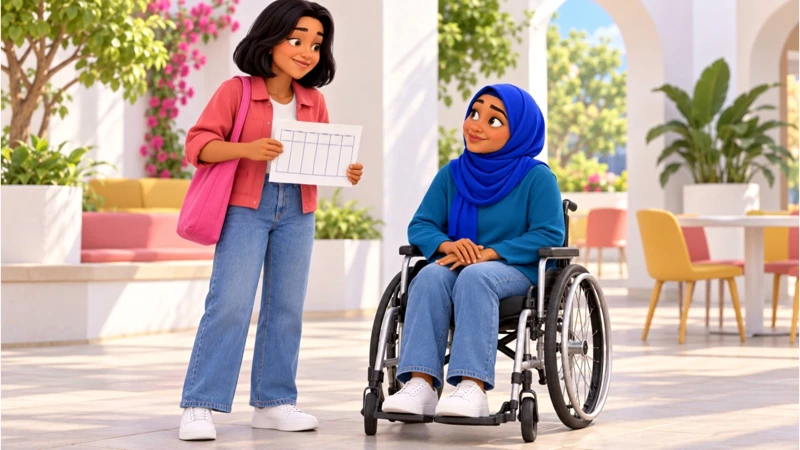 4Whose room is it, anyway?Who gets a say when a shared space changes?5
 5Okay… where did the rest of my paycheck go?Why is my deposit smaller than what I earned?12
 7Who decides what stays on the shelf?A group chat says one complaint got a novel “banned.” What actually happened, and who decides?19
 9Your ballot is more local than your feed.What’s actually on your ballot, and where do you find out?26
 10A city you can actually reachIf the usual route is blocked, whose job is it to make the trip work?33
 11Same work. Different pay. Why?Jordy and Gia worked the same event. Why are their rates different, and how do you ask?40
 12A protest is not one legal questionWhen does a school get to limit what students say?47
 13Before it reaches the binCould the crew make less waste before anyone reaches the recycling bin?54
 16“It’s our policy” is not the endWhen a new building rule appears, who wrote it and who does it affect?61
 18Follow the school moneyThe district budget is huge. Why is the theater curtain still falling apart?68
 19Give your comment a destinationHow do you make a public comment that actually lands?75
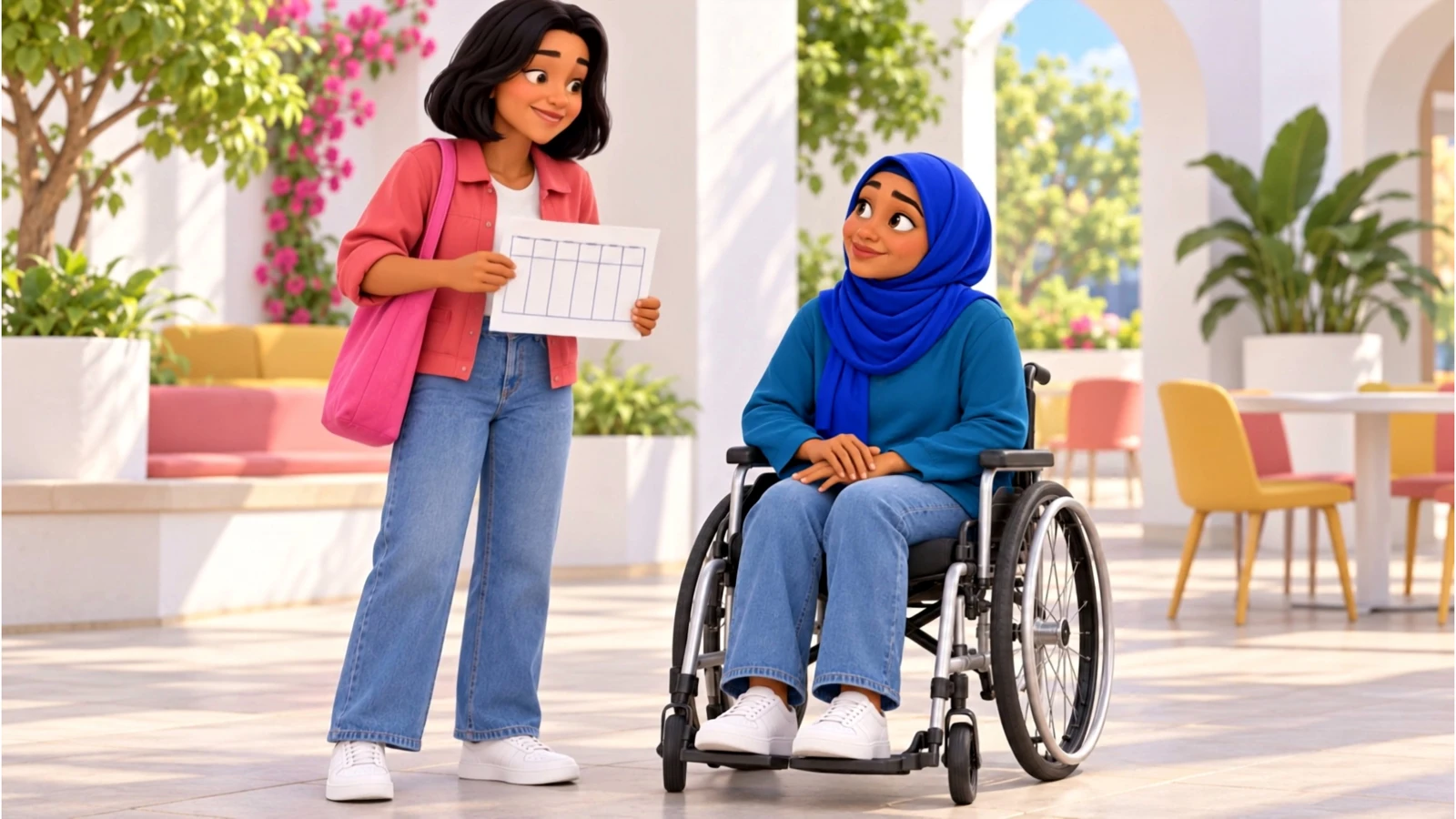
Case 4
Whose room is it, anyway?
Who gets a say when a shared space changes?
Libraries, rec centers and after-school rooms change hours and fees all the time, and those changes land hardest on people with the least flexible schedules. Learning to read a budget and ask the right decision-maker lets students defend a shared space without pretending money doesn’t matter.
In the real world
- Education Week, 2023Letting Students Decide Where Money Should Go: How One District Did It
- First Alert 4 (KMOV), 2026St. Louis shuts down streets to cars, hands them over to neighbors
- You’ll make
- Engagement-project proposal, 500–700 words, with an actor map
- Time
- About 100 minutes
- Level
- IB DP Global Politics
MariMira, “keep it free” doesn’t pay the person closing up, and I’m that person. So what’s our plan for the gap?

The case file
Look at what’s actually here before deciding what it means.
- 1Fictional case material
§ Nonprofit board agenda, board meeting Wednesday 6:30 p.m.
Evening rentals, for discussion. Option A: keep the current free evenings; the funding gap remains. Option B: replace Tuesday and Thursday evenings with paid rentals. Option C: pilot one rental evening for six weeks while seeking additional funding. No vote has been taken.
- 2Fictional case material
Illustrative weekly budget note prepared for the board (invented figures for practice)
Evening staffing and utilities: $600. Current grants and donations: $400. Each paid rental is projected to add $120 after its extra costs. Two bookings would add $240; one would add $120. Demand is uncertain.
- 3Fictional case material
Sami works afternoons. Dec rehearses on Thursdays. Mari closes the shop. A nearby resident worries about late noise. The proposed meeting time overlaps with several shifts.
Listening notes from evening users, collected over the weekend - 4Fictional case material
“If they take both late evenings, the room might still be “open” when I am working. That is not the same as being able to use it.”
Mari, 19, bookseller who closes the shop - 5Fictional case material
“I want us to stop solving this for everybody before we ask everybody.”
Sami, 23, uses the room after her print-shop shift
Outside the story
The case is fictional. The questions in it are not. Here is where they show up in the real world.
Still missing
Who uses the room on other evenings, whether the $120 projection rests on any past bookings, what the board will do if the pilot underperforms, and the views of evening users who were not in the listening notes.
Real-world evidence

Real sourceCarol Bacchi, “What’s the problem represented to be?” approachSummary, not a quotation: Bacchi’s policy-analysis approach asks how a proposed solution represents the problem it claims to solve and what that representation leaves unexamined.

articleLetting Students Decide Where Money Should Go: How One District Did ItEducation Week, 2023-02-06A real district let students propose and vote on how shared school spaces and money would change.

articleSt. Louis shuts down streets to cars, hands them over to neighborsFirst Alert 4 (KMOV), 2026-06-04A city pilot that changes a shared space for a trial run, so neighbors can test trade-offs before anything is permanent.
Discuss before deciding
- Which item did you trust first, and why?
- What would you need to see before repeating the strongest claim?
- Who is missing from these documents?
If this, then what?
Follow each option to its consequences. Which consequences depend on a projection, and who carries the cost if it misses?
Option B: paid rentals replace Tuesday and Thursday evenings
A projected $240 would cover the $200 gap if both evenings book
Check: What happens if bookings fall short of the projection?Dec loses Thursday rehearsals and Mari’s late evenings stop being usable
Evening users, including people who cannot attend the meeting
Option C: one rental evening piloted for six weeks
A projected $80 gap remains while the board seeks funding and reviews the pilot
Check: What happens if bookings fall short of the projection?
One student’s draft
Prepare a 90-second public comment recommending an option, using at least one figure accurately.
Good evening. I use the Common Room on weeknights, and I’m here about the evening rental options. I think the board should choose Option C, the six-week pilot.1 Option B would replace both Tuesday and Thursday free evenings, and Dec rehearses on Thursdays, so he would lose his spot2. The budget note says each rental will add $120, so the pilot will bring the gap down to $803. That still leaves a gap, but the board could ask local businesses to sponsor the room. Also, a lot of people who use the room are working during this meeting. Could the board accept written comments for two weeks so they can be heard too?4 Thank you.
- 1A clear position on a specific option, stated early enough for a listener to follow.
- 2Good use of the listening notes: an affected person tied to a specific evening.
- 3Revise: the budget note calls $120 a projection and says demand is uncertain. Say “is projected to” and “if bookings hold.”
- 4Strong request: the board can act on it, and it reaches people the meeting time leaves out.
Works wellUses evidenceGap to fixThink about the reader
One revision
BeforeThe budget note says each rental will add $120, so the pilot will bring the gap down to $80.
AfterThe budget note projects $120 per rental, so if bookings hold, the pilot would bring the weekly gap down to about $80.
The revision matches the source’s own uncertainty, which makes the speaker more credible to a board that knows demand could fall short.
Teacher commentary
The comment is organized for listening: position, affected person, figure, request. Its one weakness is treating a projection as a promise, which a board member would catch at once. With the figure stated conditionally it reaches Proficient on Evidence, and naming the resident’s noise concern would move it toward Advanced on Reasoning.
Teach it in one period
IB DP Global Politics
Use the room decision to rehearse scoping an engagement project: define the political issue, map the actors and the power each holds, identify whose voices are missing and plan two ways to engage people directly. Then write a short proposal explaining how power and legitimacy shape the decision.
- Sources
- The agenda, the budget note and the listening notes, plus one real local example the student identifies, such as a library, rec-center or community-board decision.
- Product
- Engagement-project proposal, 500–700 words, with an actor map
- Objective
- Students practice the early stages of the engagement project by framing a local political issue and planning engagement around power and legitimacy.
- Assessed by
- The teacher gives practice feedback on issue framing, actor analysis and engagement planning; the proposal is not an internal assessment submission and no IB marks are predicted.
| 45 minutes | You | Students | Check for |
|---|---|---|---|
| 5 minName the decision | Read the agenda aloud. Ask: is this a final vote? Who decides? | Identify the decision-maker and the stage of the proposal. | Students say “nonprofit board, discussion only, no vote yet.” |
| 10 minWork the numbers | Model $600 − $400 = $200. Provide calculators. | Model zero, one and two rentals; underline “demand is uncertain.” | Correct figures: a $200 gap, an $80 gap with one rental, a $40 surplus with two. |
| 10 minPeople map | Draw the map: who uses the room, when, and who might miss the meeting. | Add Sami, Dec, Mari and the resident; add missing voices as questions. | Map includes at least one missing voice written as a question. |
| 12 minDraft the comment | Share the four parts: position, effect, figure, request. | Write a 90-second comment or 120–160 word letter. | Comment uses one figure accurately and asks for something the board can do. |
| 6 minBoard test | Partners play board members. | Ask one good-faith question; the speaker revises one line. | Each comment shows one revision made in response. |
| 2 minExit | Ask for a person affected who may miss the meeting. | Name them and one alternate way to contribute. | Answer names a real route, like a written comment. |
Before class
Prepare the case documents, one set per pair:
- Nonprofit board agenda, board meeting Wednesday 6:30 p.m.
- Illustrative weekly budget note prepared for the board (invented figures for practice)
- Listening notes from evening users, collected over the weekend
- Mari, 19, bookseller who closes the shop
Every document is fictional case material, printable from the online field guide.
Questions to keep asking
NexoThis is a nonprofit board, not a city community board. Different bodies, different rules.
Lupa$600 − $400 = $200. One rental leaves $80, if the projection holds.
OndaSami works afternoons, Dec rehearses Thursdays. The same evening means different things to each.
Support every student, then assess
Success looks like
- Frames a genuinely political issue about power over a shared resource
- Maps actors and their sources of power accurately
- Plans ethical, feasible engagement with the people involved
- Uses power and legitimacy precisely
Supports at this level
- Actor map: formal authority, resources, influence, voice
- Engagement plan template: who, how, what you will ask, consent and safety
- Core-concept prompts: where do power and legitimacy show up here?
Access
- Provide a calculator and a worked $600 − $400 example
- Read one option at a time aloud
- Spanish vocabulary: propuesta, proyección, autoridad, equidad
- Offer a written comment instead of public speaking
- Pre-fill two people on the people map
Stretch
- Model what happens if only four of six pilot rentals are booked
- Research the difference between a nonprofit board and a public community board in your area
Challenge: Explain what would make the board’s eventual decision legitimate in the eyes of evening users who could not attend, and what evidence would show it.
| Rubric | Beginning | Developing | Proficient | Advanced |
|---|---|---|---|---|
| Evidence | No figures or perspectives. | Mentions money or people vaguely. | Uses one figure and one affected perspective accurately. | Uses figures conditionally and names an uncertainty. |
| Reasoning | Assigns bad motives to the board. | States a preference without addressing the gap. | Recommends an option and addresses the gap. | Weighs trade-offs across options and explains the choice. |
| Audience & purpose | Speaks to the wrong decision-maker. | Addresses the board but asks for nothing specific. | Makes a request the board can act on. | Requests a process that includes people who can’t attend. |
| Revision | No change. | Tone edits only. | Replaces a motive claim with evidence. | Adds a figure, a perspective and a follow-up request. |
Standards this can show
Global Politics — key concepts: power, equality and justiceIB DPLanguage A: language and literature — Time and spaceIB DP

Case 5
Okay… where did the rest of my paycheck go?
Why is my deposit smaller than what I earned?
Many students start working in high school, and a pay statement is often the first place they meet labor law and the social safety net. Reading each line lets a worker spot a real error and understand what their Social Security and Medicare contributions are for.
In the real world
- Two Cents / PBS (YouTube), 2019How Do Your Tax Dollars Get Spent?
- NPR, The Indicator from Planet Money, 2018Social Insecurity
- You’ll make
- Analytical response, 700–900 words
- Time
- About 100 minutes
- Level
- IB DP Global Politics
GiaI counted my hours twice. Okay, the Saturday shift was after the cutoff. One more question: what’s this withholding line?

The case file
Look at what’s actually here before deciding what it means.
- 1Fictional case material
Illustrative pay statement, pay period ending Friday the 12th, paid the following Thursday
Hours: 15.00 at $17.00. Gross pay: $255.00. Social Security tax: $15.81. Medicare tax: $3.70. Federal income tax withheld: $8.40. State and local income tax withheld: $6.10. Net pay: $220.99. (Invented withholding amounts for practice; they do not predict anyone’s taxes.)
- 2Fictional case material
Gia’s shift log in her notes app, last two weeks
Mon the 8th: 4 hrs. Wed the 10th: 4 hrs. Thu the 11th: 3 hrs. Fri the 12th: 4 hrs. Sat the 13th: 3 hrs. My total: 18 hrs.
- 3Fictional case material
Gia and Jordy comparing deposits, Thursday 7:20 p.m.
Gia: my deposit is way less than what I worked out??
Jordy: Mine looks different too. But comparing just our deposits is going to send us in circles.
Jordy: Please don’t post the whole statement. Just tell me which line.
- 4Fictional case material
“Just did. The period ended Friday the 12th. My Saturday shift was the 13th. So it’s probably on the next statement. Probably. I still want payroll to confirm.”
Gia, 21, café worker
Outside the story
The case is fictional. The questions in it are not. Here is where they show up in the real world.
Still missing
Whether the Saturday shift will appear on the next statement, what Gia entered on her W-4, whether any other deductions such as benefits apply to her job, and the minimum wage where she works.
Real-world evidence

Real sourceInternal Revenue Service, Understanding employment taxesSummary, not a quotation: the IRS explains that employers generally withhold federal income tax and the employee’s share of Social Security and Medicare taxes from wages, and that federal income-tax withholding is figured partly from the employee’s Form W-4.

Real sourceInternal Revenue Service, Understanding Taxes tutorial on gross and net paySummary, not a quotation: the tutorial defines gross pay as earnings before deductions and net pay as what remains after deductions, the amount often called take-home pay.

videoHow Do Your Tax Dollars Get Spent?Two Cents / PBS (YouTube), 2019-04-10Starts with a first paycheck that’s smaller than expected and explains FICA and income tax withholding.
Discuss before deciding
- Which item did you trust first, and why?
- What would you need to see before repeating the strongest claim?
- Who is missing from these documents?
What the evidence can hold up
Before calling it an error, sort the evidence. Which facts explain the smaller deposit, and which question is still worth asking payroll?
| Evidence | Claim 1Payroll shorted Gia’s pay. | Claim 2The missing 3 hours belong on the next statement. |
|---|---|---|
| 1Shift log shows 18 hours; the statement shows 15 | Supports | — |
| 2The period ended Friday the 12th; the 3-hour shift was Saturday the 13th | Challenges | Supports |
| 3Gross pay of $255.00 matches 15 × $17.00 | Challenges | — |
| 4FICA and withholding lines account for the gap between gross and net | Challenges | — |
Still open
- Will the Saturday shift actually appear next time? Ask payroll.
One student’s draft
Write Gia’s payroll question and a short explainer for a friend starting their first job.
Payroll message: Hi, I’m checking my statement for the pay period that ended Friday the 12th. My shift log shows 18 hours, but the statement shows 15.1 Was my Saturday shift on the 13th after the cutoff?2 If so, will it be on my next check? Thanks, Gia Explainer for Jordy: Your deposit is net pay, which is what’s left after deductions. Gross pay is your hours times your rate. FICA is the tax for Social Security and Medicare, and income-tax withholding is basically the same thing, just another name for it3. So before you think payroll messed up, match the dates first and then read each line4.
- 1Precise evidence from both records: the exact comparison payroll can check.
- 2Good reasoning: the writer tests the pay-period explanation before assuming an error.
- 3Revise: federal income-tax withholding is a separate line from FICA, and its amount depends partly on the W-4.
- 4Useful, sequenced advice a new worker can actually follow.
Works wellUses evidenceGap to fixThink about the reader
One revision
BeforeFICA is the tax for Social Security and Medicare, and income-tax withholding is basically the same thing, just another name for it.
AfterFICA is the tax for Social Security and Medicare. Federal income-tax withholding is a separate line, and the amount depends partly on the W-4 you filled out.
The revision fixes a factual error that would confuse a first-time worker looking at two different lines on the same statement.
Teacher commentary
The payroll message is excellent: it names the period, both hour counts and a specific question, and keeps private details out. The explainer is clear and well sequenced but merges FICA with income-tax withholding. Correcting that sentence moves the response to Proficient on Evidence and Reasoning.
Teach it in one period
IB DP Global Politics
Compare how Article 22 of the Universal Declaration of Human Rights frames social security with how the United States funds Social Security and Medicare through payroll taxes. Then evaluate one argument about whether social insurance is best understood as a right or as a national policy choice.
- Sources
- The illustrative pay statement, the Social Security Administration overview, the text of Article 22 of the Universal Declaration of Human Rights and one teacher-selected source on social insurance in another country.
- Product
- Analytical response, 700–900 words
- Objective
- Students relate a domestic social-insurance mechanism to an international statement of economic and social rights and evaluate the gap between them.
- Assessed by
- The teacher gives practice feedback on conceptual accuracy, use of evidence and evaluation of perspectives; no IB marks are predicted.
| 45 minutes | You | Students | Check for |
|---|---|---|---|
| 5 minThe deposit | Show Gia’s bank deposit and her notes: 18 hours worked. | Predict: why might the deposit be smaller? | Predictions include taxes and at least one non-tax reason. |
| 10 minRead the statement | Hand out the illustrative pay statement. Define gross, net, FICA and withholding. | Label each line and calculate 15 × $17.00. | Students get $255.00 gross and find the FICA lines. |
| 8 minFind the three hours | Show the pay-period dates and Gia’s shift log. | Compare dates and explain the missing hours. | Students find the Saturday shift after the cutoff. |
| 10 minWhy FICA? | Explain Social Security and Medicare as social insurance and the federal minimum wage vs. local rates. | Write one sentence on what FICA pays for and one question about the local minimum. | Sentences name retirement, disability or health care accurately. |
| 9 minWrite the payroll question | Model a line-specific question. | Draft a private message to payroll about any unexplained line. | Message names a period, a line and a document. |
| 3 minExit | Ask: what would you check before saying payroll made a mistake? | Write two things. | Answers include pay period and hours/rate. |
Before class
Prepare the case documents, one set per pair:
- Illustrative pay statement, pay period ending Friday the 12th, paid the following Thursday
- Gia’s shift log in her notes app, last two weeks
- Gia and Jordy comparing deposits, Thursday 7:20 p.m.
- Gia, 21, café worker
Every document is fictional case material, printable from the online field guide.
Questions to keep asking
LupaHer log says 18 hours; the statement says 15. Check the pay-period dates first.
PautaFICA funds Social Security and Medicare. It’s a separate line from income-tax withholding.
OndaThose FICA dollars pay for today’s retirees and people with disabilities, and Gia’s future benefits.
Support every student, then assess
Success looks like
- Explains the declaration’s article and the U.S. funding mechanism accurately
- Distinguishes a declared right from a funded program
- Evaluates at least two perspectives fairly
- Uses core concepts precisely
Supports at this level
- Rights-versus-policy grid
- Core-concept prompts on sovereignty, legitimacy and interdependence
- Perspective table: young worker, retiree, employer, government
Access
- Provide a color-coded statement and calculator
- Read each line aloud and model the first calculation
- Spanish vocabulary: salario bruto, salario neto, retención, período de pago
- Reduce to three lines: gross, FICA, net
- Students with IEPs may use a partially completed table
Stretch
- Use the IRS Tax Withholding Estimator’s public page to list what information it asks for (no personal data)
- Research your state’s minimum wage and pay-statement requirements
Challenge: Explain why a right stated in an international declaration may be delivered very differently by different states, and what that shows about sovereignty.
| Rubric | Beginning | Developing | Proficient | Advanced |
|---|---|---|---|---|
| Evidence | No specific numbers. | Mentions hours but no period. | Names hours, period and the line in question. | Cites own records and the statement side by side. |
| Reasoning | Assumes an error or theft. | Assumes all difference is tax. | Separates hours, deductions and period timing. | Explains which differences are expected and which need checking. |
| Audience & purpose | Shares private details or demands. | Polite but vague. | Clear question payroll can answer. | Clear, private, and offers the right document. |
| Revision | No change. | Removes one issue. | Adds period and line, removes private data. | Explains why each change helps payroll respond. |
Standards this can show
Global Politics — key concepts: equality and developmentIB DPTheory of Knowledge — Knowledge and the knower (core theme)IB DP

Case 7
Who decides what stays on the shelf?
A group chat says one complaint got a novel “banned.” What actually happened, and who decides?
School and public libraries across the country are deciding how to handle challenges to books, and the rules vary by district and state. Students who can tell a complaint from a final decision, and who know where to speak, can take part without spreading rumors or silencing other readers.
In the real world
- Chalkbeat Colorado, 2025Colorado bill to curb school library book challenges clears first legislative hurdle
- Chalkbeat Tennessee, 2024Under stricter Tennessee law, some school library books quietly disappear
- You’ll make
- Engagement-project proposal, 600–800 words, with an actor map
- Time
- About 100 minutes
- Level
- IB DP Global Politics
MariMira, I found a character in a book like this who made me feel less alone. That’s why I care. Now what does the policy actually say?

The case file
Look at what’s actually here before deciding what it means.
- 1Fictional case material
Group chat, Thursday 10:12 p.m.
“One parent complained, so that novel is banned. It’s gone from the library.”
- 2Fictional case material
§ District reconsideration notice, posted Friday by the school library
“A request for reconsideration has been received for one title in the library collection. Under district policy, the title remains available during the review. A review committee will read the full work and evaluate it against the district’s selection criteria. Written input may be submitted by the 15th. The committee’s decision may be appealed.”
- 3Fictional case material
§ Review committee input form, due the 15th
Name and role (student, parent, staff or community member). Have you read the entire work? Yes / No. Which selection criteria does your input address? Comments, 300 words maximum.
- 4Fictional case material
“Mira, I found a character in a book like this who made me feel less alone. That’s why I care. Now what does the policy actually say?”
Mari, 19, bookseller and zine maker
Outside the story
The case is fictional. The questions in it are not. Here is where they show up in the real world.
Still missing
Which novel is under review and what the request says, who sits on the review committee, what the district’s selection criteria say in full, and what state law, if any, adds to the district policy.
Real-world evidence

Real sourceAmerican Library Association, Selection and Reconsideration Policy Toolkit: formal reconsiderationSummary, not a quotation: ALA’s example procedure has a review committee whose members read or view the entire work, evaluate it against the collection policy’s criteria and vote, with the material remaining available until a formal decision and with an appeal route. ALA presents this as guidance for libraries to adapt, not as law.

Real sourceRoald Dahl, Matilda, authorized extract published by PenguinSummary, not a quotation: in the extract, four-year-old Matilda finds the village public library on her own; the librarian, Mrs Phelps, helps her choose books, and over the following months she reads widely, including classic adult novels.

articleColorado bill to curb school library book challenges clears first legislative hurdleChalkbeat Colorado, 2025-02-10A state debated requiring clear reconsideration policies, showing a challenge is a process, not an instant ban.
Discuss before deciding
- Which item did you trust first, and why?
- What would you need to see before repeating the strongest claim?
- Who is missing from these documents?
Who actually gets to decide?
Replace “banned” with the real chain of decisions. Who decides at each stage, which rules bind them, and where can a student’s input land?
Keep, restrict or remove the novel after review
The school review committee, which reads the whole work and votes
District-level appeal and, finally, the school board
District reconsideration policy and selection criteria
State law and unsettled First Amendment case law (Pico had no majority opinion)
Written input on the committee form by the 15th
One student’s draft
Write input to the review committee using the published selection criteria.
To the Review Committee, I’m a student at this school, and I’m writing about the novel under review. The district’s selection criteria ask the committee to judge each book as a whole1, not by one passage. Read as a whole, this book follows a character dealing with isolation2 and slowly finding people she can trust, and that is why readers my age connect with it. I understand the parent who filed the request is worried about one scene with mature content, and that concern deserves a real answer3. But honestly, anyone who wants a book removed is just trying to control what other people read4. I’m asking the committee to keep the novel available and, if the concern is about age level, to consider an age note in the catalog rather than removal. Thank you.
- 1Strong: the argument is anchored in the committee’s own published criterion.
- 2Good use of the whole-work standard, though one specific scene or detail would make the evidence stronger.
- 3Good: the writer acknowledges another reader’s concern with respect.
- 4Revise: this assigns a motive to everyone who files a request and contradicts the respect shown one sentence earlier. The committee needs reasons tied to criteria, not judgments of people.
Works wellUses evidenceGap to fixThink about the reader
One revision
BeforeBut honestly, anyone who wants a book removed is just trying to control what other people read.
AfterBut the criteria ask about the whole work, and that scene is part of how the story shows the character’s isolation.
The revision keeps the disagreement about the book, where the criteria apply, instead of about the parent, which the committee cannot weigh.
Teacher commentary
The input is organized around the committee’s criteria, reads the book as a whole and makes a constructive request. One sentence undoes the respectful acknowledgment by attributing a motive to everyone who files a request. Replacing it with a criteria-based reason moves the input to Advanced on Audience, and adding one specific scene would strengthen Evidence.
Teach it in one period
IB DP Global Politics
Rehearse an engagement project on library governance: frame the political issue (who decides what stays on public school shelves, and by what process), map the actors (families on different sides, librarians, the school board, the state legislature, students, advocacy groups), plan ethical engagement with people who disagree with each other, and compare the local process with the freedom to seek and receive information in Article 19 of the Universal Declaration of Human Rights.
- Sources
- The chat message, the reconsideration notice, the input form, ALA’s reconsideration guidance, one state or district policy and the text of Article 19 of the Universal Declaration of Human Rights.
- Product
- Engagement-project proposal, 600–800 words, with an actor map
- Objective
- Students practice the early stages of the engagement project on a contested local issue and connect it to rights and legitimacy.
- Assessed by
- The teacher gives practice feedback on issue framing, fairness to competing actors and conceptual accuracy; the proposal is not an internal assessment submission and no IB marks are predicted.
| 45 minutes | You | Students | Check for |
|---|---|---|---|
| 5 minThe library scene | Read the authorized Matilda extract where Mrs Phelps helps Matilda find books. | Write what the library gives Matilda. | Answers go beyond “books” to access or belonging. |
| 8 minThe chat claim | Show the group chat: “One parent complained, so that novel is banned.” | List what you’d need to know to confirm it. | Lists include stage, policy and who decides. |
| 12 minRead the process | Hand out the district policy excerpt and the ALA reconsideration steps. | Map the stages and mark where the novel is now. | Maps show “under review, still available.” |
| 8 minThe legal layer | Explain Pico in two minutes and that state laws vary. | Write one sentence on what the law does and doesn’t settle. | Sentence avoids claiming the law clearly forbids or allows removal. |
| 9 minPrepare input | Model a comment tied to criteria. | Draft a 90-second comment or written input for the committee. | Input names a criterion and a reader’s perspective without speaking for everyone. |
| 3 minExit | Ask: whose reading experience is missing? | Name one and how to hear it respectfully. | Answer doesn’t put a classmate on the spot. |
Before class
Prepare the case documents, one set per pair:
- Group chat, Thursday 10:12 p.m.
- District reconsideration notice, posted Friday by the school library
- Review committee input form, due the 15th
- Mari, 19, bookseller and zine maker
Every document is fictional case material, printable from the online field guide.
Questions to keep asking
LupaThe notice says “under review.” The chat says “banned.” Those are different stages.
PautaALA guidance isn’t law. The district’s adopted policy and state law govern the process.
OndaMari found a character who made her feel less alone. That’s why readers care.
Support every student, then assess
Success looks like
- Frames a political issue about authority over shared public resources
- Maps actors on different sides fairly
- Plans ethical engagement across disagreement
- Uses power, legitimacy and rights precisely
Supports at this level
- Actor map: formal authority, resources, influence, voice
- Engagement plan that includes people with opposing views
- Core-concept prompts on power and legitimacy
Access
- Offer an audiobook or read-aloud of the Matilda extract (Mari moves between print and audio)
- Provide the process as a visual flowchart
- Spanish vocabulary: biblioteca, reconsideración, criterios, apelación
- Allow oral input
- Never ask students to share personal reasons a book matters to them
Stretch
- Find your district’s reconsideration policy and summarize its stages
- Research how your state’s laws about school library materials have changed recently
Challenge: Explain what would make a final decision legitimate both to the family that filed the request and to students who want the book available.
| Rubric | Beginning | Developing | Proficient | Advanced |
|---|---|---|---|---|
| Evidence | Repeats “banned.” | Mentions a complaint without stage. | States the current stage from the policy. | States stage, next steps and input route. |
| Reasoning | Declares a legal verdict. | Treats outrage as the argument. | Separates complaint, review and decision. | Connects input to criteria and notes legal uncertainty. |
| Audience & purpose | Attacks people. | Rallies without direction. | Gives a useful participation route. | Invites participation while respecting other readers and the parent. |
| Revision | No change. | Tone only. | Corrects the stage and removes attacks. | Explains how each change helps the chat act accurately. |
Standards this can show
Language A: language and literature — Readers, writers and textsIB DPGlobal Politics — key concepts: rights, liberty and legitimacyIB DP

Case 9
Your ballot is more local than your feed.
What’s actually on your ballot, and where do you find out?
National races dominate feeds, but many decisions that shape students’ lives, like school boards, judges and local measures, appear lower on the ballot. Knowing how to find your own official ballot and deadlines matters whether you’re voting soon or learning how the system works before you can.
In the real world
- NPR, 2023Some states are trying to boost youth voter registration. Here's what they're doing
- Ballotpedia News, 2025Most states allow teenagers to pre-register to vote before turning 18, and some let them vote in primaries
- You’ll make
- Engagement-project proposal, 600–800 words, with an actor map
- Time
- About 100 minutes
- Level
- IB DP Global Politics
MateoDec doesn’t need us picking for him. He needs his own ballot and a registration check before November. Honestly, so do I.

The case file
Look at what’s actually here before deciding what it means.
- 1Fictional case material
§ Illustrative sample ballot, November general election
Federal: U.S. Representative. State: State Senator; Superior Court judge (retention). Local: Board of Education, District 3 (vote for two); City Council, Ward 5. Measures: Measure T, transit improvements bond.
- 2Fictional case material
Creator’s voter guide, posted three weeks before the election
“Everything you need for November!! Registration closes the 14th. School board: vote Candidate B, the only one who actually cares about students. Measure T: yes, obviously.”
- 3Fictional case material
Gia’s group-chat reminder draft, Sunday 6:30 p.m.
“Check your registration and your own sample ballot at vote.gov. Deadlines depend on your state. Please don’t post your address here.”
- 4Fictional case material
“I turn 18 in October. I don’t need someone picking for me. I need to know what’s on my ballot and whether I’m registered in time for November.”
Dec, 17, theater crew - 5Fictional case material
“Dec’s feed is all the big race. Then you flip the sample ballot: school board, city council, a transit bond. Nobody’s posting about Measure T.”
Mateo, 22, moved from New Bedford for college
Outside the story
The case is fictional. The questions in it are not. Here is where they show up in the real world.
Still missing
Dec’s own state, registration status and deadline, the actual sample ballot for his address, what each local office is responsible for where he lives, and who wrote and funds the creator’s guide.
Real-world evidence

Real sourceVote.gov, Preparing to vote: age 18 and underSummary, not a quotation: Vote.gov explains that in most states, the District of Columbia and U.S. territories people can preregister before turning 18, that you must be 18 to vote, that several states let 17-year-olds vote in primaries if they will be 18 by the general election, and that each person should check their own state’s rules.

Real sourceU.S. Constitution, Twenty-Sixth Amendment, Section 1 (text as published by the National Constitution Center)“The right of citizens of the United States, who are eighteen years of age or older, to vote shall not be denied or abridged by the United States or by any State on account of age.”

articleSome states are trying to boost youth voter registration. Here's what they're doingNPR, 2023-08-06Explains preregistration and other state steps that let teens sign up before they turn 18.
Discuss before deciding
- Which item did you trust first, and why?
- What would you need to see before repeating the strongest claim?
- Who is missing from these documents?
Who actually gets to decide?
Separate the two questions Dec has: what is on his ballot, and can he vote. Which rules and offices answer each, and which source should he check first?
Which contests and measures appear on Dec’s ballot
His address and district lines, drawn through redistricting
Vote.gov, which links to his state or local election office
Whether Dec can register and vote in November
Twenty-Sixth Amendment: the vote at 18 cannot be denied on account of age
State rules on preregistration, deadlines and 17-year-old primary voting
Vote.gov, which links to his state or local election office
One student’s draft
Write a nonpartisan explainer on one local contest: what the office does, what’s on the ballot and where to verify it. Compare how two guides describe the race.
School Board, District 3 What the office does: The school board sets the district budget, hires the superintendent and approves policies like the school calendar. It doesn’t run individual classrooms.1 What’s on the ballot: Two seats are open, with four candidates. There’s also a transit measure, but that’s a city question, not a school board one2. Where to verify: Look up your own sample ballot through vote.gov, which sends you to your state’s election office. The creator guide says Candidate B is the only one who cares about students, so you should probably vote for her3. Comparing guides: The county guide prints each candidate’s statement in their own words.4 The creator guide adds opinions about who is best.
- 1Good: saying what the office does not control keeps readers from asking it for the wrong things.
- 2Strong jurisdiction thinking: the writer separates two contests on the same ballot.
- 3Revise: an explainer must stay nonpartisan. Report what the guide claims as the guide’s opinion and leave the choice to the reader.
- 4Good comparison: the writer identifies how the two guides differ in purpose.
Works wellUses evidenceGap to fixThink about the reader
One revision
BeforeThe creator guide says Candidate B is the only one who cares about students, so you should probably vote for her.
AfterOne creator guide recommends a candidate; that is the guide’s opinion, so check each candidate’s own statement in the county guide.
The revision keeps the explainer nonpartisan while still teaching readers to tell a recommendation from a fact.
Teacher commentary
The explainer describes the office accurately, including its limits, separates the school board from the city measure and compares the two guides by purpose. One sentence slips from explaining into recommending a candidate, which the task rules out. Replacing it with a clearly labeled description of the guide’s opinion moves the response to Advanced on Audience.
Teach it in one period
IB DP Global Politics
Rehearse an engagement project on youth participation in local elections: frame a nonpartisan political issue, such as why young people vote less in local contests, map the actors (election office, schools, parties, youth organizations, candidates), plan ethical, nonpartisan engagement with an election office or youth civic group, and analyze how turnout affects the legitimacy of local decisions, comparing voting age or registration in one other country.
- Sources
- The sample ballot, Vote.gov’s guidance for people 18 and under, one source on local turnout and one official source on voting rules in another country.
- Product
- Engagement-project proposal, 600–800 words, with an actor map
- Objective
- Students practice the early stages of the engagement project on local electoral participation and analyze it through the core concept of legitimacy.
- Assessed by
- The teacher gives practice feedback on issue framing, nonpartisan engagement planning and conceptual accuracy; the proposal is not an internal assessment submission and no IB marks are predicted.
| 45 minutes | You | Students | Check for |
|---|---|---|---|
| 5 minYour feed vs. your ballot | Show a feed full of one national race. Ask: what else might be on the ballot? | List guesses. | Lists include local offices. |
| 10 minRead a sample ballot | Hand out an illustrative sample ballot with federal, state and local contests. | Circle one local office and one measure. | Students find the school board race and a local measure. |
| 8 minWhat does the office do? | Model looking up an office’s responsibilities. | Match three offices to three issues students care about. | Matches are accurate (e.g., school board → school budgets). |
| 10 minGuide vs. ballot | Show a creator’s voter guide. | Highlight checkable facts in one color, recommendations in another. | Students separate facts from picks. |
| 9 minOfficial checklist | Show Vote.gov and the age guide; emphasize rules vary. | Write a personal checklist: election office, registration, deadlines, sample ballot. | Checklist uses official sources only. |
| 3 minExit | Ask: if you can’t vote yet, what’s one way to take part? | Write one. | Answer names a real route. |
Before class
Prepare the case documents, one set per pair:
- Illustrative sample ballot, November general election
- Creator’s voter guide, posted three weeks before the election
- Gia’s group-chat reminder draft, Sunday 6:30 p.m.
- Dec, 17, theater crew
Every document is fictional case material, printable from the online field guide.
Questions to keep asking
NexoYour address decides your ballot. A friend two districts over sees different local races.
PautaThe voting age is 18, but some states let 17-year-olds vote in primaries. Check yours.
LupaThe guide’s picks are recommendations. The sample ballot is the official list.
Support every student, then assess
Success looks like
- Frames a nonpartisan political issue about participation
- Maps actors and their sources of power accurately
- Plans ethical, nonpartisan engagement
- Uses legitimacy precisely and compares fairly with another country
Supports at this level
- Actor map: formal authority, resources, influence, voice
- Nonpartisan engagement plan with consent and safety notes
- Legitimacy prompts: does turnout change whether a decision is accepted?
Access
- Provide an illustrated sample ballot with offices color-coded
- Read office descriptions aloud
- Spanish vocabulary: papeleta, inscripción, elección, medida
- Many election offices provide Spanish materials; show where
- Reduce to matching two offices
Stretch
- Find your county’s sample ballot for the next election
- Research the history of the Twenty-Sixth Amendment
Challenge: Evaluate two different definitions of legitimacy, one based on procedure and one based on participation, using the local example.
| Rubric | Beginning | Developing | Proficient | Advanced |
|---|---|---|---|---|
| Evidence | Copies one person’s deadlines. | Mentions official sources vaguely. | Points to official sources for each person’s state. | Points to official sources and explains why rules differ. |
| Reasoning | Treats a guide as the ballot. | Mentions the ballot but not local contests. | Separates ballot, guide and registration. | Explains why local offices matter to the audience. |
| Audience & purpose | Collects private info. | Generic hype. | Useful, private, nonpartisan. | Includes people not yet eligible. |
| Revision | No change. | Adds a link. | Replaces copied deadlines with official routes. | Explains how each change helps friends in different situations. |
Standards this can show
Global Politics — key concepts: power and legitimacyIB DPTheory of Knowledge — Knowledge and politics (optional theme)IB DP

Case 10
A city you can actually reach
If the usual route is blocked, whose job is it to make the trip work?
Getting to school, a library or a city program depends on sidewalks, ramps, buses and information, and when one piece fails, someone’s day falls apart. Knowing which law applies and which office to ask turns frustration into a request that can get a route fixed.
In the real world
- HISTORY, 2020When the ‘Capitol Crawl’ Dramatized the Need for Americans with Disabilities Act
- THE CITY, 2025North Bronx Subway Station to Get Elevators, Nearly a Decade After ADA Lawsuit
- You’ll make
- Engagement-project proposal, 600–800 words, with an actor map
- Time
- About 100 minutes
- Level
- IB DP Global Politics
SamiI don’t need a viral video, Mateo. I need to know if there’s a route that gets me to the bus in twelve minutes.

The case file
Look at what’s actually here before deciding what it means.
- 1Fictional case material
Construction detour sign at the corner, posted Monday, photographed Tuesday 4:05 p.m.
“SIDEWALK CLOSED AHEAD. PEDESTRIAN DETOUR →” The arrow points to a path that begins with a flight of stairs.
- 2Fictional case material
Route map, home to the city workshop, drawn by Sami and Mateo
1. Home to the corner of Elm Street and 4th Avenue: sidewalk clear. 2. Northeast curb ramp: blocked by construction fencing. 3. Bus stop: next bus in 12 minutes. 4. Bus to the parks department building. 5. Workshop entrance and room: not yet checked.
- 3Fictional case material
City workshop flyer posted by the parks department
“Free Community Workshop Series. Tuesdays, 5–7 p.m., Parks Department Annex. All welcome! Questions? Call the front desk.” The flyer gives no information about accessible entrances or how to request access.
- 4Fictional case material
“The sign says detour. The detour starts with stairs. So, no. Twelve minutes.”
Sami, 23 - 5Fictional case material
“I had the sign on video before I even thought about it. Sami asked if that gets her on the bus. Fair. Camera down.”
Mateo, 22, already filmed the sign
Outside the story
The case is fictional. The questions in it are not. Here is where they show up in the real world.
Still missing
Whether an accessible detour exists and how it is marked, how long the ramp will be blocked, whether the workshop entrance and room are accessible, and who the city’s ADA coordinator is and how complaints are handled.
Real-world evidence

Real sourceU.S. Department of Justice, ADA Update: The ADA and City GovernmentsSummary, not a quotation: under Title II, city programs, services and activities must be accessible, but program access generally does not require making every facility accessible; a city can, for example, move a service to an accessible place. The guide also covers curb ramps during street and sidewalk work and the city’s duty to communicate effectively.
articleWhen the ‘Capitol Crawl’ Dramatized the Need for Americans with Disabilities ActHISTORY, 2020-07-24A throwback to March 12, 1990, when activists climbed the Capitol steps to show what stairs do to access. The ADA was signed that July.

articleNorth Bronx Subway Station to Get Elevators, Nearly a Decade After ADA LawsuitTHE CITY, 2025-10-03A lawsuit pushed a transit agency to add elevators, showing how the ADA makes access a public duty.
Discuss before deciding
- Which item did you trust first, and why?
- What would you need to see before repeating the strongest claim?
- Who is missing from these documents?
What the evidence can hold up
Sort what the evidence supports. Which claim can you make today, which one needs more facts, and who can supply them?
| Evidence | Claim 1The city is breaking the ADA. | Claim 2On Tuesday, the posted detour did not work for a wheelchair user. |
|---|---|---|
| 1Photo: the northeast curb ramp blocked by fencing on Tuesday at 4:05 p.m. | Narrows | Supports |
| 2Detour sign points to a path that starts with stairs | — | Supports |
| 3DOJ: Title II requires program access, not every facility to be accessible | Narrows | — |
Still open
- Is there another accessible route to the bus and the workshop? Ask the ADA coordinator.
One student’s draft
Write an access report to the city’s ADA coordinator about the blocked route, with one sentence explaining why you ask rather than claim a violation.
To the City ADA Coordinator, I’m writing about the construction at Elm Street and 4th Avenue, next to the bus stop. On Tuesday at about 4:05 p.m., the curb ramp on the northeast corner was blocked by construction fencing1, and the detour sign pointed to a route with stairs. My friend Sami, who uses a wheelchair and said I could mention her2, couldn’t reach the bus stop that way. The city is clearly violating the ADA by blocking the ramp.3 Could you tell us whether there is an accessible detour, how it is marked and how long the ramp will be blocked? We would also like to know how to report this if it happens again. Why I asked instead of claimed: I only saw one corner at one time4.
- 1Precise location, time and observation: the details an office needs to find the problem.
- 2Good: the writer checked with Sami before including her.
- 3Revise: one observation cannot establish a violation, and the sentence contradicts the writer’s own rationale. Program access concerns the whole program, so ask about the detour instead.
- 4An honest statement of the evidence’s limit, which is exactly why a question fits better than a claim.
Works wellUses evidenceGap to fixThink about the reader
One revision
BeforeThe city is clearly violating the ADA by blocking the ramp.
AfterBecause the city runs the workshop and maintains the sidewalk, we understand ADA Title II may apply, so we wanted to ask you directly.
The revision names the relevant law as the reason for contacting this office without declaring a violation the evidence cannot support.
Teacher commentary
The report is specific, respects Sami’s consent and makes a clear, answerable request. One sentence declares a violation that the writer’s own rationale admits the evidence cannot show. Replacing it with a question-framed reference to Title II moves the report to Proficient on Reasoning and protects its credibility with the office.
Teach it in one period
IB DP Global Politics
Rehearse an engagement project on accessibility where you live: frame a political issue about who is responsible for accessible public routes, map the actors (city departments, contractors, the ADA coordinator, disability advocacy groups, residents), plan consent-based engagement that treats disabled residents as decision-makers, and compare the ADA’s approach at a general level with the UN Convention on the Rights of Persons with Disabilities, which the United States has signed but not ratified.
- Sources
- The route map, detour sign and flyer, the DOJ ADA and City Governments page, the text of the UN Convention on the Rights of Persons with Disabilities and one local accessibility page.
- Product
- Engagement-project proposal, 600–800 words, with an actor map
- Objective
- Students practice the early stages of the engagement project on a local access issue and connect it to rights and sovereignty through an international comparison.
- Assessed by
- The teacher gives practice feedback on issue framing, actor analysis, engagement ethics and conceptual accuracy; the proposal is not an internal assessment submission and no IB marks are predicted.
| 45 minutes | You | Students | Check for |
|---|---|---|---|
| 5 minThe blocked route | Describe Sami’s trip: blocked curb ramp, detour sign pointing to stairs, bus in 12 minutes. | Write what Sami needs right now and what could be asked later. | Students separate the immediate need from the follow-up. |
| 10 minWhat the photo shows | Show Mateo’s photo. Ask what it proves and what it doesn’t. | Sort statements into “the photo shows” and “we’d need more.” | “The city broke the law” goes in “need more.” |
| 10 minWhich law? | Explain Titles II and III of the ADA and program access using the DOJ page. | Match three places (city workshop, sidewalk, private café) to the right title. | Workshop and sidewalk → Title II; café → Title III. |
| 10 minRoute audit | Model a route audit: find, get there, enter, take part, leave. | Complete an audit for Sami’s trip using case evidence. | Audit lists at least three stages, not just the entrance. |
| 7 minWrite the request | Model a message to the ADA coordinator. | Draft a 60–100 word message with location, observation and request. | Message avoids declaring a violation and makes a specific ask. |
| 3 minExit | Ask: which barrier would a photo miss? | Write one. | Answers include information, timing or communication barriers. |
Before class
Prepare the case documents, one set per pair:
- Construction detour sign at the corner, posted Monday, photographed Tuesday 4:05 p.m.
- Route map, home to the city workshop, drawn by Sami and Mateo
- City workshop flyer posted by the parks department
- Sami, 23
Every document is fictional case material, printable from the online field guide.
Questions to keep asking
PautaTitle II covers city programs and sidewalks. Private businesses are Title III.
LupaThe photo shows one blocked ramp at one time. It can’t show the whole trip.
OndaThe detour sign points to stairs. For Sami, that’s not a detour.
Support every student, then assess
Success looks like
- Frames a political issue about responsibility for public access
- Maps actors and their sources of power accurately
- Plans engagement that respects disabled residents’ agency
- Compares the domestic and international frameworks accurately
Supports at this level
- Actor map: formal authority, resources, influence, voice
- Consent-based engagement plan template
- Comparison grid: domestic statute versus international convention
Access
- Provide a printed route map with stages labeled
- Read the DOJ summary aloud with a visual of Titles II and III
- Spanish vocabulary: ruta, barrera, rampa, desvío
- Allow an oral report
- Reduce to mapping two stages
Stretch
- Find your city’s ADA coordinator page and summarize its complaint process
- Research how your city communicates construction detours
Challenge: Explain why a country might sign a rights convention without ratifying it, and what that means for a resident on a blocked sidewalk.
| Rubric | Beginning | Developing | Proficient | Advanced |
|---|---|---|---|---|
| Evidence | No location or time. | General description. | Specific location, time and observation. | Specific observation plus what remains unknown. |
| Reasoning | Declares a violation. | Mixes observation and conclusion. | Separates observation from legal question. | Connects observation to program access and asks the right office. |
| Audience & purpose | Threatening or vague. | Polite but no clear request. | Specific, answerable request to the right office. | Request plus how to report future issues. |
| Revision | No change. | Tone only. | Adds specifics and removes the legal conclusion. | Explains how each change helps the city act and respects Sami. |
Standards this can show
Global Politics — key concepts: rights, equality and powerIB DPTheory of Knowledge — Knowledge and the knower (core theme)IB DP
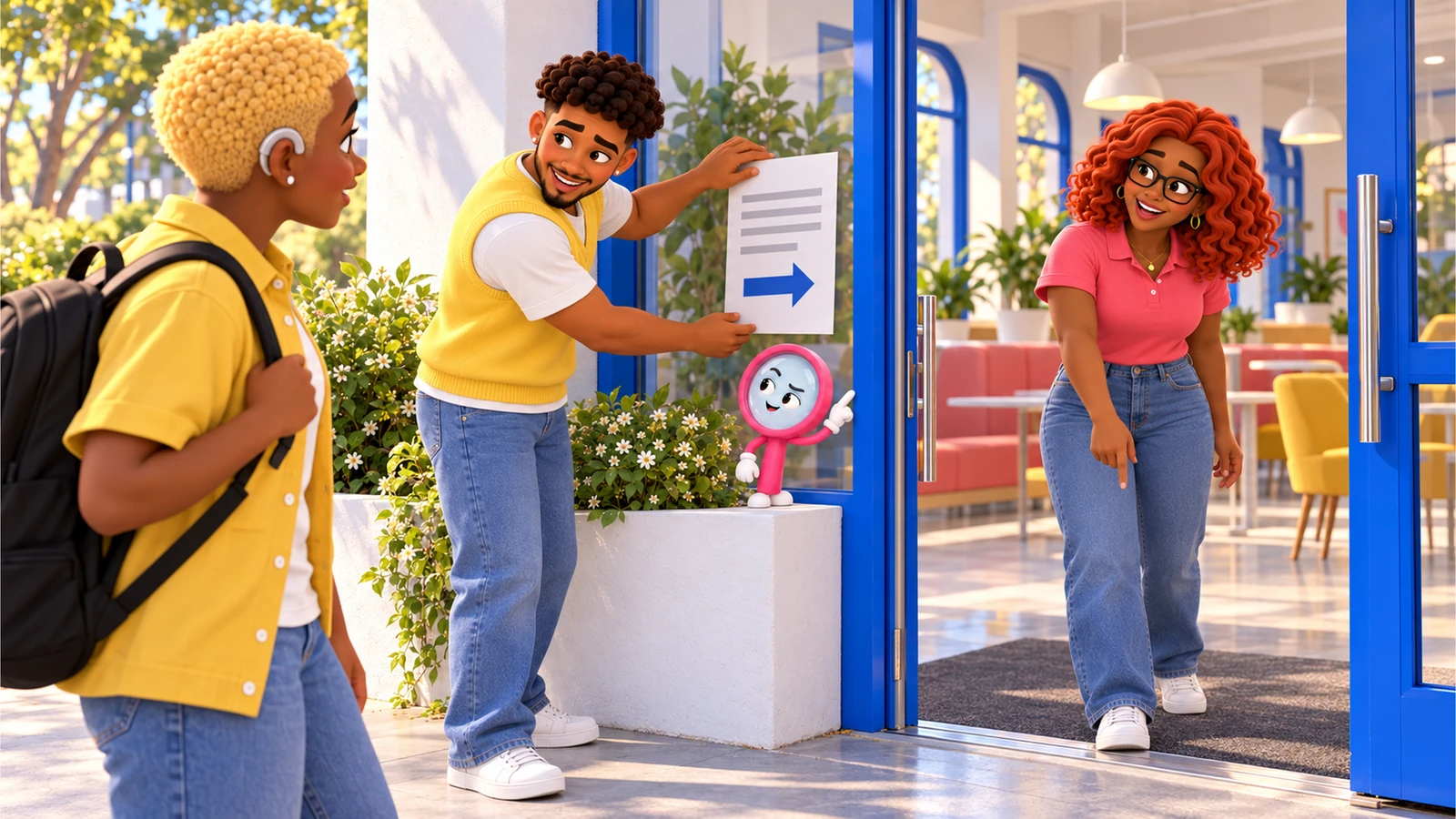
Case 11
Same work. Different pay. Why?
Jordy and Gia worked the same event. Why are their rates different, and how do you ask?
Pay gaps can come from fair criteria, mistakes or discrimination, and workers usually can’t tell which from a paycheck alone. Knowing what the law protects, including the right most private-sector workers have to talk about pay, helps young workers ask without guessing or getting silenced.
In the real world
- NPR, 2022The U.S. national women's soccer team wins $24 million in equal pay settlement
- NPR, 2020Federal Judge Dismisses U.S. Women’s Soccer Team’s Equal Pay Claim
- You’ll make
- Analytical response, 700–900 words
- Time
- About 100 minutes
- Level
- IB DP Global Politics
JordyWe were both there till close. I want to know why the numbers differ. Not my statement in a post before we’ve even asked.

The case file
Look at what’s actually here before deciding what it means.
- 1Fictional case material
Jordy’s pay statement (illustrative), Saturday event, paid the following Friday
Event crew, Saturday. Hours: 8.0 at $16.50. Gross pay for the event: $132.00.
- 2Fictional case material
Event crew schedule with job titles, posted the Wednesday before
Saturday event, 3:00–11:00 p.m. Crew: Gia (shift lead), Jordy and two other crew members. Setup, 3:00–5:00: all crew. Caption and audio check: Jordy. Closing, 10:00–11:00: all crew.
- 3Fictional case material
Jordy and Gia comparing notes, Sunday 1:15 p.m.
Gia: I’m fine with you knowing my rate. I just don’t want my statement posted anywhere.
Jordy: Got it. Did you do anything different as shift lead?
Gia: I opened up and handled one guest issue. Honestly, I don’t know if that’s why. We have a question, not a finding.
- 4Fictional case material
“We were both there till close. I want to know why the numbers differ. Not my statement in a post before we’ve even asked.”
Jordy, 20, event crew and caption editor
Outside the story
The case is fictional. The questions in it are not. Here is where they show up in the real world.
Still missing
What the shift-lead role officially involves and how rates are set, whether Gia’s higher rate reflects experience or other criteria, how other crew members are paid, and whether the company has any written pay policy.
Real-world evidence

Real sourceU.S. Equal Employment Opportunity Commission, Youth@Work: Pay DiscriminationSummary, not a quotation: the EEOC explains that the Equal Pay Act requires men and women to be paid equally for the same work at the same workplace, that other laws it enforces bar pay discrimination based on race, color, religion, sex, national origin, disability, age (40 or older) or genetic information, that compensation includes wages, overtime, bonuses and benefits, and that retaliation for complaining is prohibited.

Real sourceNational Labor Relations Board, Your Right to Discuss WagesSummary, not a quotation: the NLRB says that for employees covered by the National Labor Relations Act, employers may not have rules banning wage discussions or requiring permission for them, and may not punish, question, threaten or monitor employees for such discussions, whether or not they have a union.

articleThe U.S. national women's soccer team wins $24 million in equal pay settlementNPR, 2022-02-22A real ‘same work, different pay’ dispute that ended in a settlement and a promise of equal rates.
Discuss before deciding
- Which item did you trust first, and why?
- What would you need to see before repeating the strongest claim?
- Who is missing from these documents?
Same moment, different accounts
Line up the accounts. Where do they agree, where do they differ, and which difference could be a legitimate factor? What would you need to find out before calling it unfair?
Jordy’s record: 8 hours, setup, caption and audio check, closing, $16.50
Gia’s account: same hours, setup and closing, opened up and handled one guest issue, $18.00
The schedule: Gia listed as shift lead, with no description of the role
Where they agree
Both worked the same event, the same hours, and setup and closing.
Where they differ
Title and rate: shift lead at $18.00 versus crew at $16.50
Check: Ask the supervisor how rates are set and what the shift-lead role requires
One student’s draft
Build a private comparison sheet and draft Jordy’s message to the supervisor.
Comparison sheet: Jordy worked the Saturday event, 3 to 11 p.m.: setup, the caption and audio check, and closing, at $16.50 an hour. Gia worked the same event and hours, setup and closing, at $18.00. The schedule lists Gia as “shift lead.” Message: Hi Dana, I have a question about my rate for Saturday’s event. I worked 3 to 11 p.m., did setup and closing, and ran the caption and audio check1. My statement shows $16.50 an hour2, and I know Gia was paid $18.00 for the same shift3. Could you explain how rates are set for event crew, and what the shift-lead role involves4? Thanks, Jordy
- 1Precise hours and duties: the facts the supervisor needs to compare roles.
- 2Good: Jordy states their own record, which is theirs to share.
- 3Revise: this names a coworker and her pay without her permission. Jordy can raise the question without exposing Gia’s information.
- 4Strong: the question targets the one legitimate factor that might explain the difference.
Works wellUses evidenceGap to fixThink about the reader
One revision
BeforeMy statement shows $16.50 an hour, and I know Gia was paid $18.00 for the same shift.
AfterMy statement shows $16.50 an hour, and I understand another worker on the same shift was paid a higher rate.
The revision keeps the question specific while respecting that Gia’s pay is hers to share, which also keeps the conversation about criteria rather than about a coworker.
Teacher commentary
The sheet is accurate, and the message is specific, respectful and focused on the one legitimate factor that could explain the gap. Naming Gia and her rate without her permission is the one serious miss, because the case makes clear her information is hers to share. With that line revised, the message reaches Advanced on Audience and Proficient on Evidence.
Teach it in one period
IB DP Global Politics
Compare the statement of equal pay for equal work in Article 23 of the Universal Declaration of Human Rights with how U.S. federal law (the Equal Pay Act and Title VII) and one state or city pay-transparency law approach it. Then evaluate whether transparency laws change the balance of power between employers and workers like Jordy.
- Sources
- Jordy’s statement and schedule, the EEOC pay-discrimination page, the NLRB page on discussing wages, the text of Article 23 of the Universal Declaration of Human Rights and one pay-transparency law chosen with the teacher.
- Product
- Analytical response, 700–900 words
- Objective
- Students connect a workplace pay question to rights, power and legitimacy by comparing an international statement of a right with domestic enforcement.
- Assessed by
- The teacher gives practice feedback on conceptual accuracy, use of evidence and evaluation of perspectives; no IB marks are predicted.
| 45 minutes | You | Students | Check for |
|---|---|---|---|
| 5 minTwo statements | Show illustrative statements: Jordy $16.50/hr, Gia $18.00/hr, same event, same hours. | Write three possible explanations. | Lists include legitimate and illegitimate reasons. |
| 8 minCompare the work | Hand out the event schedule and job titles. | Build a table: duties, hours, title, rate. | Students notice Gia’s “shift lead” title and ask what it involved. |
| 10 minWhat the law covers | Summarize the EEOC youth page: Equal Pay Act, Title VII, legitimate factors. | Match each explanation to “could be lawful,” “could be unlawful” or “need facts.” | Most land in “need facts.” |
| 7 minTalking about pay | Explain that federal labor law protects most private-sector workers who discuss pay. | Discuss: whose choice is it to go public? | Students say Jordy decides. |
| 12 minWrite the question | Model: “We compared these duties and hours. Can you explain the rate?” | Draft Jordy’s message to the supervisor. | Message names duties and hours and asks for the criteria. |
| 3 minExit | Frame: “An explanation that would satisfy me is __. One that wouldn’t is __.” | Complete it. | Answers distinguish legitimate factors. |
Before class
Prepare the case documents, one set per pair:
- Jordy’s pay statement (illustrative), Saturday event, paid the following Friday
- Event crew schedule with job titles, posted the Wednesday before
- Jordy and Gia comparing notes, Sunday 1:15 p.m.
- Jordy, 20, event crew and caption editor
Every document is fictional case material, printable from the online field guide.
Questions to keep asking
PautaEqual Pay Act, Title VII and other laws each cover different reasons for a pay gap.
LupaGia’s title says “shift lead.” Did she do lead work? That could explain it.
OndaGia’s statement is hers to share. Jordy decides whether their own case goes public.
Support every student, then assess
Success looks like
- Explains the international statement and U.S. law accurately
- Analyzes information as a source of power
- Evaluates at least two perspectives fairly
- Uses core concepts precisely
Supports at this level
- Rights-versus-law grid: who states the right, who enforces it, what it covers
- Power prompts: who holds information, and who can act on it?
- Perspective table: worker, employer, regulator
Access
- Provide a pre-built comparison table
- Read the EEOC page aloud with visuals
- Spanish vocabulary: salario, tarifa, discriminación, criterios
- Allow oral message drafting
- Reduce to comparing duties and rates
Stretch
- Find your state labor department’s page on pay equity
- Research the EEOC’s filing deadlines and how they vary by state
Challenge: Explain why a right can be widely recognized yet hard for an individual worker to use, and what that shows about power and legitimacy.
| Rubric | Beginning | Developing | Proficient | Advanced |
|---|---|---|---|---|
| Evidence | Relies on assumption. | Mentions the gap only. | Cites duties, hours and rate. | Cites records and acknowledges what isn’t known. |
| Reasoning | Declares discrimination. | Assumes the reason. | Asks for criteria before concluding. | Identifies possible legitimate factors to test. |
| Audience & purpose | Threatens or exposes coworkers. | Polite but vague. | Specific question to the right person. | Specific question that protects coworkers’ privacy. |
| Revision | No change. | Tone only. | Replaces conclusion with a question. | Explains how changes protect Jordy and get an answer. |
Standards this can show
Global Politics — key concepts: equality, justice and rightsIB DPTheory of Knowledge — Knowledge and the knower (core theme)IB DP

Case 12
A protest is not one legal question
When does a school get to limit what students say?
Students speak up at school through shirts, posters, walkouts and posts, and they often hear either “you have free speech” or “you have no rights here.” Both are too simple, and knowing how precedent really works helps students speak effectively without walking into avoidable trouble.
In the real world
- PBS NewsHour, 2021Student free speech makes it to the Supreme Court in former high school cheerleader's case
- PBS NewsHour (Associated Press), 2021Supreme Court rules in favor of cheerleader who published critical social media post in First Amendment case
- You’ll make
- Analytical response, 700–900 words
- Time
- About 100 minutes
- Level
- IB DP Global Politics
AnikaThe feeling is real. But “free speech, end of story” isn’t a fact pattern. What did the poster say, where did it go up, and under whose rule?

The case file
Look at what’s actually here before deciding what it means.
- 1Fictional case material
Anika’s poster, first version, printed Tuesday 3:15 p.m.
“KEEP OUR LIBRARY OPEN AT LUNCH. Wear blue Thursday.” A photo of the school’s sign and logo runs across the top. No student name or group appears anywhere on the poster.
- 2Fictional case material
§ Student handbook, posting policy, p. 14 (illustrative excerpt)
Students may post materials on the student bulletin boards outside the cafeteria and the library. Materials must be approved by the main office and must show the name of the student or group responsible.
- 3Fictional case material
Group chat suggesting a walkout, Wednesday 9:02 p.m.
“If they take the poster down we walk out Thursday. Tinker says they can’t touch us.”
Reply: “Wait, wear blue AND walk out??”
- 4Fictional case material
“I put the school sign across the top because it looked good. Now it reads like the school is announcing it. It isn’t.”
Mateo, 22, did the photo and layout
Outside the story
The case is fictional. The questions in it are not. Here is where they show up in the real world.
Still missing
What the attendance policy says about leaving class, whether the school has objected to the poster or only might, whether the people shown in the photo agreed to its use, and what process the school follows before any discipline.
Real-world evidence

Real sourceU.S. Courts, Facts and Case Summary: Tinker v. Des MoinesSummary, not a quotation: public-school students were suspended for wearing black armbands to protest the Vietnam War. The Supreme Court ruled for the students, reasoning that a school could not restrict their expression because of a mere fear of disruption.

Real sourceTinker v. Des Moines Independent Community School District, 393 U.S. 503 (1969), majority opinion“It can hardly be argued that either students or teachers shed their constitutional rights to freedom of speech or expression at the schoolhouse gate.” … “But, in our system, undifferentiated fear or apprehension of disturbance is not enough to overcome the right to freedom of expression.”

videoStudent free speech makes it to the Supreme Court in former high school cheerleader's casePBS NewsHour, 2021-04-28Explains the Snapchat case the Court used to ask when a school can punish off-campus student speech.
Discuss before deciding
- Which item did you trust first, and why?
- What would you need to see before repeating the strongest claim?
- Who is missing from these documents?
What the evidence can hold up
Test the slogan against the facts. Which evidence supports each claim, which challenges it, and which fact would you still need?
| Evidence | Claim 1Tinker means nobody can face consequences for walking out. | Claim 2The wear-blue plan closely matches Tinker’s facts. | Claim 3The poster should carry a student byline instead of the school logo. |
|---|---|---|---|
| 1Tinker’s facts: silent armbands, no substantial disruption, a public school | Narrows | Supports | — |
| 2A walkout means leaving class, which falls under the attendance rule | Challenges | — | — |
| 3The logo photo makes the poster look like school-sponsored speech | — | — | Supports |
Still open
- What does the attendance policy say, and what process follows?
One student’s draft
Write a fact-pattern brief comparing Tinker with the wear-blue plan and the walkout.
Facts: In Tinker (1969), public-school students wore black armbands to protest the Vietnam War and were suspended. Rule: The Supreme Court said students keep free-speech rights at school unless their expression would substantially disrupt school or invade others’ rights1. Application: Anika’s wear-blue Thursday plan is a lot like the armbands. It is silent and doesn’t stop class, so Tinker probably protects it.2 The walkout is also protected because it is a protest just like Tinker.3 Open questions: We don’t know what the attendance policy says4 or whether the school would count a walkout as a disruption. We also need to know whether the school has any rule about clothing.
- 1Accurate rule, including the limit most first drafts leave out.
- 2Good application: the writer matches specific facts and says “probably” instead of promising a legal outcome.
- 3Revise: leaving class is conduct under an attendance rule, which Tinker does not settle. Calling both “protest” hides the fact that changes the question.
- 4Strong open question: it names the exact missing fact that would decide the walkout issue.
Works wellUses evidenceGap to fixThink about the reader
One revision
BeforeThe walkout is also protected because it is a protest just like Tinker.
AfterThe walkout is different: the message may be similar, but leaving class is conduct covered by the attendance policy, so Tinker alone doesn’t answer it.
The revision separates the message from the action, which is the distinction the case turns on.
Teacher commentary
The brief states the rule accurately and applies it carefully to the wear-blue plan. It then treats the walkout as the same fact pattern because both are protests, which is the slogan the case warns against. Separating speech from conduct moves it to Proficient on Reasoning, and adding the logo question would reach Advanced.
Teach it in one period
IB DP Global Politics
Compare how the U.S. Tinker framework and Article 13 of the UN Convention on the Rights of the Child treat young people’s freedom of expression, noting that the United States has signed but not ratified the convention. Then evaluate the legitimacy of the school’s posting policy from the perspectives of students, staff and the district.
- Sources
- The Tinker summary, the posting-policy excerpt, the walkout chat and the text of Article 13 of the UN Convention on the Rights of the Child.
- Product
- Analytical response, 700–900 words
- Objective
- Students connect a local expression dispute to rights, legitimacy and sovereignty by comparing a domestic legal framework with an international rights instrument.
- Assessed by
- The teacher gives practice feedback on conceptual accuracy, use of evidence and evaluation of perspectives; no IB marks are predicted.
| 45 minutes | You | Students | Check for |
|---|---|---|---|
| 5 minThe slogan | Write on the board: “Tinker means nobody can face consequences for walking out.” | Agree, disagree or unsure, with one reason. | Students commit to a position before reading. |
| 10 minRead the precedent | Read the U.S. Courts Tinker summary aloud: facts, ruling, reasoning. | Fill a fact-pattern card for Tinker: expression, place, school action, reason. | Cards name armbands, public school, suspension, no substantial disruption. |
| 12 minCompare fact patterns | Introduce Anika’s poster, the wear-blue plan and a friend’s walkout idea. | Build a three-column comparison and mark which facts match Tinker. | Students separate quiet expression from leaving class. |
| 8 minThe logo problem | Explain school-sponsored speech (Hazelwood) in one minute. | Decide what to change so the poster reads as student speech, not an official notice. | Revisions remove the logo photo or add a clear student byline. |
| 7 minDraft the next questions | Model: “Which rule is the school citing, and what process follows?” | Write two questions for a school contact about the posting policy. | Questions are about specific rules and procedures, not slogans. |
| 3 minExit | Frame: “A fact that would make Tinker less useful here is __.” | Complete the frame. | Answer names a changed fact like conduct, sponsorship or private school. |
Before class
Prepare the case documents, one set per pair:
- Anika’s poster, first version, printed Tuesday 3:15 p.m.
- Student handbook, posting policy, p. 14 (illustrative excerpt)
- Group chat suggesting a walkout, Wednesday 9:02 p.m.
- Mateo, 22, did the photo and layout
Every document is fictional case material, printable from the online field guide.
Questions to keep asking
PautaTinker covers public schools. A private school isn’t bound by the First Amendment the same way.
LupaThe armbands were silent and caused no substantial disruption. That’s the fact the ruling leaned on.
DudaDoes the logo photo make this look like the school is speaking?
Support every student, then assess
Success looks like
- Explains both frameworks accurately
- Analyzes power and legitimacy in the school setting
- Represents several perspectives fairly
- Links the local case to rights and justice without overstating it
Supports at this level
- Rights comparison grid: source of the right, who is bound, stated limits
- Legitimacy prompts: who made the rule, how, and can it be challenged?
- Perspective table: students, staff, district, families
Access
- Provide an illustrated two-page Tinker summary
- Read case summaries aloud and pause for paraphrase
- Spanish vocabulary: precedente, expresión, perturbación, política escolar
- Allow oral responses or a chart instead of a paragraph
- Reduce to one comparison: armbands vs. wear-blue
Stretch
- Read about Bethel v. Fraser (1986) and Morse v. Frederick (2007) and add them to the comparison
- Find your district’s student expression or posting policy and compare it with Tinker
Challenge: Explain how a right can be recognized internationally yet have limited force in one school, and what that shows about sovereignty.
| Rubric | Beginning | Developing | Proficient | Advanced |
|---|---|---|---|---|
| Evidence | No case facts. | Names Tinker without its rule. | States Tinker’s facts and substantial-disruption test. | Adds a second precedent or the walkout exercise accurately. |
| Reasoning | Treats a slogan as the answer. | Applies Tinker to everything. | Compares facts and separates speech from conduct. | Varies facts to show where the precedent stops fitting. |
| Audience & purpose | Tells others to break rules. | Argues for one side only. | Recommends a clear next question for the school. | Balances effective expression with respect for process. |
| Revision | No change. | Softens tone only. | Adds the rule’s limit and removes a legal conclusion. | Explains how each edit makes the argument more precise. |
Standards this can show
Global Politics — key concepts: liberty, rights and legitimacyIB DPTheory of Knowledge — Knowledge and politics (optional theme)IB DP

Case 13
Before it reaches the bin
Could the crew make less waste before anyone reaches the recycling bin?
Cities spend public money collecting and managing waste, and the costs of landfills and pollution don’t land evenly on every neighborhood. Students who look upstream at what gets bought and reused can make real changes at school events and ask better questions of their local government.
In the real world
- NPR, 2018Starbucks To Eliminate Plastic Straws In Its Stores By 2020
- NPR, 2018Why People With Disabilities Want Bans On Plastic Straws To Be More Flexible
- You’ll make
- Engagement-project proposal, 600–800 words, with an actor map
- Time
- About 100 minutes
- Level
- IB DP Global Politics
DecHalf this box is packaging around tiny parts. Before we redo the recycling sign, can we just order smarter?

The case file
Look at what’s actually here before deciding what it means.
- 1Fictional case material
Screening supply list, last Friday’s event
Single-use cups (plastic-lined paper, labeled “recyclable”): about 120. Paper plates: 80. Printed flyers: 150. Paper straws, on request: 40. Folding chairs: borrowed from the bookshop.
- 2Fictional case material
Parts order with packaging, delivered Tuesday to the theater shop
Three separate orders of small LED connectors and switches, placed over one week and delivered together: one full box, about half of it plastic air pillows and foam around tiny parts.
- 3Fictional case material
§ City accepted-materials list, current sanitation guide (illustrative)
Accepted in recycling: metal cans, glass bottles and jars, rigid plastic bottles and containers, flattened cardboard. Not accepted: plastic-lined paper cups, plastic bags and film, foam, items labeled compostable.
- 4Fictional case material
“Half this box is packaging around tiny parts. Before we redo the recycling sign, can we just order smarter?”
Dec, 17, theater crew - 5Fictional case material
“Before anyone says this saves money or energy, what are we counting? Washing takes water and time too.”
Anika, 16, theater tech crew
Outside the story
The case is fictional. The questions in it are not. Here is where they show up in the real world.
Still missing
How many cups washable reuse would actually replace, what washing costs in water and volunteer time, whether the bookshop can lend cups every time, and where the city’s trash and recycling actually go.
Real-world evidence

Real sourceU.S. Environmental Protection Agency, Sustainable Materials Management: Non-Hazardous Materials and Waste Management HierarchySummary, not a quotation: EPA ranks approaches from most to least environmentally preferred as source reduction and reuse, then recycling and composting, then energy recovery, then treatment and disposal, while noting that no single approach suits all materials and circumstances.
articleStarbucks To Eliminate Plastic Straws In Its Stores By 2020NPR, 2018-07-09A throwback to a company cutting waste at the counter, before anything reached a bin.
articleWhy People With Disabilities Want Bans On Plastic Straws To Be More FlexibleNPR, 2018-07-11The access problem a waste rule can create, and an exemption advocates said few people seemed to know about.
Discuss before deciding
- Which item did you trust first, and why?
- What would you need to see before repeating the strongest claim?
- Who is missing from these documents?
If this, then what?
Follow each choice to its consequences, including new costs. Which consequence would you measure first, and what would count as success?
Keep buying “recyclable” single-use cups
About 120 cups go to the trash because the city does not accept them
The city collection service and the neighborhoods near where waste ends up
Borrow washable cups and run a wash station
Fewer cups in the trash, if people use the washable ones
Check: Count cups and bags after the next event and compare with last timeNew costs: water, washing time and volunteers
Check: Count cups and bags after the next event and compare with last time
Combine parts orders into one shipment
Less packaging arrives before anything reaches a bin
One student’s draft
Write a proposal to the event organizers for one purchasing change, with a measurement plan.
Proposal: Replace most single-use cups at the next screening. Last Friday we used about 120 single-use cups2, and the city’s accepted-materials list doesn’t take that kind of cup1, so they all went to the trash even though they say “recyclable.” We propose borrowing 60 washable cups from the bookshop and running a wash station. We’ll keep compostable cups available for anyone who needs a disposable one3, like people who can’t use a heavy cup. This change will definitely save money and cut our waste in half.4 To measure it, we’ll count the cups used and thrown away after the event and compare with last time.
- 1Strong: the writer checks the local rule instead of trusting the label.
- 2Good use of a count as the baseline for the proposal.
- 3Good: the access concern is built into the plan rather than added as an afterthought.
- 4Revise: nothing has been measured yet, and washing has costs of its own. Say what you expect and let the count after the event decide.
Works wellUses evidenceGap to fixThink about the reader
One revision
BeforeThis change will definitely save money and cut our waste in half.
AfterWe expect fewer cups in the trash, but we won’t claim savings until we compare the counts and the cost of running the wash station.
The revision matches the claim to the evidence and names a cost the original sentence ignored, which makes the proposal more credible to organizers.
Teacher commentary
The proposal picks one specific change, checks local acceptance, uses a baseline count and builds in an access option and a measurement plan. One sentence overclaims results that have not been measured and ignores the cost of washing. Qualifying it moves the proposal to Advanced on Reasoning.
Teach it in one period
IB DP Global Politics
Rehearse an engagement project on local waste policy: frame a political issue about who decides and who bears the costs of waste where you live (collection, landfill siting, recycling contracts), map the actors (sanitation department, council, contractors, residents, schools), plan ethical engagement with a sanitation or recycling office, and connect the issue to the development and sustainability thematic study.
- Sources
- The case materials, the EPA hierarchy page, your city’s recycling guide and one teacher-selected source on where your area’s waste goes.
- Product
- Engagement-project proposal, 600–800 words, with an actor map
- Objective
- Students practice the early stages of the engagement project on a local environmental issue and connect it to the development and sustainability thematic study.
- Assessed by
- The teacher gives practice feedback on issue framing, actor analysis and conceptual connection; the proposal is not an internal assessment submission and no IB marks are predicted.
| 45 minutes | You | Students | Check for |
|---|---|---|---|
| 5 minThe packaging box | Describe Dec’s full box of packaging from replacement parts. | Guess: where did this waste start? | Guesses point upstream to ordering. |
| 8 minThe hierarchy | Show EPA’s hierarchy; stress it’s a general framework. | Place five items (packaging, cups, chairs, parts, flyers) on the hierarchy. | Students place reduction options above recycling. |
| 10 minCheck local rules | Hand out the city’s illustrative accepted-materials list. | Check whether the “recyclable” cups are accepted. | Students find the label and the local list disagree. |
| 10 minMaterials sheet | Model the event materials sheet. | Fill in item, number used, reduction option, disposal rule, trade-off. | Each row has a trade-off, including access. |
| 9 minOne change | Anika’s rule: pick one repeated item and measure. | Draft a proposal for one change and how to measure it. | Proposal has a before/after number. |
| 3 minExit | Ask: could reducing waste create an access problem? | Name one and how you’d find out. | Answer mentions asking people affected. |
Before class
Prepare the case documents, one set per pair:
- Screening supply list, last Friday’s event
- Parts order with packaging, delivered Tuesday to the theater shop
- City accepted-materials list, current sanitation guide (illustrative)
- Dec, 17, theater crew
Every document is fictional case material, printable from the online field guide.
Questions to keep asking
NexoThe packaging box started at the order form, not at the bin.
LupaThe cup says “recyclable.” The city’s accepted-materials list is what counts.
OndaSome people need a straw or a disposable cup. Keep an option for them.
Support every student, then assess
Success looks like
- Frames a political issue about the distribution of environmental costs
- Maps actors and their sources of power accurately
- Plans ethical, feasible engagement
- Connects the local issue to sustainability without overstating it
Supports at this level
- Actor map: formal authority, resources, influence, who lives near the costs
- Engagement plan template: who, how, what you will ask, consent and safety
- Concept prompts on power, interdependence and sustainability
Access
- Use picture cards for the hierarchy
- Read the local recycling list aloud
- Spanish vocabulary: reducir, reutilizar, reciclar, desecho
- Offer a partially completed materials sheet
- Reduce to one item: cups
Stretch
- Find your city’s recycling rules and compare with a neighboring city
- Research where your area’s trash goes after pickup
Challenge: Explain how a decision made in one neighborhood, such as where waste is taken, can shift costs onto another, and what would make that decision legitimate to the people who bear them.
| Rubric | Beginning | Developing | Proficient | Advanced |
|---|---|---|---|---|
| Evidence | No data. | General claims about recycling. | Uses quantities and local rules. | Uses quantities, local rules and a before/after plan. |
| Reasoning | Treats one fix as solving everything. | Ignores trade-offs. | Applies the hierarchy and names a trade-off. | Weighs trade-offs including access and cost with a measurement boundary. |
| Audience & purpose | Commands people. | Relies on slogans. | Specific change organizers can do. | Specific, inclusive change with roles assigned. |
| Revision | No change. | Wording only. | Narrows to a measurable change. | Explains how narrowing makes success testable. |
Standards this can show
Environmental systems and societies — waste management strategiesIB DPGlobal Politics — key concept: sustainabilityIB DP

Case 16
“It’s our policy” is not the end
When a new building rule appears, who wrote it and who does it affect?
Housing rules decide whether people can work, gather and get in and out of their own homes, and renters often have less power than whoever posts the notice. Asking who issued a rule and how it lands on different residents is how neighbors protect each other without spreading rumors.
In the real world
- Gothamist, 2019Brooklyn Landlord Does An About Face On Facial Recognition Plan
- HUD (YouTube), 2014The Federal Fair Housing Act and Reasonable Accommodations
- You’ll make
- Engagement-project proposal, 500–700 words, with an actor map
- Time
- About 100 minutes
- Level
- IB DP Global Politics
SamiI’m not canceling my workshop over an unsigned notice. I’m also not ignoring it. Who wrote it, and how do I get in after eight?

The case file
Look at what’s actually here before deciding what it means.
- 1Fictional case material
§ Unsigned notice beside the common-room door, found Monday morning
“NOTICE TO ALL RESIDENTS. Effective immediately, the rear door will be locked at 8:00 p.m. nightly. The common room is for resident social use only. NO BUSINESS USE.” No issuer, date or contact appears on the page.
- 2Fictional case material
§ Building house rules, last year’s version, distributed at lease signing (illustrative excerpt)
“Residents may reserve the common room for gatherings, classes and resident-run workshops. Reservations are made through the building office.”
- 3Fictional case material
Building entrance plan from the lobby directory
Front entrance: four steps, no ramp. Rear door: step-free, opens to the elevator hallway. Side door: service use only.
- 4Fictional case material
“Rear door locked at 8. That’s the only door I can get through. My workshop runs later. So, questions. Plural.”
Sami, 23, lives in 3B and runs a workshop in the common room - 5Fictional case material
“All caps, bold, no name, no date. That’s a design choice. It isn’t authority.”
Caio, 24, reading last year’s house rules beside the notice
Outside the story
The case is fictional. The questions in it are not. Here is where they show up in the real world.
Still missing
Who issued the notice and why, whether it replaces or adds to the house rules, what Sami’s lease says, whether there has been a security problem at the rear door, and how the building handles accommodation requests.
Real-world evidence

Real sourceU.S. Department of Housing and Urban Development, Fair Housing Act overviewSummary, not a quotation: HUD’s overview lists the characteristics the Fair Housing Act protects (race, color, national origin, religion, sex, familial status and disability) and says housing discrimination is illegal in nearly all housing, including private, public and federally funded housing.
articleBrooklyn Landlord Does An About Face On Facial Recognition PlanGothamist, 2019-11-21A throwback about a door rule: the landlord needed state permission to change how tenants got in, and tenants used that process to object.

videoThe Federal Fair Housing Act and Reasonable AccommodationsHUD (YouTube), 2014-01-31HUD explains how a person with a disability can ask for an exception to a building rule.
Discuss before deciding
- Which item did you trust first, and why?
- What would you need to see before repeating the strongest claim?
- Who is missing from these documents?
Who actually gets to decide?
Map who made this rule, which rules it has to fit, who it affects and where residents can take a question. Which box is still empty?
Lock the rear door at 8 p.m. and ban business use of the common room
Unknown issuer: the owner, the manager or someone else?
Last year’s house rules allowed resident-run workshops
Fair Housing Act: disability is a protected characteristic
Sami and other residents who need the only step-free entrance
A local tenant or housing help line, or HUD for a fair-housing concern
One student’s draft
Write Sami’s message to the building manager asking about the rule and requesting access after 8 p.m.
Hi, I’m Sami in 3B. On Monday I saw a new notice by the common-room door. It says the rear door will be locked after 8 p.m. and that business use of the room is banned.1 I use a wheelchair, and the rear door is the building’s only step-free entrance2. If it’s locked, I can’t get into my own building at night. This notice is illegal under the Fair Housing Act, so please take it down.3 Also, who issued the notice, and does it replace last year’s house rules, which allowed resident workshops?4 Thank you, Sami
- 1Accurate summary of the notice, so the manager can see exactly which parts Sami means.
- 2Strong: a concrete, checkable fact about access, taken from the entrance plan.
- 3Revise: the facts don’t establish a violation yet, and removing the notice wouldn’t guarantee Sami’s access. Ask for an accommodation instead.
- 4Good question about authority: it points to a specific document the manager can check.
Works wellUses evidenceGap to fixThink about the reader
One revision
BeforeThis notice is illegal under the Fair Housing Act, so please take it down.
AfterI’d like to request an accommodation so I can get in after 8, such as a key fob for the rear door.
A specific accommodation request is something the manager can say yes to, and it keeps the legal question open instead of declaring an answer.
Teacher commentary
The message quotes the notice accurately, states a concrete access need and asks the right question about authority. The one legal conclusion undercuts it: it accuses before asking and requests something that would not guarantee access. Swapping it for a specific accommodation request moves the message to Proficient on Reasoning and Audience.
Teach it in one period
IB DP Global Politics
Rehearse an engagement project on local housing: frame a political issue about who makes and enforces rules in rental housing, map the actors (owners, managers, tenants, tenant associations, city agencies, HUD), plan how you would engage a tenant organization or housing agency ethically, and explain how power and legitimacy show up in Sami’s case.
- Sources
- The notice, the older house rules, the entrance plan, HUD’s Fair Housing Act overview and one local tenant-resource page.
- Product
- Engagement-project proposal, 500–700 words, with an actor map
- Objective
- Students practice the early stages of the engagement project by framing a local housing issue and planning engagement around power and legitimacy.
- Assessed by
- The teacher gives practice feedback on issue framing, actor analysis and engagement planning; the proposal is not an internal assessment submission and no IB marks are predicted.
| 45 minutes | You | Students | Check for |
|---|---|---|---|
| 5 minRead the notice | Project the notice. Ask: who wrote this? | List what the notice tells you and what it doesn’t. | Lists include missing issuer, date and contact. |
| 10 minCompare the documents | Hand out the older house rules excerpt. | Mark what changed and whether the notice claims to replace the older rule. | Students identify the new 8 p.m. rear-door lock and business-use ban. |
| 10 minMap the effects | Draw a people map: Sami, other residents, guests, the manager. | Add how each person is affected and what each needs. | Map includes step-free access and workshop use. |
| 10 minThe legal layer | Introduce the Fair Housing Act and reasonable accommodation as questions, not conclusions. | Write one question about access and one about authority. | Questions don’t declare a violation. |
| 7 minRewrite or respond | Offer two options: rewrite the notice fairly, or write Sami’s question to the manager. | Draft 60–100 words. | Draft includes issuer, scope and contact, or a precise question. |
| 3 minExit | Frame: “One fact that would change my view is __.” | Complete the frame. | Answer names a missing document or fact. |
Before class
Prepare the case documents, one set per pair:
- Unsigned notice beside the common-room door, found Monday morning
- Building house rules, last year’s version, distributed at lease signing (illustrative excerpt)
- Building entrance plan from the lobby directory
- Sami, 23, lives in 3B and runs a workshop in the common room
Every document is fictional case material, printable from the online field guide.
Questions to keep asking
PautaNo issuer, no date, no contact. Bold type isn’t authority.
OndaLocking the rear door at 8 p.m. closes the building’s only step-free entrance for Sami.
DudaDoes this notice replace last year’s house rules, or just add to them?
Support every student, then assess
Success looks like
- Frames a political issue about power over housing rules
- Maps actors and their sources of power accurately
- Plans ethical, feasible engagement with the people involved
- Uses power, legitimacy and rights precisely
Supports at this level
- Actor map: formal authority, resources, influence, voice
- Engagement plan template: who, how, what you will ask, consent and safety
- Core-concept prompts on power and legitimacy
Access
- Provide the notice and older rule side by side with changes highlighted
- Read HUD’s overview summary aloud
- Spanish vocabulary: aviso, inquilino, administrador, ajuste razonable
- Offer a fill-in message template
- Reduce to the rewrite-the-notice task only
Stretch
- Research what local tenant organizations exist in your area and what they offer
- Compare federal fair-housing protections with your state’s list of protected characteristics
Challenge: Explain how international statements of a right to adequate housing relate, or fail to relate, to the rules in Sami’s building.
| Rubric | Beginning | Developing | Proficient | Advanced |
|---|---|---|---|---|
| Evidence | No specifics from the notice. | Mentions the notice generally. | Quotes the notice and older rule. | Quotes both and names what is still unknown. |
| Reasoning | Declares a legal violation. | Complains without a clear need. | Connects the rule to a concrete effect. | Separates the communication problem from the legal question. |
| Audience & purpose | Hostile or vague. | Polite but no request. | Specific request the manager can act on. | Specific request plus questions that clarify authority. |
| Revision | No change. | Tone edits only. | Replaces the conclusion with a question and request. | Explains how each change makes a yes more likely. |
Standards this can show
Global Politics — key concepts: power, equality and justiceIB DPLanguage A: language and literature — Readers, writers and textsIB DP

Case 18
Follow the school money
The district budget is huge. Why is the theater curtain still falling apart?
School budgets decide which rooms get repaired, which programs survive and how many adults are in the building, and students are rarely told where to ask. Learning to read a budget’s year, stage and units turns “where did the money go?” into a question a school board can actually answer.
In the real world
- NPR, 2016Why America's Schools Have A Money Problem
- Chalkbeat, 2026A financial reckoning is hitting America’s public schools
- You’ll make
- Engagement-project proposal, 500–700 words, with an actor map
- Time
- About 100 minutes
- Level
- IB DP Global Politics
MariAy, bendito, that curtain. Okay, before we get mad at the big number, which line is supposed to fix it?

The case file
Look at what’s actually here before deciding what it means.
- 1Fictional case material
District proposed budget, facilities excerpt, posted in spring for next school year
PROPOSED BUDGET, NEXT SCHOOL YEAR. Total proposed budget: $48,000,000. Projected enrollment: 3,200 students. Facilities, building repairs (all schools): $310,000. Note: figures are proposed and may change before the board adopts the budget.
- 2Fictional case material
Social post comparing two districts, shared Tuesday 6:10 p.m.
“Our district: $48 MILLION. Westbrook: $21,000 per student. And they can’t fix ONE curtain?? Where is the money going?”
- 3Fictional case material
Facilities repair quote issued to the theater advisor
Stage curtain replacement, main auditorium: remove the torn curtain, supply and install a flame-retardant replacement. Total: $6,800.
- 4Fictional case material
“Forty-eight million dollars, and the curtain still won’t close. Ay, bendito. I want to ask about that without pretending the total answers it.”
Mari, 19, helping younger neighbors prepare a budget question - 5Fictional case material
“I pull that curtain every show. It doesn’t close all the way anymore. That part I can show you.”
Dec, 17, theater crew, pulls the curtain every show
Outside the story
The case is fictional. The questions in it are not. Here is where they show up in the real world.
Still missing
Whether stage equipment falls under the building-repairs line or another one, how the district ranks repair requests, Westbrook’s budget year and stage, and what the board finally adopts after public comment.
Real-world evidence

Real sourceNational Center for Education Statistics, Condition of Education: Public School Revenue SourcesSummary, not a quotation: NCES reports public school revenue by federal, state and local source, and its data show that the mix of sources differs from state to state.

articleWhy America's Schools Have A Money ProblemNPR, 2016-04-18Explains how local property taxes make school budgets very different from one district to the next.

articleA financial reckoning is hitting America’s public schoolsChalkbeat, 2026-05-28Big districts are making cuts, showing how a huge budget can still leave little for extras like a stage curtain.
Discuss before deciding
- Which item did you trust first, and why?
- What would you need to see before repeating the strongest claim?
- Who is missing from these documents?
Who actually gets to decide?
Trace the curtain request from the photo to the vote. Who ranks it, who adopts the budget, which rules limit them, and where can students speak?
Fund the $6,800 curtain replacement next year
The elected local school board, which adopts the budget
The facilities office, which ranks repair requests (how is still unknown)
State and federal rules and funding streams set limits on district budgets
Proposed building-repairs line: $310,000 for all schools
A written question or public comment before the budget is adopted
One student’s draft
Correct a misleading social post that compares mismatched budget figures, then write a better comparison with a worked calculation.
Correction: A post going around says our district has $48 million and Westbrook spends $21,000 per student, so we’re being shortchanged. Those numbers can’t be compared.1 The $48 million is our district’s total proposed budget for next year, and the Westbrook number is per student. To compare fairly, divide our total by our projected enrollment: $48,000,000 ÷ 3,200 students = $15,000 per student2. So our district spends less per student, which proves we are underfunded3. We also need to check that both numbers are for the same year and the same stage4, proposed or adopted. Source: district proposed budget, next school year.
- 1Clear diagnosis stated up front, before any math.
- 2Correct calculation that turns the total into a comparable unit, with the work shown.
- 3Revise: per-pupil figures cannot settle adequacy on their own. Costs, student needs and budget categories differ between districts, and a proposed budget is not spending.
- 4Strong: the writer names the remaining conditions for a fair comparison.
Works wellUses evidenceGap to fixThink about the reader
One revision
BeforeSo our district spends less per student, which proves we are underfunded.
AfterSo our district’s proposed budget works out to less per student than Westbrook’s figure, but that alone can’t tell us whether either district has enough for its students’ needs.
The revision keeps the useful comparison while separating what the numbers show from a conclusion about adequacy they cannot support.
Teacher commentary
The correction diagnoses the unit mismatch immediately and shows a correct per-pupil calculation, which is the core of the task. It then overreaches, treating one comparison as proof of underfunding and calling a proposed budget spending. Qualifying the conclusion moves it from Developing to Proficient on Reasoning, and noting that Westbrook’s year and stage are unknown would reach Advanced.
Teach it in one period
IB DP Global Politics
Rehearse an engagement project on school funding: frame the political issue (who decides how facilities money is shared, and by what criteria), map the actors from the state legislature to the school board to student groups, plan an ethical way to engage a board member or budget office, and explain how power and legitimacy shape which requests get funded.
- Sources
- The proposed-budget excerpt, the repair quote, the NCES revenue overview and the student’s own district’s published budget calendar.
- Product
- Engagement-project proposal, 500–700 words, with an actor map
- Objective
- Students practice the early stages of the engagement project by framing a local resource-allocation issue and planning engagement across levels of government.
- Assessed by
- The teacher gives practice feedback on issue framing, actor analysis and engagement planning; the proposal is not an internal assessment submission and no IB marks are predicted.
| 45 minutes | You | Students | Check for |
|---|---|---|---|
| 5 minThe curtain | Show Mateo’s photo of the curtain (with permission) and the district’s total budget. | Write the question the photo raises and the question the total raises. | Students notice the two questions aren’t the same. |
| 10 minLabel the number | Hand out the budget excerpt. Teach year, stage and units. | Label the excerpt: which year, proposed or adopted, total or per pupil? | Labels identify “proposed, next year, total.” |
| 10 minFix the comparison | Show the social post comparing a total with a per-pupil figure. | Explain the mismatch and what you’d need to compare fairly. | Students name matching units, year and category. |
| 8 minWho decides? | Map federal, state and local roles; explain equity vs. adequacy. | Place the curtain request on the map: which level, which line, which body? | Map points to the local board and a facilities line. |
| 9 minWrite the question | Model a one-line budget question. | Draft a question and a 60-second comment for the board. | Question names a line, a need and a request. |
| 3 minExit | Ask: what could make spending rise without improving a service? | Write one possibility. | Answers include cost increases or different categories. |
Before class
Prepare the case documents, one set per pair:
- District proposed budget, facilities excerpt, posted in spring for next school year
- Social post comparing two districts, shared Tuesday 6:10 p.m.
- Facilities repair quote issued to the theater advisor
- Mari, 19, helping younger neighbors prepare a budget question
Every document is fictional case material, printable from the online field guide.
Questions to keep asking
Lupa“Proposed, next year” is printed at the top. That’s not what was spent this year.
DudaTotal or per pupil? The post compares one of each.
PautaThe local board adopts the budget within state and federal rules.
Support every student, then assess
Success looks like
- Frames a political issue about the distribution of public resources
- Maps actors across levels of government accurately
- Plans ethical, feasible engagement
- Uses power and legitimacy precisely
Supports at this level
- Actor map: formal authority, resources, influence, voice
- Engagement plan template: who, how, what you will ask, consent and safety
- Core-concept prompts on power and legitimacy
Access
- Provide a pre-labeled budget excerpt with one line highlighted
- Use a calculator and a worked per-pupil example
- Spanish vocabulary: presupuesto, ingresos, gasto, por estudiante
- Read the budget notes aloud
- Reduce to the source-card task
Stretch
- Find your own district’s adopted budget and locate the facilities or capital line
- Compare two years of the same line and explain what might explain a change
Challenge: Explain what would make a budget decision legitimate to students who had no vote in electing the board.
| Rubric | Beginning | Developing | Proficient | Advanced |
|---|---|---|---|---|
| Evidence | Uses an unlabeled total. | Uses a figure without year or stage. | Labels year, stage and line and cites the need. | Adds a repair quote and notes what the figures can’t show. |
| Reasoning | Assumes waste or theft. | Compares mismatched numbers. | Links the need to a specific budget line. | Explains process questions: ranking, timing, decision-maker. |
| Audience & purpose | Accuses the board. | Complains without a request. | Asks a question the board can answer. | Asks a question and offers a concrete way for students to contribute. |
| Revision | No change. | Removes insults only. | Adds labels and a specific line. | Explains how each change makes an answer more likely. |
Standards this can show
Global Politics — key concepts: power, equality and developmentIB DPTheory of Knowledge — Knowledge and politics (optional theme)IB DP

Case 19
Give your comment a destination
How do you make a public comment that actually lands?
City councils, school boards and agencies make decisions about parks, buses and schools in meetings anyone can attend, but most people never find the agenda. A short, specific comment in the right place can be one of the most direct ways a young person, including one too young to vote, takes part in local government.
In the real world
- Chalkbeat Philadelphia, 2026‘Not what democracy is all about’: Philly students slam school leaders’ approach to school closures
- Chalkbeat Newark, 2025How a Newark student coalition is using its own research to press for change in schools
- You’ll make
- Engagement report, 800–1,000 words, with a stakeholder map and engagement log
- Time
- About 150 minutes
- Level
- IB DP Global Politics
GiaI wrote three pages. The limit is two minutes. Okay: item four, what I saw, why it matters, what I’m asking. Time me.

The case file
Look at what’s actually here before deciding what it means.
- 1Fictional case material
§ Parks committee agenda, Tuesday 6 p.m., item 4
Item 4. Evening court hours. Proposal to turn off the court lights and close the lighted courts at 8:00 p.m. Background: complaints about evening noise from nearby residents. Action: committee recommendation to the full council.
- 2Fictional case material
§ Public comment instructions posted with the agenda
Sign up to speak by 5:00 p.m. on the day of the meeting. Each speaker has 2 minutes. Written comments may be submitted before the meeting. Comments and speakers’ names become part of the public record.
- 3Fictional case material
Gia’s three-page draft, Monday night (excerpt)
“The park is really important to everyone and closing it is a terrible idea. I go there all the time with my friends… You guys never listen to young people. Please don’t close the park.”
- 4Fictional case material
“The courts are good for the neighborhood, but the noise late in the evening carries into our apartment. We have kids with school in the morning.”
Written comment from a nearby resident, submitted before the meeting (illustrative) - 5Fictional case material
“What is the one thing you want them to answer?”
Mateo, 22, helping Gia prepare
Outside the story
The case is fictional. The questions in it are not. Here is where they show up in the real world.
Still missing
How many residents have complained and when the noise occurs, whether any compromise hours were considered, how the full council usually treats committee recommendations, and the views of court users who cannot attend a 6 p.m. meeting.
Real-world evidence

Real sourceSeattle City Council, Public CommentSummary, not a quotation: the page describes hybrid comment in person or by phone, registration before the meeting, up to 2 minutes per speaker, written comments by email, and comment on items on the agenda and within the committee’s purview.

article‘Not what democracy is all about’: Philly students slam school leaders’ approach to school closuresChalkbeat Philadelphia, 2026-04-03Students testified at board meetings and used district data, real public comment with a clear destination.

articleHow a Newark student coalition is using its own research to press for change in schoolsChalkbeat Newark, 2025-11-26Teens brought evidence and specific requests to their school board, the formula this case teaches.
Discuss before deciding
- Which item did you trust first, and why?
- What would you need to see before repeating the strongest claim?
- Who is missing from these documents?
Who actually gets to decide?
Follow a comment from the speaker to the final decision. Which body hears it, which body decides, and whose concerns reach the room?
Turn off the court lights at 8 p.m.?
Full council: takes the final action
One student’s draft
Cut Gia’s long draft into a 90-second comment, then write a note explaining what you cut and why.
Comment: Good evening. I’m Gia, and I live two blocks from the park. I’m here about item 4, the proposal to turn off the court lights at 8 p.m.1 On weekday evenings I’ve counted twenty to thirty people on the courts between 8 and 92. My friend works late and is going through a lot at home3, so this is her only time to play. Please keep the lights on until 9 on weekdays this summer. Thank you. Cutting note: I cut the part about the committee never listening to young people, because it didn’t ask them for anything4. I cut the long history of the park so the comment fits in two minutes.
- 1A precise destination: the item number and the exact proposal tell the committee what the comment is about.
- 2Strong evidence: a specific, first-hand observation tied to the hours in question.
- 3Revise: this is someone else’s private story, and it would stay in the public record. Keep the point that people work late without the personal detail.
- 4Good reasoning in the note: the cut is justified by purpose, not only by length.
Works wellUses evidenceGap to fixThink about the reader
One revision
BeforeMy friend works late and is going through a lot at home, so this is her only time to play.
AfterMany of us work until evening, so after 8 is the only time we can play.
The revision keeps the reason that matters to the committee while protecting a friend’s privacy in a permanent record.
Teacher commentary
The cut comment has all four parts (item, observation, reason, request) and fits the time, and the cutting note explains choices by purpose. The one miss is keeping a friend’s private situation, which the case flags because comments become public. Fixing it moves the response to Advanced on Audience, and acknowledging the residents’ noise concern would strengthen Reasoning.
Teach it in one period
IB DP Global Politics
Carry out an engagement-project rehearsal on the court-lights item: frame the political issue, identify stakeholders (court users, nearby residents, the parks committee, the full council), hold one consented conversation with a park user or neighbor or observe a real public meeting with a trusted adult, and write a report on how power and legitimacy shape the decision, including whose voices are missing.
- Sources
- The agenda item, the comment instructions, the resident’s written comment, Seattle’s public-comment page and the student’s own engagement notes.
- Product
- Engagement report, 800–1,000 words, with a stakeholder map and engagement log
- Objective
- Students rehearse the engagement project by investigating a local decision through direct, ethical engagement and analyzing it with the core concepts of power and legitimacy.
- Assessed by
- The teacher gives practice feedback on issue framing, ethical engagement and conceptual analysis; the report is not an internal assessment submission and no IB marks are predicted.
| 45 minutes | You | Students | Check for |
|---|---|---|---|
| 5 minPawnee vs. real | Contrast a Parks and Recreation meeting clip description with a real agenda page. | Note three differences. | Students notice time limits, agenda items and sign-up rules. |
| 8 minFind the destination | Show the fictional committee agenda and comment instructions. | Identify the item, the body, the deadline and the time limit. | Students find item 4, the parks committee and a 2-minute limit. |
| 10 minCut the draft | Show Gia’s three-page draft summary. | Highlight what stays: item, observation, why it matters, request. | Kept lines map onto the four parts. |
| 12 minWrite and time | Model a 90-second comment. Hand out timers. | Write and time a 90-second comment. | Comment fits the time and ends with a specific request. |
| 7 minListener test | Partners play committee members. | Repeat the request back in one sentence. | Listener can restate the request accurately. |
| 3 minExit | Ask: what would you leave out because it may become public? | Write one example. | Example involves someone else’s private information. |
Before class
Prepare the case documents, one set per pair:
- Parks committee agenda, Tuesday 6 p.m., item 4
- Public comment instructions posted with the agenda
- Gia’s three-page draft, Monday night (excerpt)
- Written comment from a nearby resident, submitted before the meeting (illustrative)
Every document is fictional case material, printable from the online field guide.
Questions to keep asking
VozItem 4, two minutes, sign up by 5 p.m. The destination comes before the draft.
NexoThe parks committee can recommend court hours. Bus routes need a different body.
OndaHer friend’s situation would stay in the public record. Her story, her choice.
Support every student, then assess
Success looks like
- Frames a genuine local political issue with competing interests
- Engages people ethically and records what was learned
- Analyzes power and legitimacy with evidence from the engagement
- Names missing voices and the limits of the student’s own findings
Supports at this level
- Stakeholder map with sources of power and access to the meeting
- Consent script and engagement log template
- Core-concept prompts: where does legitimacy come from in this process?
Access
- Provide the agenda with item 4 highlighted
- Offer a written comment in place of speaking
- Spanish vocabulary: orden del día, comentario público, petición
- Allow students to record their comment for practice
- Reduce to a 45-second comment
Stretch
- Compare comment rules for two different local bodies
- Track a real agenda item from discussion to vote
Challenge: Evaluate whether a recommendation made after public comment is more legitimate than one made without it, and what evidence would show the difference.
| Rubric | Beginning | Developing | Proficient | Advanced |
|---|---|---|---|---|
| Evidence | No facts. | General claim about importance. | One specific observation tied to the item. | Observation plus acknowledgment of another perspective. |
| Reasoning | Attacks the body. | States a feeling only. | Explains why the change matters. | Weighs the concern and offers a middle path. |
| Audience & purpose | Wrong body or no request. | Request is vague. | Names the item and a specific request. | Request fits the body’s remit and includes a follow-up. |
| Revision | No change. | Shortens only. | Removes private details and adds a request. | Explains each cut in terms of time, privacy and purpose. |
Standards this can show
Global Politics — key concepts: power and legitimacyIB DPLanguage A: language and literature — Readers, writers and textsIB DP
Track the work across the year
Each case has its own four-level rubric on its support page. The criteria repeat, so growth is visible: mark the level each student or group reached, case by case.
| Case | Evidence | Reasoning | Audience | Revision | Took a civic step |
|---|---|---|---|---|---|
| 1Whose room is it, anyway? | |||||
| 2Okay… where did the rest of my paycheck go? | |||||
| 3Who decides what stays on the shelf? | |||||
| 4Your ballot is more local than your feed. | |||||
| 5A city you can actually reach | |||||
| 6Same work. Different pay. Why? | |||||
| 7A protest is not one legal question | |||||
| 8Before it reaches the bin | |||||
| 9“It’s our policy” is not the end | |||||
| 10Follow the school money | |||||
| 11Give your comment a destination |
Feedback that moves the work
- Name the evidence the student used, then ask what it can’t show.
- Point to one line a reader might misread.
- Ask for one revision, and have the student say why it’s better.
Use it in your tools
Take it into class.
Share it, schedule it or edit it in the apps your school already uses.