Teacher field guide
PR / strategic communications
The apology is not the repair
What makes a correction more useful than “sorry”?
Clubs, schools and companies all post things that turn out to be wrong, and how they fix it decides who keeps trusting them. Students who can tell a real correction from a nice-sounding apology can hold groups, including their own, to a higher standard.
What students make
Four-sentence correction
The civic idea
Words that do the work.
- Communications planPlan de comunicación
A plan naming your goal, audiences, key message, channels and how you will check it worked.
Caio’s question “Who needs the correction, and what should they understand afterward?” starts the plan.
- Key messageMensaje clave
The one idea every audience should walk away with.
The projector failed; younger attendees did not cause the delay.
- CorrectionCorrección
A clear replacement of inaccurate information, published where the error was seen.
Gia edits the original caption, not just her story, so people who saw it learn what was wrong.
- StereotypeEstereotipo
A broad assumption about people because of a group label.
“Once the younger crowd finally got organized” blames an age group without evidence.
- Claim vs. evidenceAfirmación y prueba
A claim is what someone says happened; evidence is the record that supports or challenges it.
The caption claims a cause. Jordy’s event log is the evidence that challenges it.
- MeasurementMedición
Checking whether a message changed what people understand, not just how many saw it.
Jordy wants to know if readers now know about the projector, not how many views the fix got.
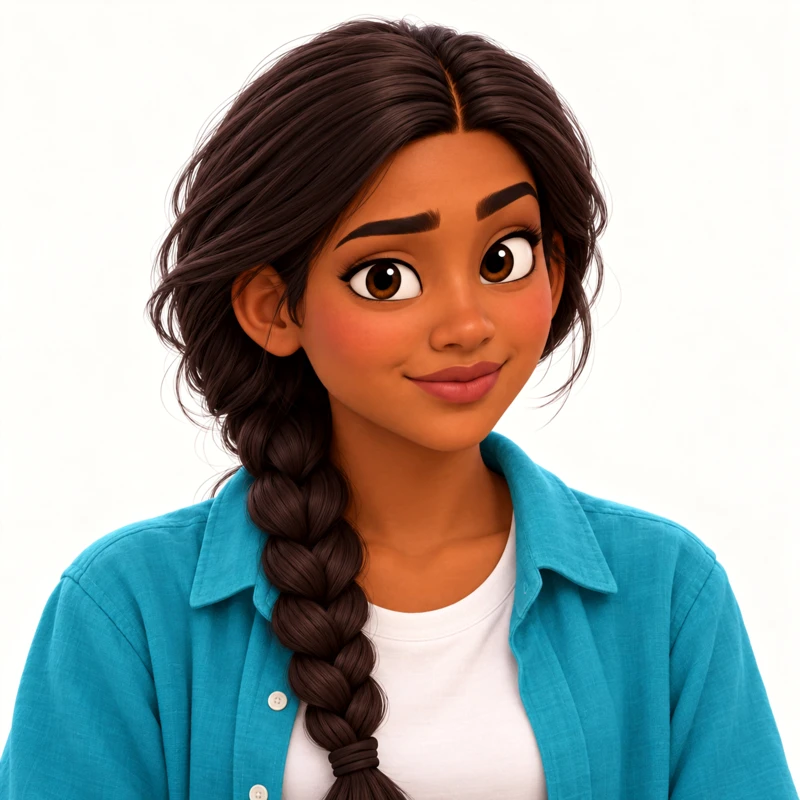
We were carrying chairs at 5:30. Don’t tell me how sorry you feel. Tell people what actually happened.
The evidence
Handle the case file.
Every artifact comes with a question. The captions are the lesson.
Original statementExhibit A
The published caption
“Great night, once the younger crowd finally got organized.” The caption names no evidence for the delay and gives viewers a group to blame.
Supports The statement itself is evidence of what the crew communicated, not proof of the cause.
Jordy’s setup recordExhibit B
The event log
5:40 p.m. projector failure reported. 6:00 p.m. attendees seated. 6:20 p.m. replacement projector connected. Anika and Dec helped carry chairs before doors opened.
Supports It challenges the caption’s explanation. It does not describe every attendee’s experience.
Draft, not postedExhibit C
Gia’s first correction
“Sorry if this came across wrong. We love our younger neighbors and would never want anyone to feel excluded.”
Supports The draft describes intent without correcting the cause or naming a practical change.
The workshop
45 minutes, block by block.
5 min
Read the caption
TeacherShow the caption alone. Keep discussion on the fictional event.
StudentsSilently note the claim and the group it blames.
CheckStudents name “younger crowd” as the group blamed.
10 min
Build the timeline
TeacherHand out Jordy’s event log.
StudentsBuild a timeline from 5:40 to 6:20 and mark which entry challenges the caption.
CheckTimelines show the projector failure as the cause of delay.
8 min
Examine the apology
TeacherProject Gia’s first draft. Ask: what does it correct?
StudentsHighlight words about intent in one color, facts in another.
CheckStudents find zero corrected facts in the draft.
15 min
Write the plan
TeacherIntroduce the plan parts: goal, audience, key message, channel, repair owner, measure.
StudentsDraft a 70–100 word correction plus one repair with an owner and a check.
CheckCorrection names the error, the evidence, the fix and who does what.
5 min
Editorial desk
TeacherAssign roles: fact-checker, reach-checker, responsibility-checker.
StudentsPartners check one role each and suggest one edit.
CheckEach draft receives one specific edit tied to a role.
2 min
Exit
TeacherFrame: “Our next recap will change because __.”
StudentsComplete the frame.
CheckAnswer names a repeatable process, not a feeling.
Differentiated routes
One case. Seven ways in.
Each route changes what students read, make and prove, not only how long it takes.
Middle school
Grades 6–8: Fix Gia’s apology using a four-line template, then read it aloud as Anika would hear it.
- Sources
- The caption, the event log and Gia’s first draft.
- Product
- Four-sentence correction
- Raises the rigor
- Add one sentence that tells people who saw the original where the fix is posted.
Supports
- Template: “We said __. The record shows __. We changed __. Next time __ will __.”
- Timeline already started
- Word bank: correction, cause, evidence, blame
- Pair reading
Success looks like
- Names the wrong claim
- States what the log shows
- Names one change
- Leaves out how sorry Gia feels
High school
Grades 9–10: Write a correction and a one-paragraph repair plan with a named owner and a date to check it.
- Sources
- All three evidence cards and the decision feedback.
- Product
- Correction (70–100 words) plus repair paragraph (80–120 words)
- Raises the rigor
- Explain why asking Anika to vouch for Gia puts the work on the wrong person.
Supports
- Plan grid: action / owner / when / how we’ll know
- Model correction to annotate
Success looks like
- Correction owns the error and cites the log
- Repair is specific and feasible
- Names who does what by when
- Avoids asking the harmed person for reassurance
High school
Grades 11–12: Build a full crisis communications plan for the recap error: goals, audiences, key message, channels, holding statement, correction and measurement.
- Sources
- Case evidence plus PRSA Code of Ethics and SPJ Code of Ethics excerpts on correcting errors.
- Product
- Communications plan, one page (about 400 words)
- Raises the rigor
- Resolve a tension between protecting the crew’s reputation and minimizing harm, citing a professional code.
Supports
- Plan template with seven headings
- Example measurement questions
Success looks like
- Every audience has a matching channel
- Key message is accurate and consistent
- Measurement checks understanding, not views
- Cites a professional code to resolve a tension
High school
Honors: Argue whether deleting the post is ever the right correction strategy.
- Sources
- Case evidence, decision 1 feedback, and the SPJ guidance on corrections.
- Product
- Argument, 500–600 words
- Raises the rigor
- Consider screenshots, archives and the people who never see the update.
Supports
- Claim/counterclaim chart
- Example of an edited post with a visible correction note
Success looks like
- Takes a clear position
- Uses case and code evidence
- Addresses the strongest counterargument
- Proposes a standard the crew could follow
AP English Language
AP Lang: Write a rhetorical analysis comparing Gia’s first draft with the model correction.
- Sources
- Gia’s first draft and the model correction from the case.
- Product
- Comparative rhetorical analysis, about 500 words, 40 minutes
- Raises the rigor
- Explain how each text constructs the speaker’s ethos, and why the model earns credibility by conceding error.
Supports
- Side-by-side annotation sheet
- Commentary stems: “This choice positions readers to…”
Success looks like
- Thesis explains how purpose differs between drafts
- Analyzes specific word choices
- Links choices to Anika and other readers
- Commentary explains effect, not just device
Middle Years
IB MYP: Create an inquiry statement on fairness and representation and a corrections checklist for a student club.
- Sources
- Case evidence; global context: Fairness and development.
- Product
- Checklist (8–10 items) plus 200-word justification
- Raises the rigor
- Test the checklist on one other real or invented club post.
Supports
- Inquiry statement frame
- Checklist example from a school newspaper
Success looks like
- Inquiry statement connects fairness to communication
- Checklist items are specific and testable
- Justification cites the case
- Applies checklist to a second example
Diploma
IB DP: Write a reflective commentary on intent versus impact: does it matter what Gia meant?
- Sources
- Gia’s draft, Anika’s message and the event log as three perspectives.
- Product
- Commentary, 600–800 words
- Raises the rigor
- Evaluate intent and impact as competing ways of judging communication; relate to one broader context.
Supports
- Perspective chart
- Prompt: “Who has to live with the explanation after the post?”
Success looks like
- Analyzes at least three perspectives
- Distinguishes intent, impact and accountability
- Connects to a broader context
- Offers a reasoned, personal conclusion
Access for every learner
- Pre-build the timeline with blanks for three times
- Read Anika’s message aloud in a neutral voice
- Spanish vocabulary: corrección, estereotipo, reparación
- Allow students to annotate a provided draft instead of writing from scratch
- Reduce the plan to three parts: fix, owner, check
Extension
- Draft how the crew would measure whether younger neighbors come back
- Compare a real published correction policy from a newsroom with the crew’s plan
Annotated student work
What a draft shows us.
Write the correction the crew should post under the recap.
First draft
We want to apologize for our last post. 1We didn’t mean to offend anyone and we love having younger people at our events. It was a really stressful night and 2things were hectic so we said something we shouldn’t have. Honestly we were all tired and trying to get everything set up on time, and it’s been a lot. 3We are sorry if anyone was hurt. 4We promise it won’t happen again and 5we hope everyone keeps coming! Thank you all for your support and understanding, it means a lot to us.
- 1Gap Talks about intent. It still doesn’t say what was wrong.
- 2Evidence This is where the fact goes: the projector failed at 5:40.
- 3Audience “If” puts the problem on readers. Name who was blamed.
- 4Gap Impossible to check. Name a specific process instead.
- 5Strength Good goal, but a repair makes that more likely than a hope.
Revised
Correction: our recap said the screening started late because younger attendees were disorganized. That was wrong. Jordy’s event log shows the projector failed at 5:40 p.m. and the replacement was connected at 6:20. Anika and Dec actually helped carry chairs before doors opened. We have edited the original caption and messaged the people it blamed. Starting with the next event, Gia and Jordy will check any claim about causes against the event log before we post. We’re sorry we blamed people who were helping us. If you see something we got wrong, message Jordy.
Assessment
One-page rubric.
Mark the evidence you see. Leave room for a comment and a next step.
| Criterion | Beginning | Developing | Proficient | Advanced |
|---|---|---|---|---|
| Evidence | No evidence about the delay. | Mentions “technical issues” vaguely. | Cites the projector failure from the log. | Cites specific times and corrects who actually helped. |
| Reasoning | Apologizes for feelings only. | Admits error but not what it was. | Names the inaccurate claim and replaces it. | Explains why the claim harmed a group and how the repair prevents a repeat. |
| Audience & purpose | Does not consider who saw the post. | Speaks to readers in general. | Reaches the people who were blamed. | Reaches the original audience and the blamed group through appropriate channels. |
| Revision | No change. | Softens tone only. | Adds facts and a repair. | Adds facts, an owner, a check and removes shifting of blame. |
Evidence I saw
Next step
Standards
What this case teaches, by the book.
CCSS 6–8 4
RI.7.6Students analyze how Gia’s first draft centers her feelings instead of the facts.RI.8.8Students evaluate whether the caption offers any evidence for its explanation of the delay.W.6.1Students write a correction that states a claim and supports it with the event log.RH.6-8.6Students identify loaded language (“finally got organized”) that shows point of view.
CCSS 9–10 3
RI.9-10.6Students analyze how the caption’s rhetoric advances a point of view about younger attendees.W.9-10.5Students revise the apology into a correction and explain the purpose of each change.SL.9-10.1Students discuss Anika’s message and respond to diverse perspectives without asking anyone to represent a group.
CCSS 11–12 3
RI.11-12.6Students evaluate how style and content in Gia’s draft fail its purpose.W.11-12.1Students argue what an organization owes people it wrongly blamed.SL.11-12.4Students present a repair plan with a clear line of reasoning and named owners.
C3 Framework 3
D2.Civ.7.6-8Students apply civic virtues like honesty and fairness to a group’s public post.D2.Civ.10.9-12Students analyze how personal interest (protecting the crew’s image) competes with fairness.D4.3.9-12Students adapt the correction for the people who saw the original post.
AP English Language 3
Rhetorical Situation (RHS)Students analyze how Gia’s draft misreads its audience: Anika needs a fact, not reassurance.Reasoning and Organization (REO)Students reorder the correction so the inaccurate claim and the evidence come first.Style (STL)Students analyze how “Sorry if this came across wrong” shifts responsibility onto readers.
IB MYP 3
Language and Literature A: AnalysingStudents analyse the effect of the caption’s word choices on readers.Language and Literature D: Using languageStudents choose precise, accountable language for the correction.Individuals and Societies D: Thinking criticallyStudents evaluate how a stereotype in a caption affects who participates next time.
IB DP 2
Language A: language and literature — Readers, writers and textsStudents examine how the writer’s intent and the readers’ experience diverge.Global Politics — key concepts: power and legitimacyStudents ask how an organization rebuilds legitimacy after a public error.
Take it off the page
Help a club you’re in write a corrections rule.
- Ask the editor or advisor of a school newsletter, club account or yearbook how they fix mistakes
- Suggest a three-step checklist: name the error, show the evidence, say what changes
- Offer to test it on an old post together
- Keep any real examples anonymous