Teacher field guide
Legal concepts
Credit is not the whole copyright answer
If you credit the artist, can you use their track in your film?
Students remix music, clips and images every day, and many believe credit or “only ten seconds” makes any use okay. Understanding how U.S. copyright and fair use actually work lets creators share their projects without getting taken down, and respect other creators too.
What students make
Rights log plus 3–4 sentences
The civic idea
Words that do the work.
- CopyrightDerechos de autor
U.S. legal protection that automatically covers original creative work once it’s fixed, like recorded or written down.
The track Caio sampled is protected from the moment it was recorded, whether or not it’s registered.
- AttributionAtribución
Naming or crediting the source.
Mateo’s plan to “credit them” answers who made it. It doesn’t answer whether the crew may use it.
- LicenseLicencia
Permission to use a work under specific terms.
A Creative Commons or stock-music license could allow the use, if its terms fit this film.
- Fair useUso justo
A U.S. doctrine allowing some unlicensed uses, judged case by case on four factors.
Purpose, the kind of work, how much is used and market effect all matter. There’s no safe number of seconds.
- Transformative purposePropósito transformador
Using a work for a new purpose, like commentary, rather than just repackaging it.
Using the song as the film’s background mood is different from quoting it to critique it.
- Platform permissionPermiso de la plataforma
Terms that let you remix within one app; they don’t automatically cover other uses.
Stitch works inside TikTok. Downloading the clip for a festival film is a different use.
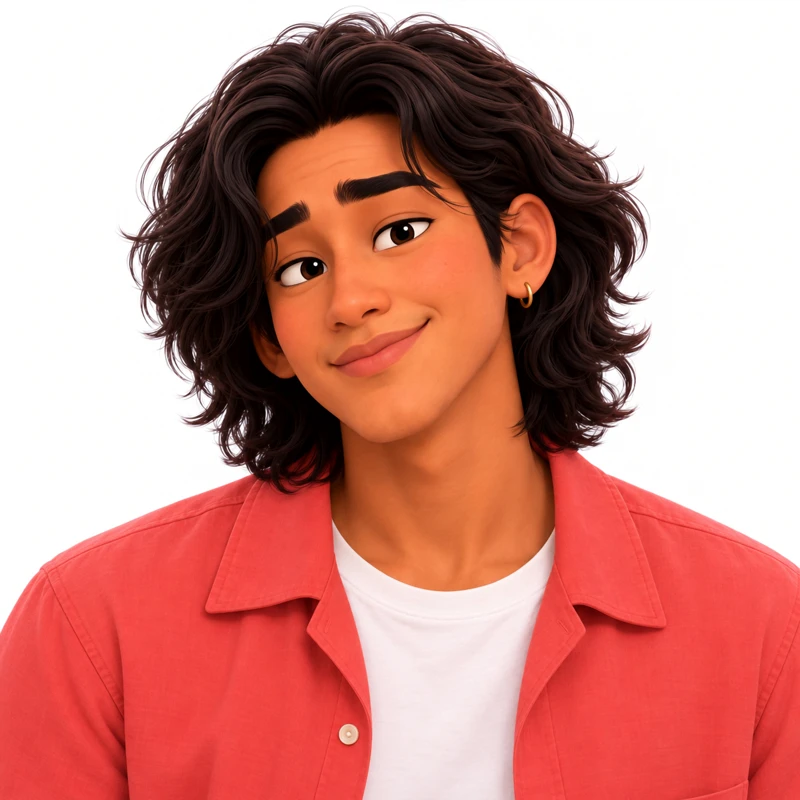
Calma, Mateo. The sample makes the scene, I know. But “we credited them” isn’t a reason I can explain. Let’s check the license first.
The evidence
Handle the case file.
Every artifact comes with a question. The captions are the lesson.
DRAFTFriday, 9:40 p.m.
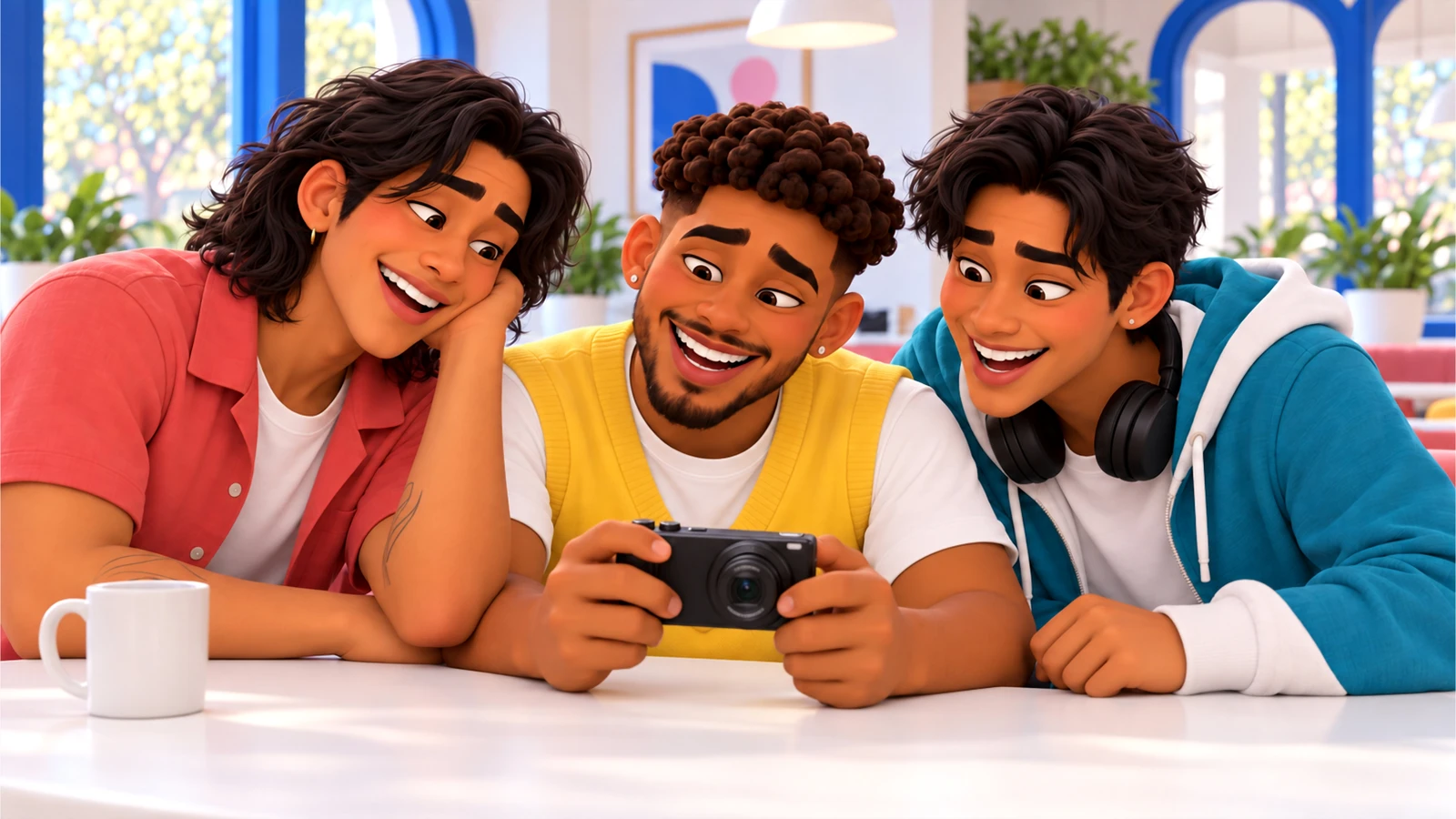
Caio’s rough cut with the sampled track
CHATFriday, 10:02 p.m.
Mateo: “we’ll credit them, post tonight?”
FORMStarted Saturday morning
Rights log template
Use it in your tools
Take it into class.
Share it, schedule it or edit it in the apps your school already uses.
In the real world
This isn’t just a story.
Real reporting, clips and research on the same question. The crew is fictional; these are not. Each link opens the original in a new tab.
The workshop
45 minutes, block by block.
5 min
The paused upload
TeacherSet the scene: Caio’s film recap uses a sample; Mateo wants to post tonight with a credit.
StudentsVote: is credit enough? One reason.
CheckEveryone commits to a position.
10 min
Three questions
TeacherDistinguish attribution, permission and fair use.
StudentsSort statements into the three categories.
Check“We’ll credit them” goes under attribution only.
10 min
Four factors
TeacherRead the Copyright Office fair-use page together.
StudentsApply each factor to the crew’s use, marking uncertainty.
CheckStudents avoid a guaranteed verdict.
7 min
Myth check
TeacherTest “ten seconds is always fine” and “it’s for school.”
StudentsFind what the source says about each.
CheckStudents cite that there’s no fixed-length rule and education isn’t automatic.
10 min
Rights log and alternative
TeacherModel a four-column rights log.
StudentsComplete the log and propose a licensed or original alternative.
CheckLog is complete; alternative is realistic.
3 min
Exit
TeacherAsk: what changes if the class draft becomes a public post?
StudentsWrite one change.
CheckAnswer mentions audience, market or platform terms.
Differentiated routes
One case. Seven ways in.
Each route changes what students read, make and prove, not only how long it takes.
Middle school
Grades 6–8: Make a rights log for the crew’s short film and suggest a way to use music they’re allowed to use.
- Sources
- The case scenario and a kid-friendly summary of the Copyright Office page.
- Product
- Rights log plus 3–4 sentences
- Raises the rigor
- Explain why “it’s only ten seconds” isn’t a rule.
Supports
- Rights-log template: what, who made it, permission?
- Frames: “Credit tells people __. Permission means __.”
- Vocabulary: copyright, credit, license
- List of free-to-use music libraries for school
Success looks like
- Lists each outside element
- Separates credit from permission
- Suggests a realistic alternative
- Doesn’t claim a guaranteed legal answer
High school
Grades 9–10: Write a four-factor analysis of the crew’s planned use and recommend a path.
- Sources
- Copyright Office fair-use page and TikTok Stitch announcement.
- Product
- Analysis, 300–400 words
- Raises the rigor
- Explain why Stitch permission inside TikTok doesn’t cover a download used elsewhere.
Supports
- Factor table
- Model analysis of a different example
Success looks like
- Applies all four factors
- States uncertainty honestly
- Distinguishes platform permission
- Recommends a practical path
High school
Grades 11–12: Write a brief on how the Supreme Court’s 2023 Warhol v. Goldsmith decision shapes the “purpose” factor, applied to the crew’s film.
- Sources
- A neutral summary of Andy Warhol Foundation v. Goldsmith and the Copyright Office page.
- Product
- Brief, 450–550 words
- Raises the rigor
- Explain why the specific use matters, not just whether the new work looks different.
Supports
- Case summary
- Factor-one explainer
Success looks like
- Represents the holding accurately
- Applies it to the case carefully
- No legal advice
- Clear recommendation
High school
Honors: Argue whether fair use gives young creators enough room to remix.
- Sources
- Copyright Office page plus one teacher-selected article.
- Product
- Argument, 600–700 words
- Raises the rigor
- Take the original artist’s perspective seriously.
Supports
- Stakeholder chart: original artist, remixer, platform
Success looks like
- Clear thesis
- Accurate legal content
- Fair to artists
- Considers platforms’ role
Pre-AP
Pre-AP: Closely observe Caio’s rough cut and list every outside element, then write an evidence-based paragraph on which one raises the biggest rights question and why.
- Sources
- The rough-cut description, Mateo’s chat message and the Copyright Office fair-use page.
- Product
- Inventory plus paragraph (150–200 words)
- Raises the rigor
- Discuss with a partner whether changing the pitch changes the analysis, then revise.
Supports
- Element inventory
- Question stems: “What is this element doing in the film?”
- Paragraph frame
Success looks like
- Complete inventory
- Supported claim
- Uses one fair-use factor accurately
- Revision reflects discussion
AP English Language
AP Lang: Analyze the persuasive strategy of a common online myth (“10 seconds is fair use”) and write a correction for creators.
- Sources
- A teacher-written myth post and the Copyright Office page.
- Product
- Analysis (about 350 words) plus 100-word correction
- Raises the rigor
- Explain why the myth persuades (simplicity, confidence) and how your correction competes.
Supports
- Myth anatomy chart
- Correction model
Success looks like
- Thesis on persuasion
- Analyzes choices
- Correction is accurate and appealing
- Commentary explains effect
AP U.S. Government
AP Gov: Concept application: the Constitution gives Congress power “to promote the Progress of Science and useful Arts” by securing to authors exclusive rights for limited times (Article I, Section 8). Explain this enumerated power and how Congress and courts shaped fair use.
- Sources
- Article I, Section 8 text, the Copyright Office fair-use page and the case.
- Product
- Concept-application response, about 300 words
- Raises the rigor
- Explain how the “limited times” language and fair use balance creators and the public.
Supports
- Enumerated-powers chart
- Vocabulary: enumerated power, statute, judicial interpretation
Success looks like
- Quotes the clause accurately
- Explains enumerated powers
- Explains the balance
- Applies to the crew’s film
AP Seminar
AP Seminar: Team inquiry: “Does copyright help or hurt young creators?” Members research artists’ income, remix culture, platform licensing and legal doctrine, then present guidance for student filmmakers.
- Sources
- Case plus teacher-approved sources.
- Product
- Individual research report (800–1,000 words) plus 8-minute team presentation
- Raises the rigor
- Guidance must be U.S.-specific and must not promise legal outcomes.
Supports
- Lens assignments
- Annotated bibliography
- Presentation storyboard
Success looks like
- Accurate research
- Artists’ and remixers’ perspectives both represented
- Synthesized guidance
- Stated limits
School pathway
Pre-IB: Write a commentary on the question “When does borrowing become a new text?”, comparing the crew’s planned use of the sampled track with one teacher-selected example of a licensed remix or cover. Then add a short reflection on how legal ownership and creative influence differ.
- Sources
- The rough-cut description, Mateo’s message, the Copyright Office fair-use page, the Warhol summary and one teacher-selected licensed remix or cover.
- Product
- Commentary (450–550 words) plus a 200-word reflection
- Raises the rigor
- Find a case where the law and your own sense of creativity point in different directions, and explain which you would follow and why.
Supports
- Comparison grid: what is borrowed, what is added, what the new work is for
- Reflection stems: “Influence means…; ownership means…”
- Glossary: attribution, license, transformative purpose
Success looks like
- Compares the two examples precisely
- Uses legal concepts accurately without giving legal advice
- Distinguishes influence from ownership
- Reflection takes a reasoned position
Middle Years
IB MYP: Investigate “Who owns a remix?” and create an original remix using only licensed or self-made material, with a rights log.
- Sources
- Case materials; global context: Personal and cultural expression.
- Product
- Short remix plus rights log and 200-word reflection
- Raises the rigor
- Reflect on how the constraint changed the creative outcome.
Supports
- Statement of inquiry frame
- Licensed-media source list
- Rights log
Success looks like
- Only permitted material used
- Complete rights log
- Accurate concepts
- Thoughtful reflection
Access for every learner
- Provide a three-box visual: credit / permission / fair use
- Read the Copyright Office summary aloud
- Spanish vocabulary: derechos de autor, licencia, atribución, uso justo
- Allow the rights log to be completed orally
- Reduce to one element: the music track
Extension
- Compare Creative Commons license types and what each allows
- Research how your school’s media policy handles copyrighted material
Annotated student work
What a draft shows us.
Mateo wants to post the film tonight. Write the crew’s plan for the music.
First draft
We’re good to post! 1We only used like 20 seconds of the song and we’re 2putting the artist’s name in the caption so they get credit. Plus 3it’s not like we’re making money off it, it’s just for our page. 4Everyone uses songs like this on TikTok anyway so it’s fine. We even changed the pitch a little so it’s basically our own version now, and the whole cut is under two minutes. If they don’t like it 5they can just ask us to take it down.
- 1Gap There’s no safe number of seconds.
- 2Strength Good practice, but credit isn’t permission.
- 3Evidence Noncommercial use is one consideration, not an automatic yes.
- 4Gap In-app sound libraries have their own licenses. A downloaded track is different.
- 5Audience That puts the risk on the artist. Check first.
Revised
Plan: we’re pausing the upload tonight. We used about 20 seconds of the song as background mood, which isn’t commentary on the song, and crediting the artist doesn’t give us permission. We’ll try two options. First, Caio will check whether the track has a license that covers this use. If not, we’ll swap in a track from a library with a clear license, or Dec will record a short drum loop we own. We’ll keep a rights log with the source, license and date for every clip and sound, then post by Sunday.
Assessment
One-page rubric.
Mark the evidence you see. Leave room for a comment and a next step.
| Criterion | Beginning | Developing | Proficient | Advanced |
|---|---|---|---|---|
| Evidence | Relies on myths. | Cites credit as permission. | Uses the four factors or license terms. | Uses factors, license terms and platform differences. |
| Reasoning | Assumes any use is fine. | Applies one factor. | Separates credit, permission and fair use. | Weighs factors honestly and chooses a lower-risk path. |
| Audience & purpose | Ignores the artist. | Considers only the crew. | Considers the artist and the audience. | Balances creative goals with respect for the original creator. |
| Revision | No change. | Adds a credit. | Replaces myths with a rights plan. | Explains each step and a realistic alternative. |
Evidence I saw
Next step
Standards
What this case teaches, by the book.
CCSS 6–8 3
RI.7.4Students define “license,” “attribution” and “fair use” as the Copyright Office uses them.W.8.8Students gather sources and follow a standard format for citation while avoiding plagiarism.SL.7.1Students discuss the remix decision, building on peers’ ideas.
CCSS 9–10 3
W.9-10.8Students assess each source’s usefulness and integrate it while avoiding plagiarism.RI.9-10.1Students cite the Copyright Office’s four factors.W.9-10.1Students argue whether a specific use is likely fair, acknowledging uncertainty.
CCSS 11–12 3
W.11-12.8Students integrate sources and avoid overreliance on any one, including a rights log.RI.11-12.8Students evaluate legal reasoning in a fair-use decision summary.W.11-12.1Students argue how fair use should apply to student creators.
C3 Framework 3
D2.Civ.3.9-12Students analyze the impact of copyright law on creative communities.D2.Civ.12.9-12Students analyze how creators use and challenge copyright rules.D2.Civ.10.9-12Students analyze how personal interest in a project shapes how people read the rules.
AP English Language 3
Claims and Evidence (CLE)Students test claims like “ten seconds is always fine” against the source.Reasoning and Organization (REO)Students organize a fair-use analysis factor by factor.Rhetorical Situation (RHS)Students explain a rights decision to a creative team eager to post.
IB MYP 3
Individuals and Societies A: Knowing and understandingStudents explain copyright, licenses and fair use accurately.Language and Literature C: Producing textStudents produce a rights log and creative alternative.Individuals and Societies D: Thinking criticallyStudents evaluate a use against the four factors.
IB DP 2
Language A: language and literature — Intertextuality: connecting textsStudents examine remix as a way texts borrow from and transform each other.Theory of Knowledge — Knowledge and technology (optional theme)Students ask who owns knowledge and art when copying is effortless.
Take it off the page
Start a rights log for your next project.
- List every outside clip, image, sound and quote before you edit
- Record the source and the license or permission for each
- Use your school’s licensed media or openly licensed libraries when you can
- Ask your media teacher or librarian about uses you’re unsure of