Sources and corrections

How we choose and cite sources, how we show different points of view, and what happens when we get something wrong.

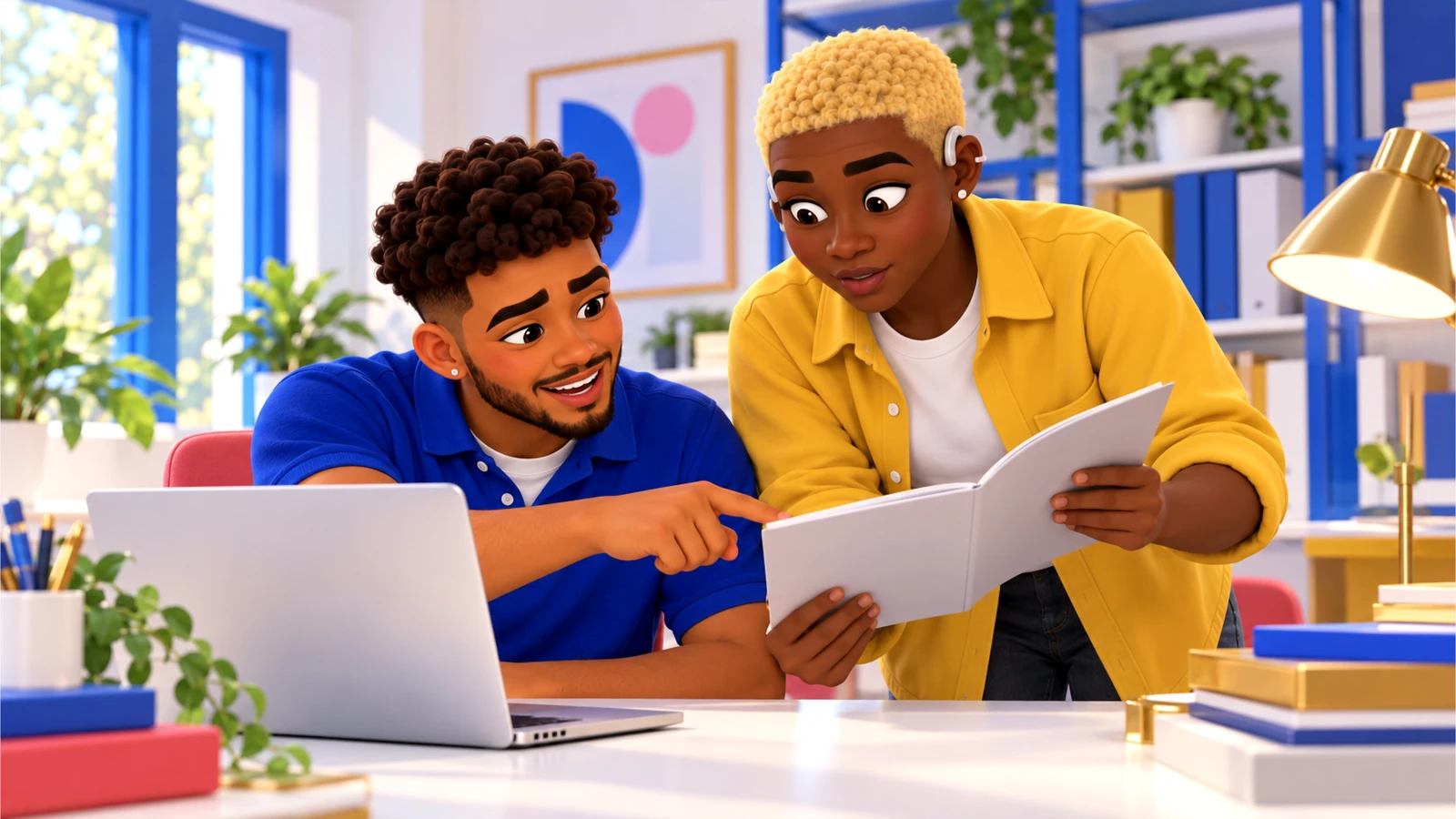
Mateo and Jordy cross-check original sources at a white desk.

How we choose sources

Every source we cite names its publisher, title and date and links to the original, checked on the date shown. We say what the source supports and where uncertainty remains. When a lesson depends on a rule, we name the rule and the place it applies.

The English and Spanish versions keep the same claim, scope and uncertainty. A plain-words definition helps with the lesson, and the linked original is still the source for the rule.

What each kind of source does here
SourceWhat it supports
Laws, rules and official pagesSupport what a rule says, where it applies and who has to act, within the source’s place and date.
Published reporting and researchShow what happened and what’s known, with the publisher, title and date.
Professional codesGuide practices such as verification, fair credit and disclosure. A code of ethics isn’t a law.
Research and foundational writingGive us ideas for questioning an account or planning a task. They don’t establish the facts of a lesson.

How lessons use real sources

Each lesson has two kinds of material. The story, the crew’s chats and the lesson documents set up the problem. Real sources, like a law, an agency page, a news report or a professional code, carry the facts.

Real sources carry a “Real source” label with the publisher and date, and they’re listed again in the lesson’s Sources. Story material carries no label. A cartoon, a clip or a character’s opinion can start a question, and only a real source can settle a fact.

The lessons give general information. On lessons about the law, one line says so: these are general rules, not legal advice.

From Lesson 1

Real source

SPJ Code of Ethics

Society of Professional Journalists, September 6, 2014

Open the original

Different perspectives

The crew brings different experiences into every scene. They miss context, disagree and change their minds, and the answer they want isn’t the answer key.

Each lesson asks who is affected, whose account is missing and what evidence would change the explanation. No character, and no learner, is asked to speak for a whole community.

“Who does this land on first, and did anyone ask them?”

Onda, the companion who asks who’s affected

Corrections

We fix wrong facts, broken or outdated sources, a rule that has changed, a translation that shifts the meaning and anything that misrepresents a person or a community.

A fix that changes what a lesson says gets a dated note in that lesson’s Sources saying what changed and why. Small fixes, like a typo or a moved link, are made without a note.

Use the question page to write down the lesson, the claim and a source to check. It saves your note on your device, so share it with your educator, who can pass it on. Please leave private records and other people’s personal details out.

We can’t promise a fast reply, and there’s no separate review team behind this edition.

Write a correction note

Independence and sponsorship

No, Pero Why? is created by Nasaiah Algarin. It has no sponsors and no ads, and no company or organization reviews a lesson before it goes up.

Some tasks name products, like Adobe or Apple apps, as optional ways to make something. That’s not sponsorship, free access or a partnership. Paper, plain text and a spoken answer always work too.

About the creator

Named here if it ever changes

Any funder or sponsor, what they gave and the date. No funder gets a say in what a lesson says.

Credits

Voices

Each crew voice is guided by a short reference clip from a consenting speaker in the Edinburgh International Accents of English Corpus (EDACC) from the University of Edinburgh, shared under a CC BY-SA 4.0 license. Each speaker is matched to a character by accent and background, and every reaction is checked against a transcript. No voice imitates a real, identifiable person. The companions’ sounds are built from scratch in code, with no recorded samples.

Type

Clash Display and Satoshi from the Indian Type Foundry (ITF Free Font License), and Caveat by Pablo Impallari (SIL Open Font License), all hosted with this site.

Real sources

Every lesson lists its sources at the bottom of the page: published reporting, research, laws and official pages, each with the publisher, title and date, checked on the date shown.