
Companions

Six small characters show up in the lessons. Each one asks the same kind of question every time, so you can learn to ask it yourself. They ask; the crew and you work out the answer.

Here’s when to call each one, where they show up in a lesson’s four steps (Story, Evidence, Practice, Task) and what they sound like.

Questions

Duda

“Wait. What are we really asking?”

Call on Duda when everyone’s arguing and nobody has said what the question is.

Duda is the speech bubble that interrupts at the useful moment. They help turn “this makes no sense” into a question we can look into. No question is too basic, and asking again is allowed.

In a lesson: Story. Asks the lesson’s question at the top.

Joins the crew in

Duda’s noises

Evidence

Lupa

“Can we check the original?”

Call on Lupa when a screenshot, clip or photo has no source.

Lupa is a magnifying glass with a healthy suspicion of cropped screenshots. They find the source, read the bit around the quote and check what it actually supports. Especially when everyone sounds certain.

In a lesson: Evidence. Checks the original before anyone repeats it.

Joins the crew in

Lupa’s noises

Rules

Pauta

“Who decided it should work this way?”

Call on Pauta when someone says “that’s the rule” and nobody knows who wrote it.

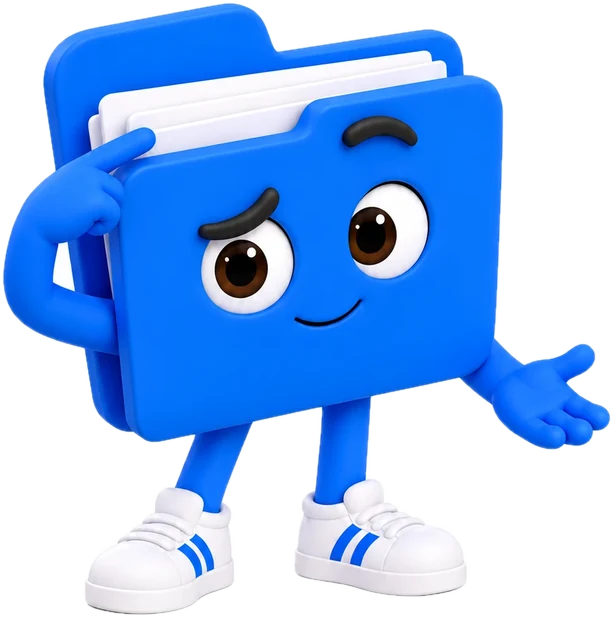
The folder is a clue: Pauta keeps track of the rules, who wrote them and who can change them. A school policy, a workplace process and a law are not interchangeable. Pauta wants to know which one we’re dealing with.

In a lesson: Practice. Shows up when the lesson turns on a rule.

Joins the crew in

Pauta’s noises

Impact

Onda

“Who does this land on differently?”

Call on Onda when a decision sounds small until you ask who it lands on.

One decision can travel a long way. Onda looks at what changes in someone’s day, time, access or take-home pay. Their rings are a reminder to look beyond the first person affected.

In a lesson: Practice. Shows up when the lesson turns on who’s affected.

Joins the crew in

Onda’s noises

Connections

Nexo

“What else is this connected to?”

Call on Nexo when something reminds you of something else, and you want to check how far the comparison goes.

Nexo is two interlocking loops. They connect the moment in a story to the bigger system: who decides, how an institution works, and what the comparison leaves out. A connection is a way to investigate, not proof that two things are the same.

In a lesson: Practice. Shows up when the lesson compares two things.

Joins the crew in

Nexo’s noises

Next steps

Voz

“What could you do with this?”

Call on Voz when you know something now and want to decide what to do with it.

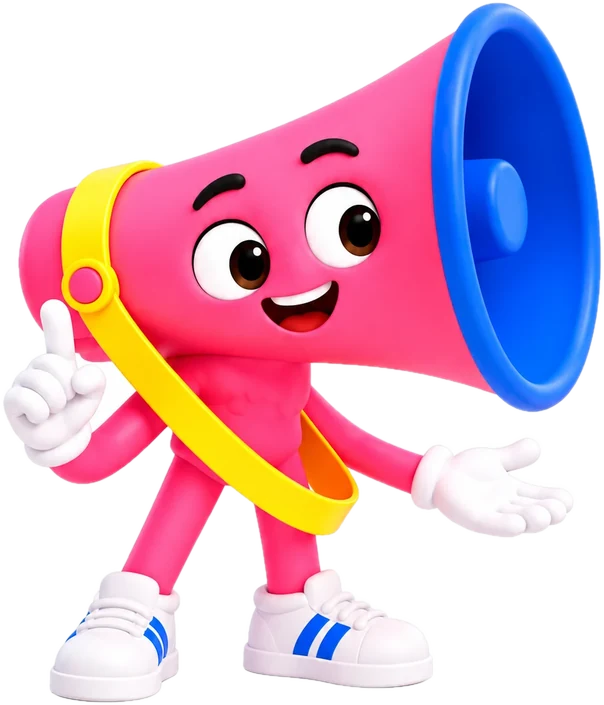
The megaphone is for your question, not a lecture. Voz helps you find a useful next step: ask the right office, compare a document, save a source or share what you learned. You decide what comes next.

In a lesson: Task. Stands beside Jordan Brooks’s check.

Joins the crew in

Voz’s noises